
Where Do Deer Go During the Day?
You see deer in the fields at dawn and dusk, and your trail cameras fill up with them at night. Then, during the middle of the day, they seem to vanish. Where do deer go during the day? The short answer is: not far. Most deer spend their daylight hours lying down in thick cover, often within a few hundred yards of where you saw them feeding. Here is what they are doing, where they hide, and how to find those spots.
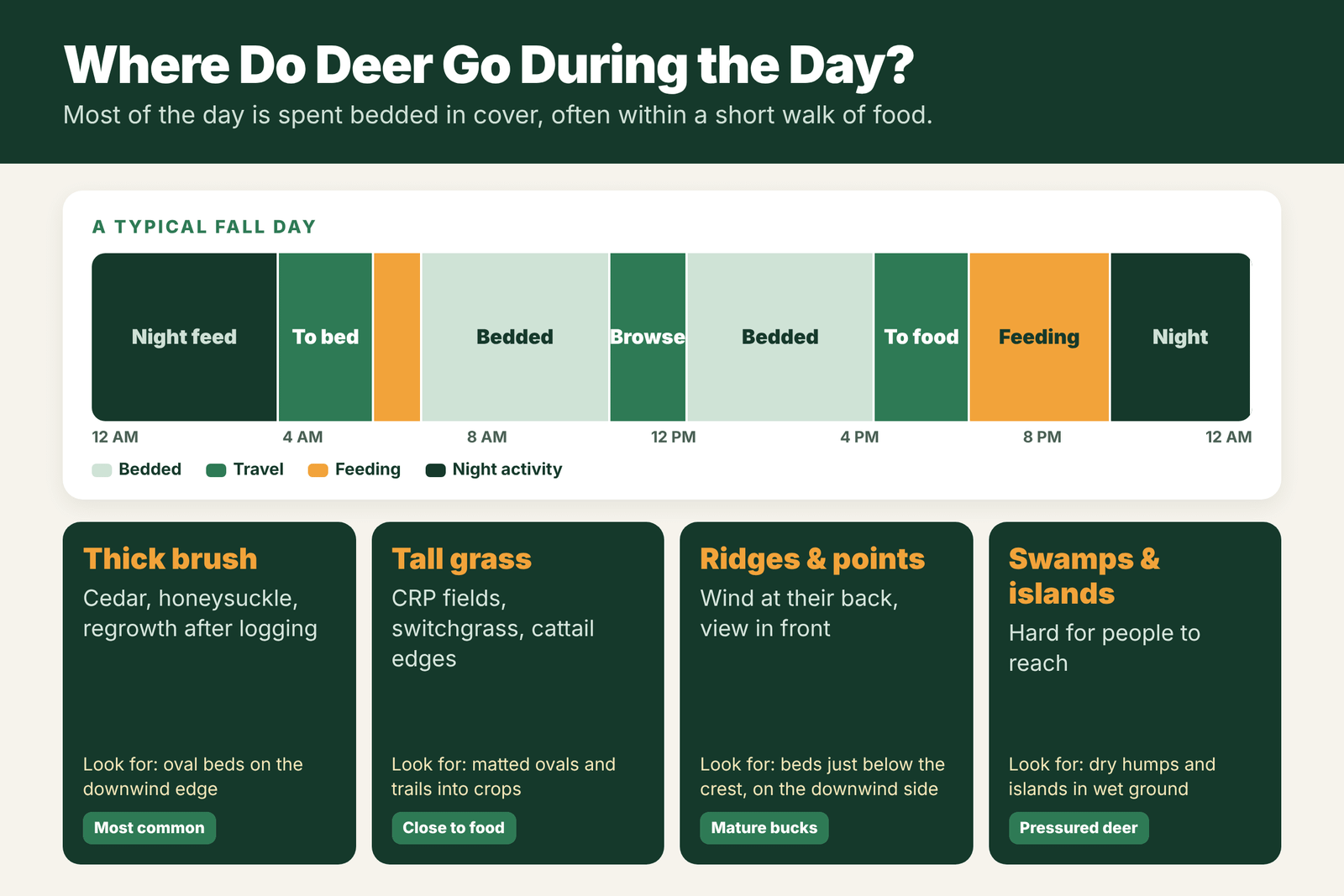
During the day, deer are mostly bedded down in thick cover: brushy thickets, tall grass, cedar stands, the downwind side of ridges, or swamps where people rarely go. They bed to rest, chew their cud and stay hidden, and they usually get up once or twice around midday to stretch, browse a little and move a short distance. They travel to food in the late afternoon, feed and move at night, and head back to bed around sunrise. Heavy hunting pressure pushes them into even thicker, harder-to-reach cover.
- Daytime
- Mostly bedded in thick cover
- Most active
- Dawn and dusk
- Midday
- Short stand-up, stretch and browse
- Typical distance
- Often a few hundred yards from food
- Bucks bed
- Higher ground, wind at back, view in front
- Pressured deer
- Swamps, steep cover, small overlooked patches
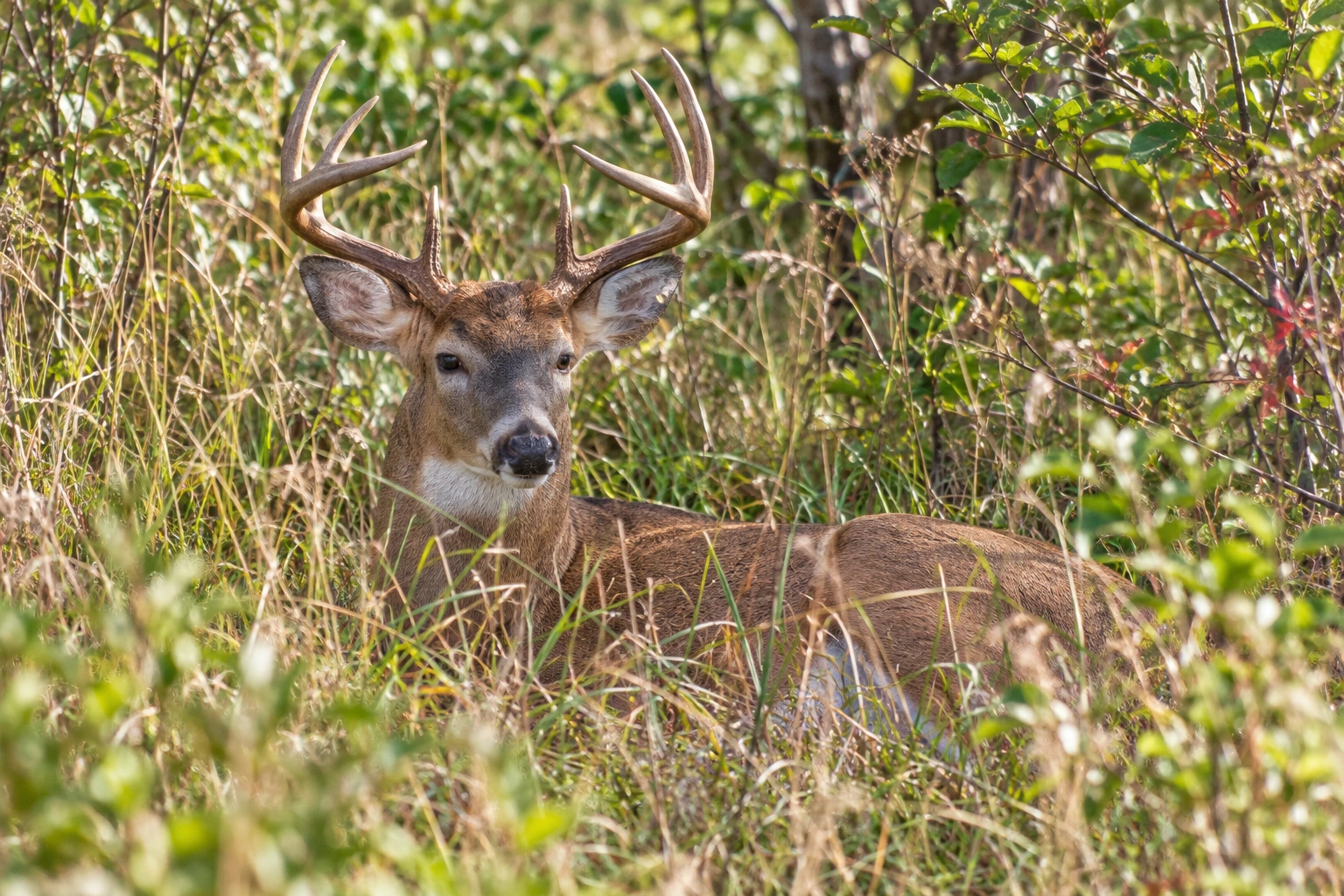
A Deer’s Daily Routine
White-tailed deer are crepuscular, meaning they are most active around dawn and dusk. Their day usually looks like this:
- Before sunrise: deer finish feeding and start moving back toward bedding cover.
- Morning: they bed down. Deer are ruminants like cows, so they spend a lot of their resting time chewing their cud.
- Midday: many deer stand up for a short time, stretch, urinate, browse nearby plants, and then bed again, sometimes in a slightly different spot as the sun and wind shift.
- Late afternoon: they get up and move toward food, often stopping at “staging areas” in cover near the field edge until it gets darker.
- Night: they feed, rest, and move between food sources.
This routine changes with the season. In the rut, bucks may move at any hour, and in very cold weather deer may feed more during the warmest part of the day. Read more in are deer nocturnal and the best time to see deer.
Where Deer Bed: Types of Cover
Deer pick bedding spots that keep them hidden, give them a warning if danger comes, and stay close to food. Common bedding cover includes:
- Thick brush and thickets: honeysuckle, briars, young trees growing back after logging, and cedar or pine stands. This is the most common daytime cover.
- Tall grass: CRP fields, native warm-season grasses like switchgrass, and the edges of cattail sloughs. Deer often bed right next to crop fields here.
- Ridges and points: mature bucks like to bed just below the top of a ridge or at the end of a point, with the wind at their back to smell danger behind them and a view in front to see danger coming.
- Swamps and islands: dry spots in wet ground are hard for people and predators to reach quietly.
- South-facing slopes in winter: they catch more sun and stay warmer. Thick conifers break the wind.
Does and fawns often bed in groups, closer to food. Mature bucks tend to bed alone, in thicker or more defensible spots.
How Hunting Pressure Changes Where Deer Go
Deer learn fast. When hunters are in the woods, deer change their daytime habits:
- They move less in daylight and more at night.
- They bed in thicker and harder-to-reach cover: steep draws, swamps, briar patches, and small patches of cover that most hunters walk past.
- They may move to neighboring land with less pressure, or to spots near houses and roads where people do not hunt.
- They watch their back trail and use wind more carefully when they travel.
That is why the deer you had on camera in September may seem to disappear in November. They have not left. They have just changed their schedule and their beds.
Finding Daytime Bedding Areas With Trail Cameras
Trail cameras help you find where deer spend the day without walking through their beds:
- Watch the times. Deer heading into cover at sunrise and coming out at sunset point to bedding in that direction.
- Watch the direction. Note which way deer walk in each photo. Trails used in the morning lead toward beds.
- Set cameras on the edges, not inside the bedding area: on trails entering thick cover, at staging areas near field edges, and in funnels between bedding and food.
- Check with care. Go mid-day when the wind is right, or use cellular cameras so you do not walk near beds. See how to use a trail camera without spooking deer.
- Scout in late winter. After the season, walk the thick cover to find oval, matted beds, droppings and rubs. Deer will often use the same areas again next fall.
Our full guide to finding deer bedding areas goes deeper into terrain and map clues.
Hunting Near Beds Without Blowing Deer Out
- Hunt the edges, not the bed. Set up between bedding and food, close enough to see deer in shooting light.
- Only hunt with the right wind, blowing from the bedding area toward you, not the other way.
- Plan quiet entry and exit routes that do not cross trails deer use to reach their beds.
- Afternoon hunts near beds are often safer than mornings, when you might walk in while deer are coming back.
- Do not over-hunt one spot. A few well-timed sits beat many sits that slowly push deer out.
A Typical Day: Hour by Hour
Every deer herd is a little different, but most whitetails follow a similar daily rhythm. This is a general pattern for lightly hunted land in the fall. Pressure, weather and the rut can shift it by hours.
| Time | What deer are usually doing | Best camera spot |
|---|---|---|
| Before sunrise | Leaving food, walking back toward cover | Trails between food and bedding |
| Sunrise to mid-morning | Settling into beds, some late movers | Edges of thick cover, staging areas |
| Late morning to early afternoon | Bedded, chewing cud; short stand-and-stretch around midday | Not inside beds; use cellular cams on trails nearby |
| Mid to late afternoon | Getting up, browsing near beds, moving to staging areas | Staging areas just inside cover |
| Last hour of light | Heading to fields and food plots | Field edges, food plot entry points |
| Night | Feeding, traveling, socializing | Food sources, water, crossings |
How Season and Weather Change Daytime Hiding Spots
- Early fall: deer bed close to food and water, often in shady, thick cover where it stays cool.
- The rut: bucks leave their usual beds and cruise in daylight to find does. Does still bed, but bucks may bed near doe groups. Midday movement jumps.
- Late season and cold snaps: deer bed on south-facing slopes to catch the sun and out of the wind, and they feed earlier in the afternoon.
- Hot days: deer bed in shade near water, on north-facing slopes, or in low, damp spots, and move later in the evening.
- Rain and wind: light rain often keeps deer moving. Strong wind pushes them into sheltered hollows and thick cover. See where do deer go when it’s windy.
- Snow: deer move toward thick conifers and food. See where do deer go when it snows.
Bucks vs Does: Different Daytime Habits
Does and fawns tend to live in family groups and bed in the same general area day after day, often closer to food. Mature bucks usually bed alone, in thicker or harder-to-reach spots, and they often pick beds with the wind at their back and a good view ahead. Older bucks also become more nocturnal under pressure. That is why many hunters see plenty of does on camera in daylight while the big buck shows up only at night. Read more in deer bedding areas.
Mistakes When Looking for Daytime Deer
- Walking straight into bedding cover. One careless trip can push deer out for days. Scout beds in late winter or early spring instead.
- Only hunting field edges. On pressured land, mature deer may not reach the field until after dark. Move closer to cover, inside the woods, on the trails they use to get there.
- Ignoring small, odd cover. Deer often bed in places people skip: a brushy fence row, a cattail patch, a small island of trees in a field, or tall grass near a house.
- Checking cameras at the wrong time. Morning and evening checks bump deer that are moving. Go in midday, when they are bedded away from the camera.
Field Example: Finding Where Deer Spend the Day
Say your field camera shows deer arriving 20 minutes after dark every night. That suggests they bed some distance away, or are wary. Put a second camera 100 to 200 yards back inside the woods on the main trail. If it shows deer in the last 30 minutes of daylight, they are staging there before the field. Move a third camera closer to the cover you suspect they bed in, on the downwind side, and compare times. In two to three weeks, the camera times will usually point you to the bedding area without you ever stepping into it.
Frequently Asked Questions
Where do deer go during the day?
Most deer spend the day bedded in thick cover such as brushy thickets, tall grass, cedar stands, ridges or swamps, usually within a short distance of their food.
Do deer sleep during the day?
Deer rest during the day but rarely sleep deeply. They doze in short bursts while lying down, chew their cud, and stay alert to sounds and smells around them.
Where do deer go at night?
At night deer are usually out feeding in fields, food plots and oak flats, and moving between food sources. They also rest for short periods during the night.
Do deer bed in the same place every day?
Deer often use the same general bedding area, but not always the exact same bed. They choose spots based on wind, weather, sun and how much pressure they feel.
Why do deer disappear during hunting season?
Hunting pressure makes deer move less in daylight and bed in thicker, harder-to-reach cover. They are usually still nearby, just more careful.
What time do deer get up from their beds?
Usually in the mid to late afternoon. Many also stand up briefly around midday to stretch and browse before lying back down.
Do deer move in the middle of the day?
Some do, especially during the rut, on cool days and in areas with little hunting pressure.
How far do deer travel from bed to food?
Often a few hundred yards to about a mile, depending on the land, food and pressure.