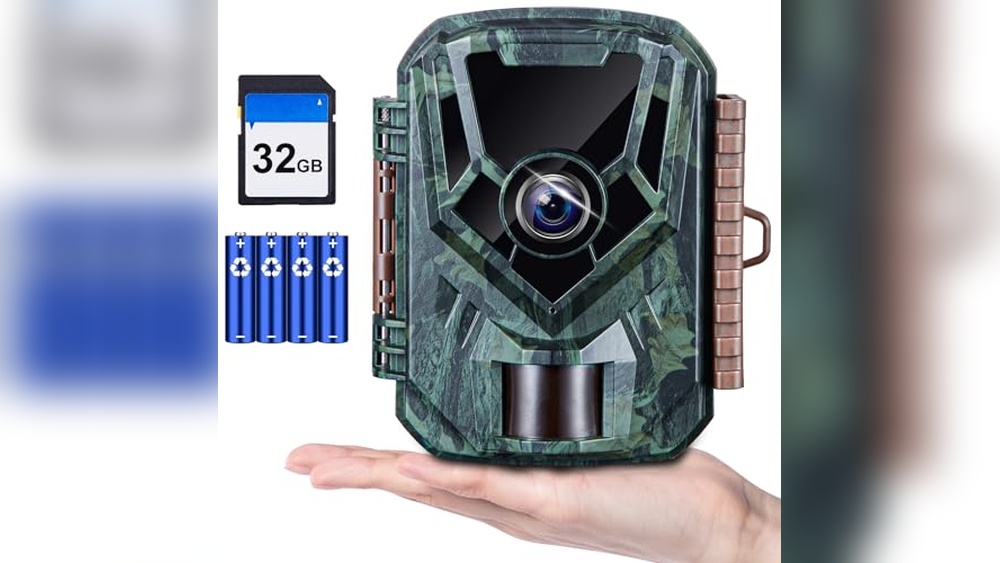
What is the best trail camera for hunting? Based on 2026 independent field tests, Tactacam REVEAL Pro 4.0 Solar is a compelling overall cellular choice, but Moultrie EDGE 4 Solar, Browning Defender Pro Scout MAX HD DV, SPYPOINT FLEX-M2, and non-cellular options may be better for particular needs. This guide compares the published evidence rather than claiming one model wins everywhere.
Quick Answer: What Is the Best Trail Camera for Hunting?
For most hunters seeking a capable cellular camera, the Tactacam REVEAL Pro 4.0 Solar is a strong starting point: Outdoor Life named it best overall in its October 2026 field-tested guide. That does not make it the winner for every property. Field & Stream selected Moultrie EDGE 4 Solar and Browning Defender Pro Scout MAX HD DV as joint best overall in September 2026. Budget-minded hunters should also consider the SPYPOINT FLEX-M2 or Stealth Cam Fusion Max 3, while a no-cell-coverage location may call for a conventional SD-card camera. The best choice depends on reception, photo quality, battery strategy, hunting regulations, and ongoing subscription costs.
Our 2026 Shortlist and Evidence
Tactacam REVEAL Pro 4.0 Solar: Outdoor Life’s best overall cellular pick. Moultrie EDGE 4 Solar: Field & Stream joint best overall, especially attractive where reducing battery-change trips matters. Browning Defender Pro Scout MAX HD DV: Field & Stream joint best overall. SPYPOINT FLEX-M2: Field & Stream’s best value choice. Stealth Cam Fusion Max 3: Outdoor Life’s best-value cellular pick. Stealth Cam Deceptor Max 3: Outdoor Life’s best-trigger-speed pick. Lone Wolf Custom Gear Undercover: Outdoor Life’s best standard non-cellular camera. These are attributed editorial test results, not our own field tests or a claim that every reviewer agrees.
How These Trail Cameras Were Tested
Outdoor Life’s 2026 roundup describes controlled walk-through tests at 10, 60, and 110 feet during day and night, followed by real-world field use. Its team assessed trigger response, detection, photo quality, reliability, and app performance. Field & Stream reports two months of testing on a Colorado whitetail property, including weather exposure and distance-based motion tests. Those approaches are more informative than judging a camera by advertised megapixels alone. Still, results from one property cannot guarantee identical performance in a wooded valley, hot climate, or weak-signal area. Use these published tests as comparative evidence and perform your own walk test after installation.
Best Overall Cellular: Tactacam REVEAL Pro 4.0 Solar
Outdoor Life ranked the REVEAL Pro 4.0 Solar as its best overall cellular trail camera in October 2026. The package combines a cellular camera with solar-assisted power, which can reduce routine battery maintenance when sunlight and charging conditions are adequate. Outdoor Life praised image quality, battery performance, and app usability while noting that the camera is not compatible with some earlier lithium cartridges. In its September comparison, the publication listed a 0.4-second trigger and successful day/night walk tests at 10 and 60 feet, but not 110 feet. Treat these as test-specific observations rather than guaranteed maximum ranges. See our Tactacam model guide.
Best Solar Alternative: Moultrie EDGE 4 Solar
Field & Stream named the Moultrie EDGE 4 Solar a joint best-overall cellular camera in its 2026 roundup. A solar-assisted system can be especially useful when the camera is mounted in a remote location that is inconvenient to visit. But solar power is not maintenance-free: shade, seasonal sunlight, cold weather, and heavy transmission demands can affect performance. Outdoor Life’s September comparison listed the EDGE 4 Solar at $170 with plans from $8.99 monthly at publication, but pricing and plan terms can change. Check the current manufacturer listing before buying. Prioritize dependable reception at your exact tree rather than choosing based on solar power alone.
Best Browning Option: Defender Pro Scout MAX HD DV
The Browning Defender Pro Scout MAX HD DV shared Field & Stream’s 2026 best-overall award with the Moultrie EDGE 4 Solar. The reviewer highlighted a fast reported 0.25-second trigger, battery performance, and a folding antenna design. Those characteristics can appeal to hunters monitoring narrow trails where animals move quickly. Still, antenna design and fast triggering cannot compensate for a poor placement angle or blocked field of view. Verify which video features and transmission options apply to the exact model and subscription you are considering. Avoid confusing this model with other Browning Defender or Recon Force products that have different features and storage requirements.
Best Budget Cellular: SPYPOINT FLEX-M2
Field & Stream chose the SPYPOINT FLEX-M2 as its best-value cellular camera in 2026. Outdoor Life’s September roundup listed promotional multi-camera packages and a free tier for a limited number of transmitted photos, but those offers may change. A low initial price can be attractive when monitoring several access routes or wildlife corridors. However, calculate the cost of batteries, memory cards, accessories, and the photo plan over a full season. A cheaper camera with poor signal may be less useful than a more expensive model that reliably delivers images. Our SPYPOINT setup guide explains activation considerations.
Best Value Alternative: Stealth Cam Fusion Max 3
Outdoor Life selected the Stealth Cam Fusion Max 3 as its best-value cellular camera in the 2026 roundup. Its September comparison listed a two-pack equivalent price of approximately $75 per camera and plans beginning around $5 monthly at that time. The publication recorded successful walk-through triggers at 10 and 60 feet during day and night, but not at 110 feet. These observations make it worth considering for a multi-camera property, provided the supported network works in your location. Compare battery requirements and flash type with other candidates. See our Stealth Cam overview for broader brand context.
Best for Trigger Speed: Stealth Cam Deceptor Max 3
Outdoor Life named the Stealth Cam Deceptor Max 3 its best-trigger-speed cellular option in September 2026. In that publication’s table, it was the only listed model that passed the 110-foot walk-through checks both day and night. That is a notable test result, but it should not be treated as proof that every animal will trigger the camera at 110 feet. Animal size, travel direction, background temperature, mounting height, and vegetation all matter. Fast triggering is particularly relevant at narrow crossings where a deer may move through the frame quickly. Pair trigger speed with image sharpness and a sensible camera angle.
Best Non-Cellular Trail Camera for Hunting
A conventional SD-card camera remains a practical choice when the property lacks reliable cellular coverage, when you want to avoid recurring plans, or when hunting regulations restrict cellular models. Outdoor Life selected the Lone Wolf Custom Gear Undercover as its best standard camera in October 2026. Digital Camera World also highlighted the Bushnell Core S-4K No Glow as a strong non-cellular wildlife option in its September 2026 guide. With either approach, you must physically retrieve or access stored images, which can disturb an area if done too frequently. Read our non-cellular trail camera guide.
Cellular vs Non-Cellular: Which Is Better for Hunting?
Cellular cameras send captured images to a compatible account when they have network coverage and an active service plan. This can reduce repeated trips to retrieve SD cards and may help minimize disturbance at a monitored site. Non-cellular cameras record locally and avoid ongoing transmission fees, but require physical checks. Outdoor Life notes that some jurisdictions restrict cellular camera use for hunting even when conventional trail cameras are allowed. Always verify local regulations for the exact season and land you plan to hunt. A camera that sends pictures to your phone is not necessarily better if it cannot connect reliably at the chosen location.
How Much Should You Spend?
The total cost of a hunting trail camera includes the device, batteries or rechargeable packs, SD cards, mounts, protective cases, and any cellular plan. Outdoor Life’s September 2026 comparison listed several capable cellular cameras in the roughly $100 to $200 range, with monthly plan prices varying by brand. Promotional bundles and service pricing change, so those figures are historical snapshots rather than guaranteed offers. Calculate a full-season cost instead of comparing only the purchase price. If you need six cameras, recurring fees may matter more than a small difference in trigger speed. Our trail camera plan comparison provides related context.
Detection Range vs Useful Photo Range
A camera’s advertised detection distance describes how far its sensor may react to movement under specified conditions. That is not the same as the distance at which the resulting image clearly shows antlers or identifies an animal. Infrared illumination, lens quality, subject speed, weather, and the direction of travel influence the useful photo. Outdoor Life’s walk-through protocol tested at fixed distances, which makes comparisons more meaningful than marketing claims alone. For your property, mark several distances and walk across the field of view during daylight and darkness. Inspect the images for framing, blur, and exposure. See our trail camera range guide.
Low-Glow vs No-Glow Night Flash
Low-glow infrared cameras can show a faint red illumination during nighttime capture, while no-glow models are designed to reduce visible flash. Neither approach guarantees that an animal will ignore the camera. Outdoor Life notes tradeoffs in nighttime image quality and visibility, with some tested cameras performing better than expected. Choose a flash type based on the location, image needs, and desired discretion rather than assuming the most invisible option always takes the best photograph. Place the camera so that it does not face a close branch or reflective surface that can wash out infrared images. See our no-glow versus low-glow guide.
Battery Life and Solar Charging
Battery performance depends on temperature, number of triggers, video settings, cellular transmission frequency, and battery chemistry. Solar-assisted cameras can reduce visits when the panel receives sufficient light, but a shaded forest floor may not provide ideal charging. Before buying, compare the camera’s power requirements, compatible rechargeable packs, and available external power options. Avoid assuming that a solar label means indefinite operation. Test the setup over several days before leaving it unattended for an entire hunting season. For more detail, read our battery life guide.
How to Choose a Camera for Deer Hunting
For deer movement monitoring, prioritize reliable triggers, consistent timestamps, useful nighttime images, and a field of view matched to the location. A narrow crossing favors a responsive camera and an angle that gives the sensor enough time to detect movement. A larger opening may benefit from broader coverage, but do not assume a wide view always produces better detail. Cellular delivery is convenient if the site has coverage and the rules permit it. Check the camera’s time and date before deployment so patterns are meaningful. Choose mounting height and angle according to the manufacturer’s recommendations and local conditions.
How to Choose for Remote Hunting Property
For a remote property, battery endurance, weather resistance, security, and connectivity become especially important. Test the cellular signal at the exact mounting position before paying for a long plan. A coverage map is a starting point, not proof that a camera will connect behind a hill or deep in a valley. Consider a solar-assisted camera if the location receives sufficient light, or use a standard SD-card model if there is no reliable service. Use an approved mount or security box where theft risk is a concern, and keep records of the camera’s serial number and location. See our camera security guide.
What About Photo Resolution and Megapixels?
A high advertised megapixel number does not automatically mean clearer hunting photographs. Sensor quality, optics, exposure, compression, and interpolation all influence real image detail. Compare published sample images captured at similar distances and lighting conditions, especially moving subjects at night. Ask whether the transmitted cellular image is a thumbnail or full-resolution file and whether downloading a larger version costs extra. For hunting decisions, a dependable, sharp image of a moving deer is usually more useful than a high-resolution file that is blurred or poorly exposed. See our megapixel settings guide.
Hunting Regulations and Responsible Use
Trail camera regulations differ by location, season, land ownership, and whether the device transmits images in near real time. Outdoor Life specifically warns that some states restrict cellular trail cameras even where ordinary cameras are permitted. Check the current wildlife agency rules before installing or relying on one. Follow public-land mounting restrictions, obtain permission on private property, and avoid interfering with other people’s equipment. Consider fair-chase principles when using real-time wildlife location information. The purpose of a camera should be to support informed, responsible scouting rather than replace field knowledge or disregard legal requirements.
Frequently Asked Questions
What is the best trail camera for hunting in 2026? Outdoor Life picked Tactacam REVEAL Pro 4.0 Solar as best overall cellular; Field & Stream named Moultrie EDGE 4 Solar and Browning Defender Pro Scout MAX HD DV joint best overall. What is the best cheap cellular trail camera? SPYPOINT FLEX-M2 and Stealth Cam Fusion Max 3 earned value awards in separate 2026 tests. Do I need cellular service? Only for cellular transmission features. Are solar trail cameras better? They can reduce battery changes where sunlight is adequate. Can trail cameras be used on public land? Rules vary; check the responsible land agency.
Final Recommendation
Choose the Tactacam REVEAL Pro 4.0 Solar if you want a strong all-around cellular starting point supported by Outdoor Life’s 2026 field tests. Consider Moultrie EDGE 4 Solar or Browning Defender Pro Scout MAX HD DV if their particular features suit your property. For value, compare SPYPOINT FLEX-M2 with Stealth Cam Fusion Max 3; for a non-cellular setup, review the Lone Wolf Custom Gear Undercover and Bushnell Core S-4K No Glow. There is no universal winner for every hunter. Confirm reception, local legality, app support, full-season cost, and useful night images before purchasing. Sources: Outdoor Life 2026 testing; Outdoor Life cellular comparison; Field & Stream 2026 field tests; Digital Camera World 2026 review.
As an Amazon Associate, I earn from Qualifying Purchases.