
When Do Deer Go Into Rut? 2026 Rut Dates by Region
Every fall, hunters ask the same question: when do deer go into rut where I hunt? The answer depends a lot on where you live. A buck in Minnesota and a buck in Alabama can be more than two months apart. The good news is that the rut lands at about the same time every year in a given area, so once you know your local timing, you can plan your hunts and your trail cameras around it.
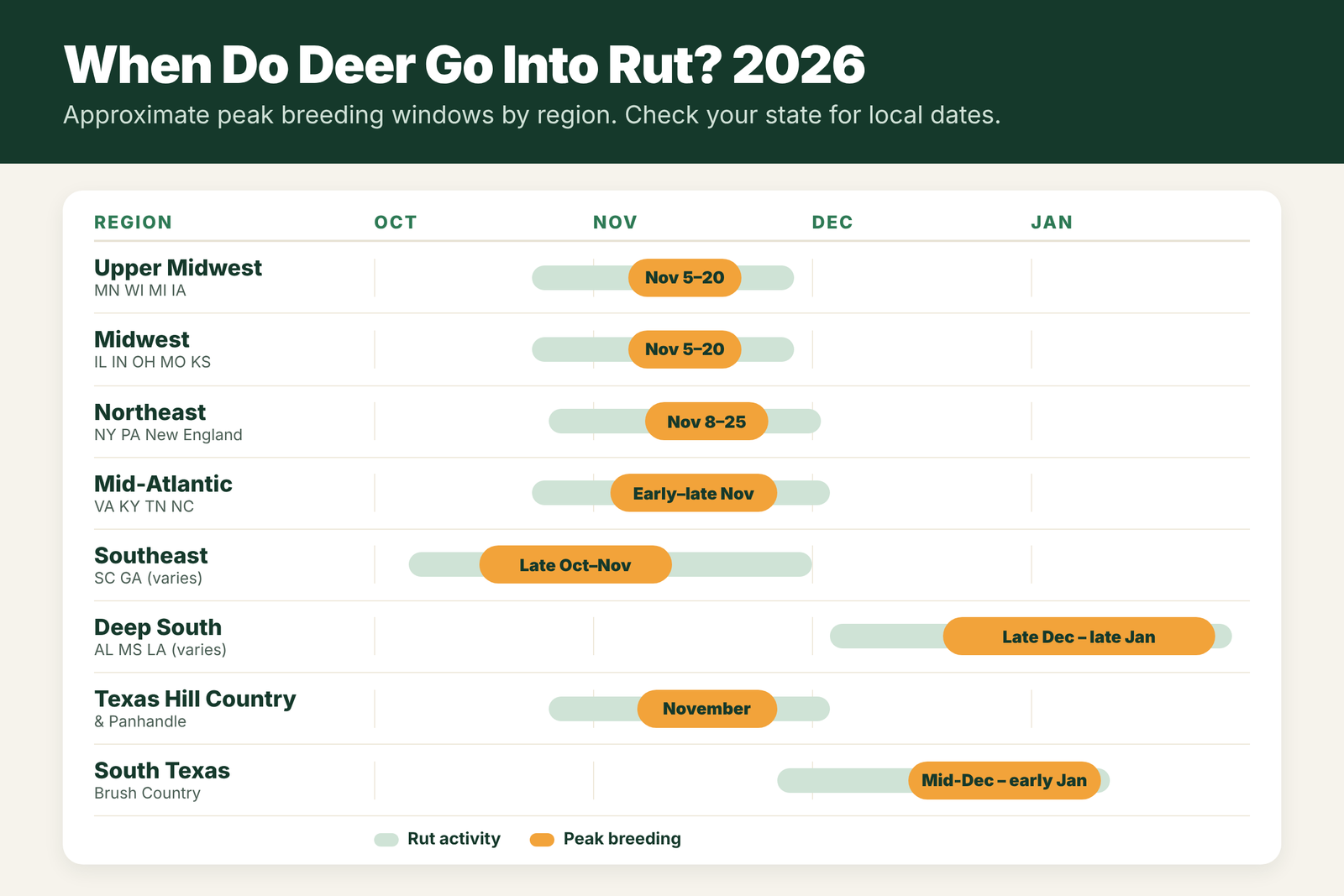
In most of the northern and Midwestern United States, whitetail deer go into rut in late October, with the peak in roughly November 5–20. The Northeast and mid-Atlantic run about the same, peaking in mid-November. The South varies widely, from late October in parts of the Carolinas to late December and January in much of Alabama and Mississippi. In Texas, the Panhandle and Hill Country peak in November, while South Texas peaks mid-December into early January. The rut is driven by day length, so 2026 dates are close to past years.
- What triggers it
- Shorter days (photoperiod), not cold or the moon
- North & Midwest peak
- About Nov 5–20
- Northeast peak
- About Nov 8–25
- Deep South peak
- Varies, often mid-Dec to late Jan
- South Texas peak
- About mid-Dec to early Jan
- How long
- 6–8 weeks of activity, 2–3 weeks of peak breeding
What Triggers the Rut?
The rut is the breeding season of white-tailed deer. It is set off mainly by photoperiod, the amount of daylight in a day. As days get shorter in late summer and fall, a deer’s body releases more of the hormone melatonin. That change raises testosterone in bucks and brings does into heat (estrus).
Because day length changes the same way every year, the rut in any one area comes at nearly the same time every year. That is why biologists can predict local rut dates so well. Other things you hear about change how much deer move during the rut, but not when breeding happens:
- Weather: warm days push movement to night. A cold front can make bucks move more in daylight. Breeding still goes on.
- Moon phase: a popular theory, but most studies of breeding dates have found the moon does not shift the timing of the rut.
- Herd balance: a herd with too few bucks or too few mature bucks can have a more spread-out rut and a stronger second rut.
2026 Rut Timing by Region
Use these dates as a starting point. Your state wildlife agency has the best local data, often from studies of fawn birth dates that show exactly when does were bred. The peak dates below are when the most does are bred. Seeking and chasing start one to two weeks earlier.
| Region | Rut begins (seeking) | Peak breeding | Notes |
|---|---|---|---|
| Upper Midwest (MN, WI, MI, IA) | Late October | About Nov 5–20 | Very consistent year to year |
| Midwest (IL, IN, OH, MO, KS, NE) | Late October | About Nov 5–20 | Many hunters’ favorite week is Nov 7–14 |
| Northeast (NY, PA, New England) | Late Oct – early Nov | About Nov 8–25 | PA peak is often mid-November |
| Mid-Atlantic & Upper South (VA, KY, TN, NC) | Late October | Early to late November | Varies by part of each state |
| Southeast (SC, GA, FL) | October – December | Varies widely | SC is early (Oct–Nov); parts of FL range from summer to winter |
| Deep South (AL, MS, LA) | December | Often late Dec to late Jan | Big differences between counties |
| Texas | Late Oct – Dec | Panhandle & Hill Country: November; South Texas: mid-Dec to early Jan | See below |
Rut in the North and Midwest
This is the most predictable rut in the country. Bucks start making scrapes and rubs in October, seeking begins around the last week of October, and chasing ramps up in early November. The peak of breeding lands in the first three weeks of November, with a “lockdown” period when bucks stay with one doe. If you can only take one week off, the second week of November is a strong pick in most of this region. For more, read our guide to the best time to hunt deer in November.
Rut in the South
The South is where generic charts fail. The timing in southern states often depends on where the deer were restocked from many decades ago, so two counties in the same state can be weeks apart. South Carolina and parts of Georgia rut early, sometimes in October. Much of Alabama and Mississippi rut in late December and January, and some parts of Alabama even later. Always check your state’s breeding-date map before planning a hunt.
Rut in Texas
Texas is big enough to have several ruts. In the Panhandle, Cross Timbers and much of the Hill Country, the peak is usually in November. The Post Oak area and East Texas tend to fall in November too, with some areas later. South Texas is the late one, with the peak usually from mid-December into early January, which is why the brush country is famous for late-season rut hunts.
Signs on Your Trail Camera That the Rut Has Started
Your own trail camera is the best rut calendar you can have. Look for these changes in your photos:
- Bachelor groups break up: bucks that were feeding together in summer start showing up alone.
- Scrapes and rubs everywhere: a sudden jump in fresh sign means the pre-rut is on. Learn the difference in our guide to deer scrapes vs rubs.
- Bucks with their nose down: photos of bucks trotting with their head low, following a doe’s trail.
- New bucks show up: bucks you have never seen before start passing through as their ranges grow.
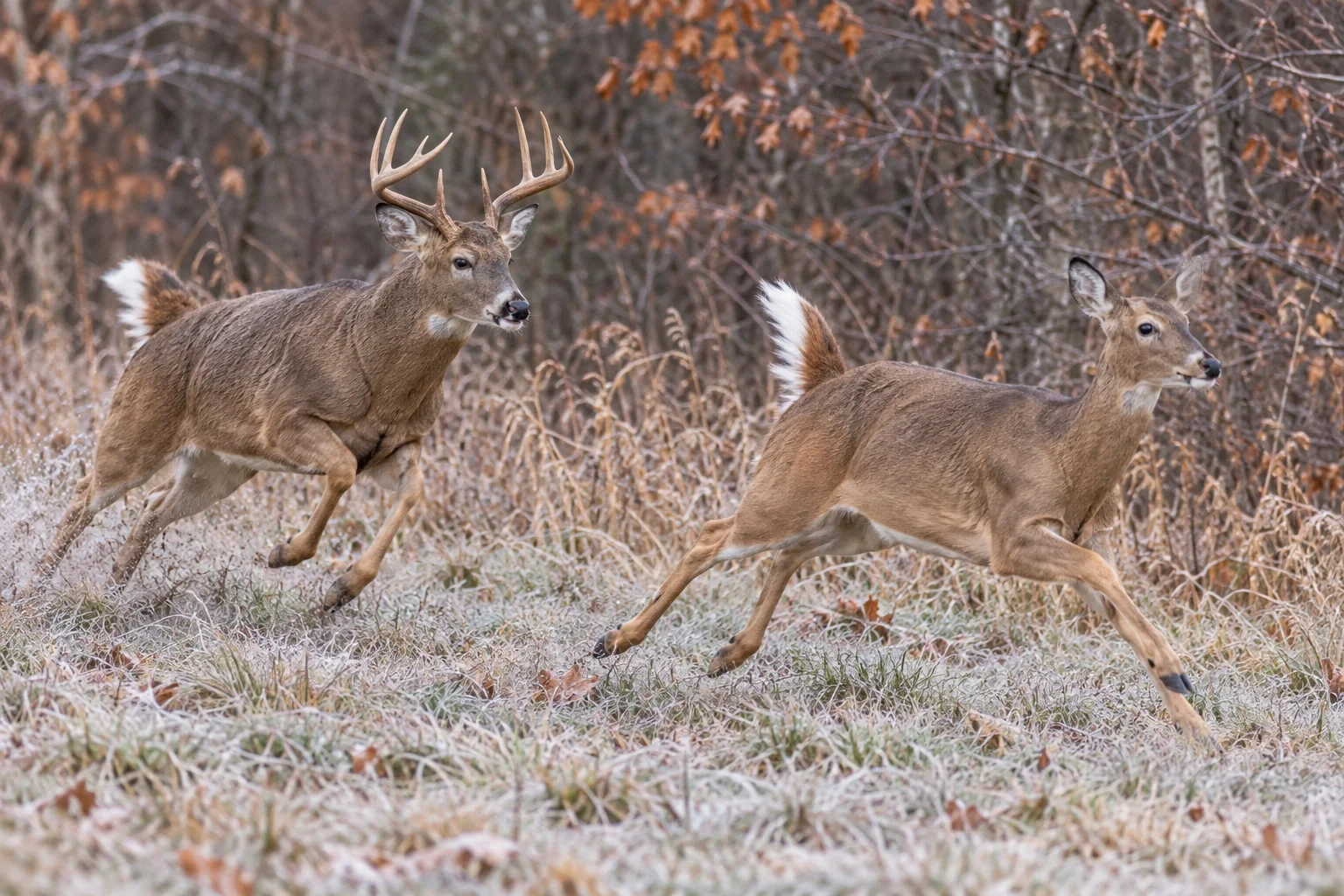
- Chasing: blurry photos of does running with a buck right behind them.
- Swollen necks and dark tarsal glands: mature bucks look thick in the neck, and the glands on their back legs turn dark.
- Fewer buck photos for a few days: often lockdown, when bucks stay with one doe in thick cover.
When these signs show up, it is time to move cameras. Our trail camera strategy for the rut shows where to put them in each phase.
How Long Does the Rut Last?
From the first seeking to the end of the post-rut, rut activity usually lasts about 6 to 8 weeks in any one area. The main breeding peak is shorter, about 2 to 3 weeks. Here is how it usually goes:
- Pre-rut / seeking (1–2 weeks): bucks make scrapes, rub trees and start cruising for the first does in heat.
- Chasing (about 1 week): bucks push does hard. Lots of daylight movement.
- Peak breeding / lockdown (1–2 weeks): most does are bred. Bucks move less while they stay with one doe.
- Post-rut (2–3 weeks): tired bucks go back to food and bed a lot.
- Second rut (about 28 days after the peak): does that were not bred, and some doe fawns, come into heat again. Activity is smaller but real.
How to Hunt Each Phase of the Rut
- Pre-rut: hunt near scrapes and rub lines between bedding and food in the evening. This is the best time for calling and rattling.
- Chasing: sit all day if you can, near doe bedding areas and funnels. Mature bucks can show up at any hour.
- Lockdown: hunt the edges of thick cover where bucks hold does, or be patient. A buck may show up when he leaves one doe to find the next.
- Post-rut: go back to the best food, especially in cold weather. Afternoon hunts on food plots and crops are strong.
Not sure your season is open yet? Check our guide on when deer hunting season is, and for the bigger picture, read the best time to go deer hunting.
Frequently Asked Questions
When do deer go into rut in 2026?
In most northern and Midwestern states, the rut starts in late October and peaks around November 5–20, 2026. The Northeast peaks in mid-November. Southern states range from October to January, and South Texas peaks from mid-December to early January.
What triggers the deer rut?
Shorter days. As daylight drops in the fall, hormone changes raise testosterone in bucks and bring does into heat. Weather and moon phase can change how much deer move, but not when breeding happens.
How long does the deer rut last?
Rut activity usually lasts about 6 to 8 weeks in one area, with a 2 to 3 week peak of breeding. A smaller second rut happens about 28 days after the peak.
When is the rut in Texas?
It depends on the region. The Panhandle and Hill Country usually peak in November. South Texas peaks later, usually from mid-December into early January.
Does the moon affect the rut?
Studies of breeding dates have found that the moon does not shift when the rut happens. It may affect when deer move during the day, but local rut timing stays about the same every year.