
Mountain Lion on Trail Camera: What It Means and What to Do Next
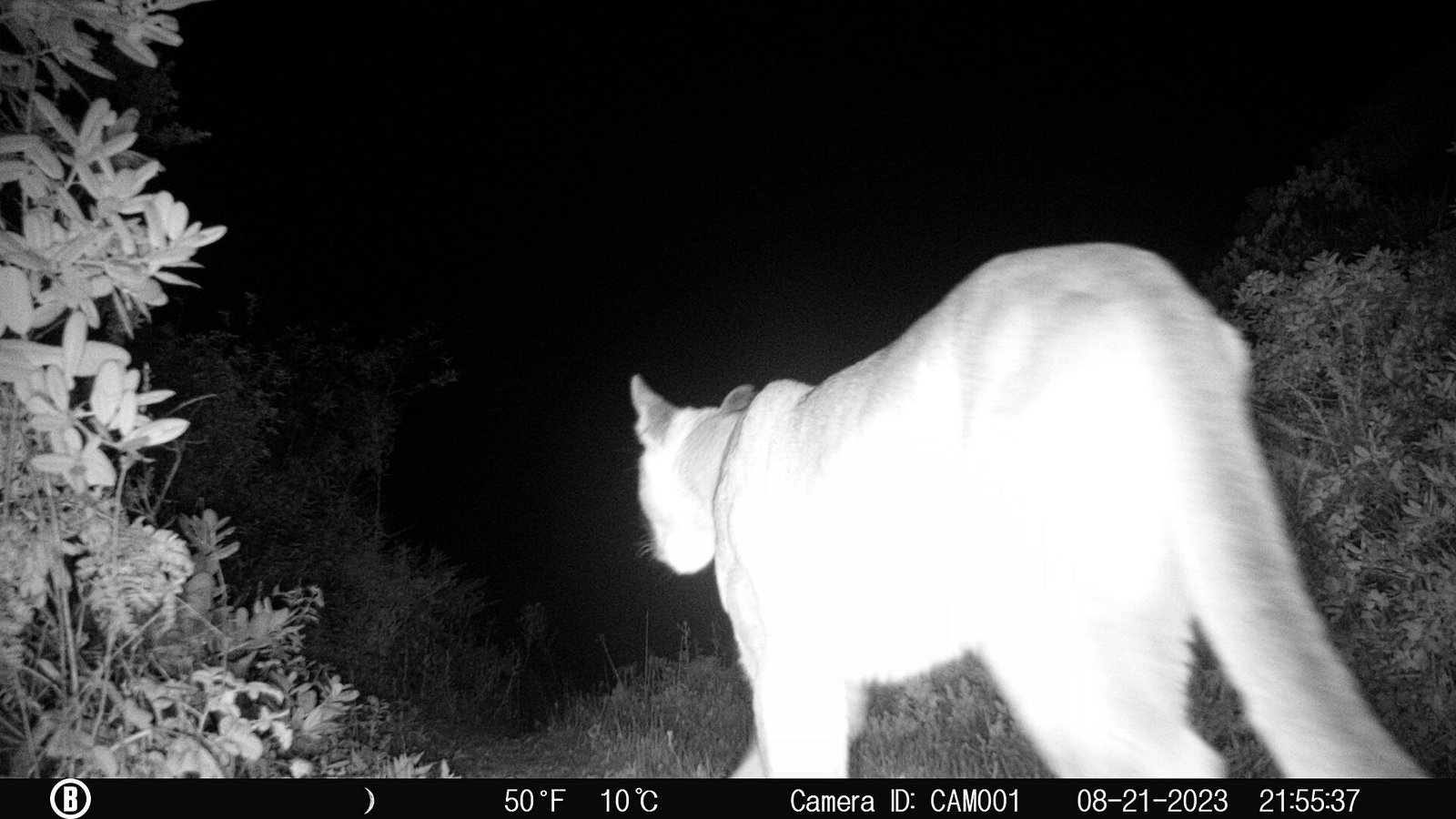
You scroll through a night of trail camera photos expecting deer, raccoons, maybe a coyote. Then a long, low shape slides across the frame, with a tail almost as long as its body. Your heart rate jumps. Was that really a mountain lion?
Mountain lions, also called cougars, pumas, or panthers, are among the most secretive large animals in North America. Many people live near them for years without ever seeing one. A trail camera changes that, because it watches all night when these cats are most active. This guide explains how to confirm what you caught, what it means for you, who to tell, and how to set up your cameras for better cougar photos.
Quick answer: A mountain lion on your trail camera usually means a cat is passing through or using the area as part of a large home range. Confirm the ID, save the original file with the date and time, and report it to your state wildlife agency, especially if you are outside known cougar range or the cat appears repeatedly near homes or livestock.
Why Trail Cameras Catch So Many Mountain Lions Now
Sightings have climbed in many places, and much of that rise comes from better watching rather than more lions. A Tucson report on Arizona Game and Fish noted that the agency gets dozens of lion reports a year, and that photos and video from the public now make many of those reports far easier to verify. The city of Mission Viejo, California made a similar point: motion-triggered home cameras have pushed sightings up in an area where lions have always lived.
Trail cameras also reach places where people rarely go. In the Midwest and East, where confirmed cougars are rare, a single trail camera photo can become official news. In Illinois, for example, a landowner’s trail camera image of a cougar in Pike County was reported as just the 11th confirmed sighting in the state since 2002.
How to Tell If It Is Really a Mountain Lion
Night photos are blurry, and plenty of “cougars” turn out to be house cats, bobcats, or even dogs. Check these features before you share the photo:
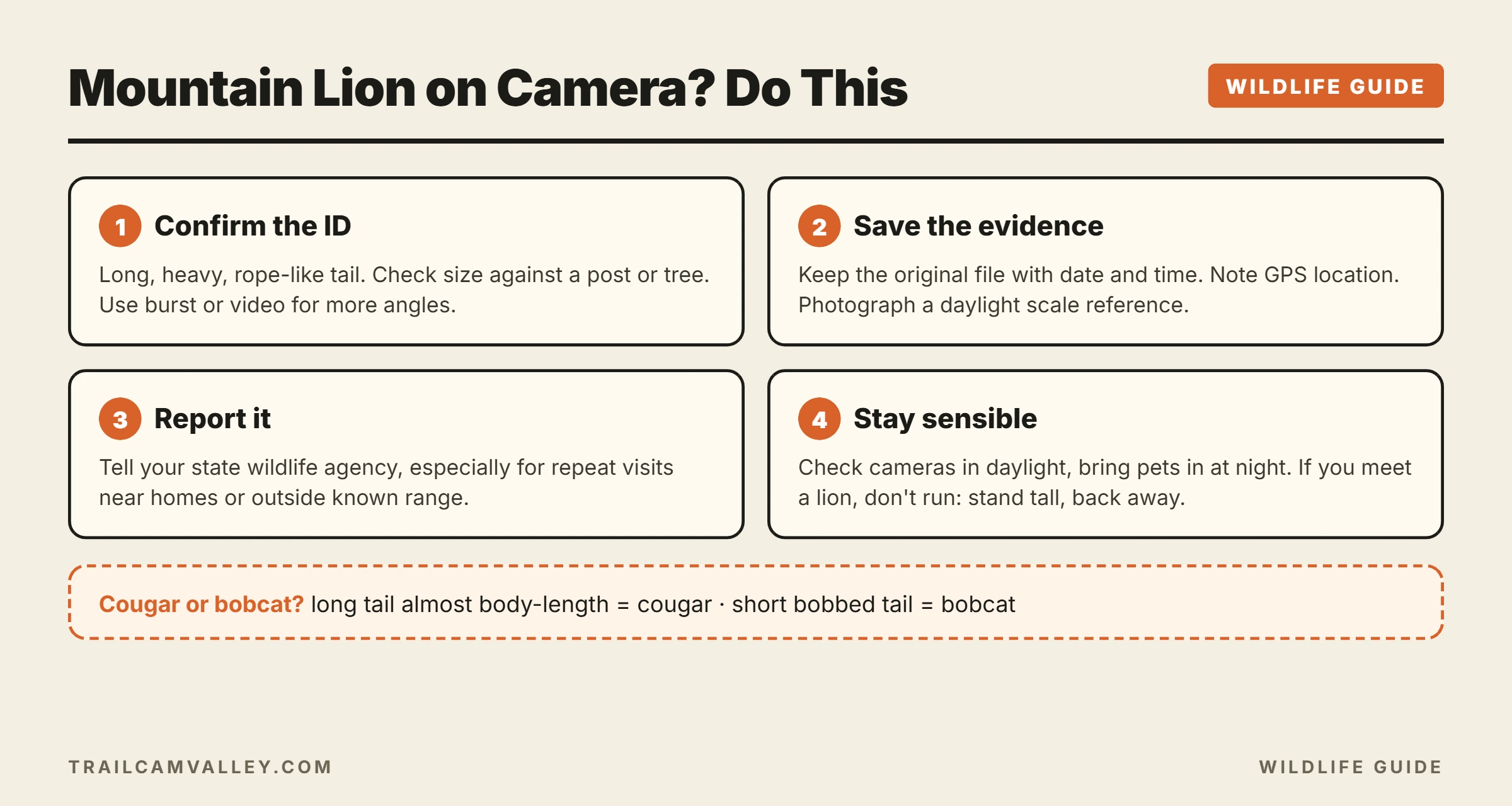
- The tail: a mountain lion’s tail is long, thick, and rope-like, often hanging low with a curve at the dark tip. Bobcats have a short, bobbed tail. This is the single best clue.
- Size against landmarks: compare the animal with a tree, fence post, or feeder you can measure later. An adult cougar is far larger than a bobcat or house cat.
- Body shape: long, low, and muscular, with a small head relative to the body.
- Color: tawny to gray-brown and fairly uniform, unlike a bobcat’s spots. On infrared night photos, color disappears, so rely on shape and tail.
- Several frames: burst mode or video gives you more angles and makes ID far easier.
Not sure? See our guide to bobcats on trail cameras, the most common look-alike.
What a Mountain Lion on Camera Usually Means
In most cases, nothing alarming. Mountain lions cover huge areas and are often just moving through. Utah wildlife officials, quoted by KSL, say one-time sightings typically involve a cat traveling through, and that the animal has often left before biologists or officers could respond. In Tucson, Arizona Game and Fish described lion sightings in the Foothills as routine and said most do not require management action.
Lions follow their food. Deer are their main prey, so where you have deer, you may eventually have a lion. Wildlife officials in California have noted that lush spring grass draws deer, and deer draw lions.
Pay closer attention if you see:
- The same cat on camera repeatedly near homes, barns, or play areas
- A lion photographed in daylight close to people or pets
- Signs of livestock or pet losses
- A cougar in a state where they are not known to live
Should You Report It?
Usually, yes. Wildlife agencies use public photos to track where lions are and whether a particular cat poses a risk. KSL notes that Utah asks people to report cougars that act aggressively or show up repeatedly on security cameras. In states outside established lion range, agencies are especially interested, because some sightings turn out to be escaped captive animals or long-distance dispersers.
When you report:
- Keep the original file. Do not crop or filter it. The original holds the date, time, and sometimes temperature and moon data.
- Note the exact location, ideally GPS coordinates. Many cellular cameras record GPS. See how to view trail camera photos on a computer to pull the original files.
- Photograph a scale reference at the same spot in daylight, such as a person standing where the cat walked.
- Contact your state wildlife agency through its website or regional office.
Staying Safe When You Check Cameras
Attacks on people are very rare, but a little caution is sensible when you know a lion is using an area. Utah wildlife officials recommend not hiking or jogging alone in lion country. General guidance from wildlife agencies is consistent:
- Check cameras in daylight, not at dusk or dawn.
- Bring a partner if a cat is showing up regularly.
- Keep kids close and pets leashed.
- If you meet a lion, do not run. Face it, make yourself look big, speak firmly, and back away slowly. If attacked, fight back.
A cellular camera can also reduce how often you walk into the site at all. See how cellular trail cameras work.
How to Get Better Mountain Lion Photos
If you would like clearer cougar photos, set your cameras the way wildlife researchers do:
- Watch travel routes, not bait. Lions use ridgelines, saddles, creek bottoms, canyon trails, and old roads. These natural funnels beat a corn pile.
- Look for sign. Scrapes (piles of scratched-up leaves and dirt), tracks with no claw marks, and cached kills covered with debris all show where cats travel.
- Use video or burst mode. A three-shot burst or 10-second clip captures the tail and body shape. See trail camera modes explained.
- Choose no-glow infrared for less disturbance, and a fast trigger. Read how a trail camera works at night.
- Aim along the trail, not across it. A slight angle gives the camera more time to fire. Our aiming guide explains why.
- Be patient. A single lion may pass a given spot only every few weeks.
Protecting Pets and Livestock
If a lion is using your property, the main risk is usually to small livestock and pets left out at night. Bring pets in after dark, use secure night pens for goats and sheep, and remove outdoor pet food. Deer feeders near the house can draw deer, and deer can draw lions. A camera on your barn or pen is a good early-warning system. See our guide on using a trail camera for security.
Quick Facts
- Trail and home security cameras have driven a rise in verified mountain lion sightings (Arizona Game and Fish via Tucson.com; City of Mission Viejo).
- One-time sightings usually involve a lion passing through (Utah Division of Wildlife Resources via KSL).
- Most lion sightings near Tucson do not need management action (AZGFD via KGUN).
- A long, heavy tail is the clearest sign a cat is a cougar rather than a bobcat.
- Deer are the main prey of mountain lions, so deer-rich areas attract them.
Frequently Asked Questions
Are mountain lions dangerous to people?
Attacks are very rare. Most lions avoid people. Use normal precautions in lion country and report any cat that acts boldly.
Do mountain lions avoid trail cameras?
Some notice the camera, but many walk past without reacting. No-glow cameras are least likely to draw attention.
Can a mountain lion damage a trail camera?
It is uncommon. Bears are far more likely to chew or knock down cameras. See our guide to black bears on trail cameras.
What time of day do mountain lions show up on cameras?
Mostly at night and around dawn and dusk, when deer are moving.
Is it legal to bait mountain lions for photos?
Rules vary by state, and baiting predators can create problems for the animal and for neighbors. Check your state’s regulations, and favor travel routes over bait.
Who do I report a mountain lion sighting to?
Your state wildlife or natural resources agency. Many have online reporting forms.
Final Thoughts
A mountain lion on your trail camera is a rare look at one of North America’s most elusive animals. Most of the time it simply means a cat is passing through. Confirm the ID, keep the original file, report it to your wildlife agency, and take sensible precautions with pets and livestock. And if you want more cougar photos, set your cameras along the natural travel routes these big cats already use.