
Black Bear on Trail Camera: Placement Tips and How to Bear-Proof Your Camera
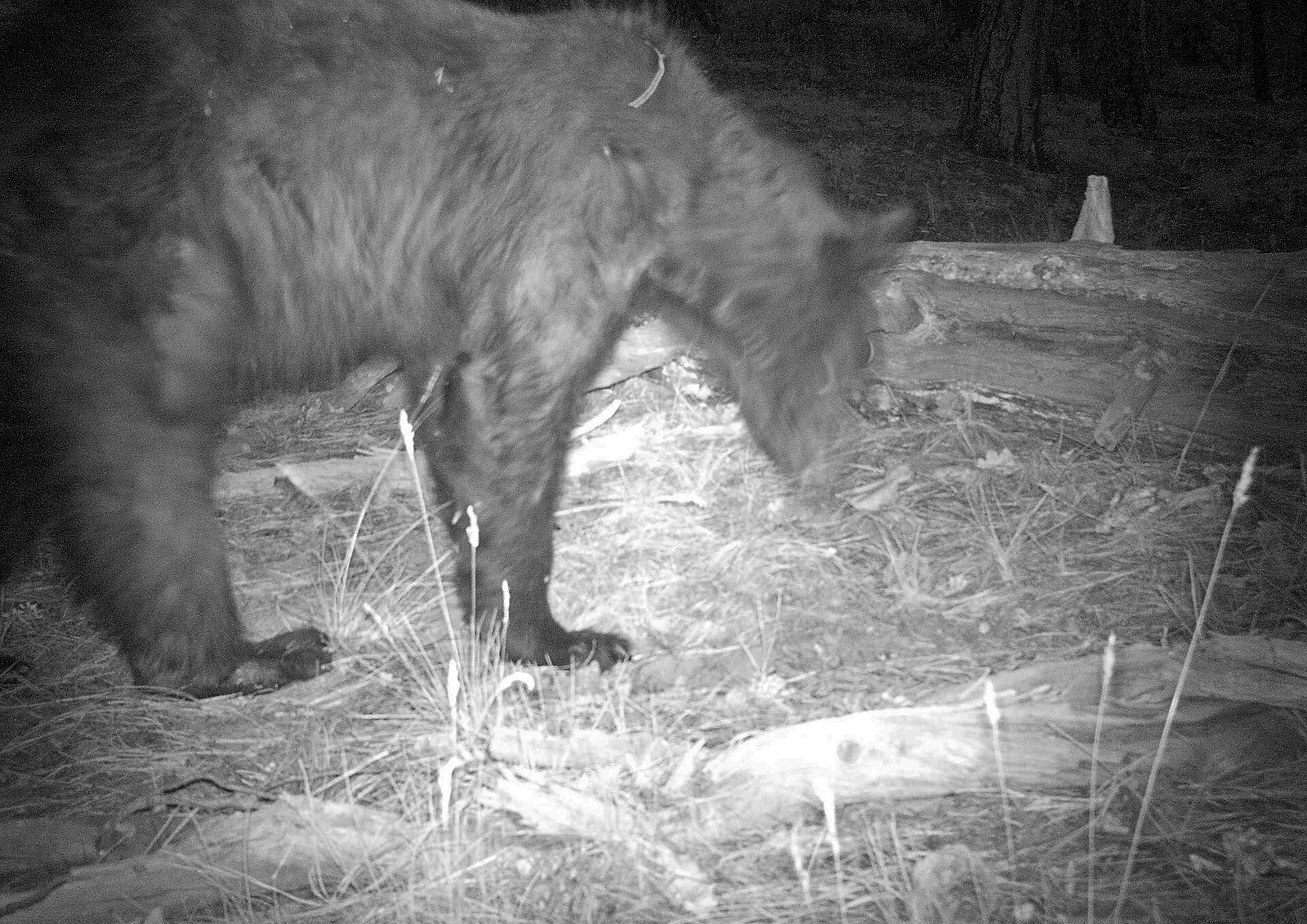
Anyone who runs trail cameras in bear country has a story. The camera was fine on Monday. By Friday it was face-down in the leaves, strap chewed, lens scratched, antenna gone. Sometimes the last photo is a close-up of a black nose filling the whole frame.
Black bears are fascinating to watch on camera, and for bear hunters, trail cameras are close to essential. But bears are also the single biggest threat to your camera. This guide covers why bears go after trail cameras, how to protect yours, and how to place cameras for clear, useful bear photos.
Quick answer: To get good black bear photos without losing your camera, mount it higher than usual and angle it down, put it in a steel security box, keep it free of food and human scent, and place it on travel routes or a legal bait site at a safe distance.
Why Do Bears Attack Trail Cameras?
Nobody knows for certain, but the leading explanations come down to curiosity and smell. GardePro’s bear-proofing guide points to a bear’s extremely sensitive nose, along with small cues such as faint clicks, internal noises, or a dim infrared glow that can draw a bear in for a closer look. A trail camera company owner quoted by the Bradford Era guessed curiosity, and the same article notes that some hunters believe cellular antennas attract extra attention.
The behavior can be persistent. Researchers with the Voyageurs Wolf Project in Minnesota recorded a mother black bear and her cubs attacking cameras at the same site on five separate occasions, according to Mahoning Matters.
Common damage includes:
- Bitten or torn straps, with the camera dragged away
- Chewed or snapped antennas on cellular models
- Scratched lenses and sensor windows
- Cracked housings and broken latches
- Slobber and residue that blurs photos
How to Bear-Proof a Trail Camera
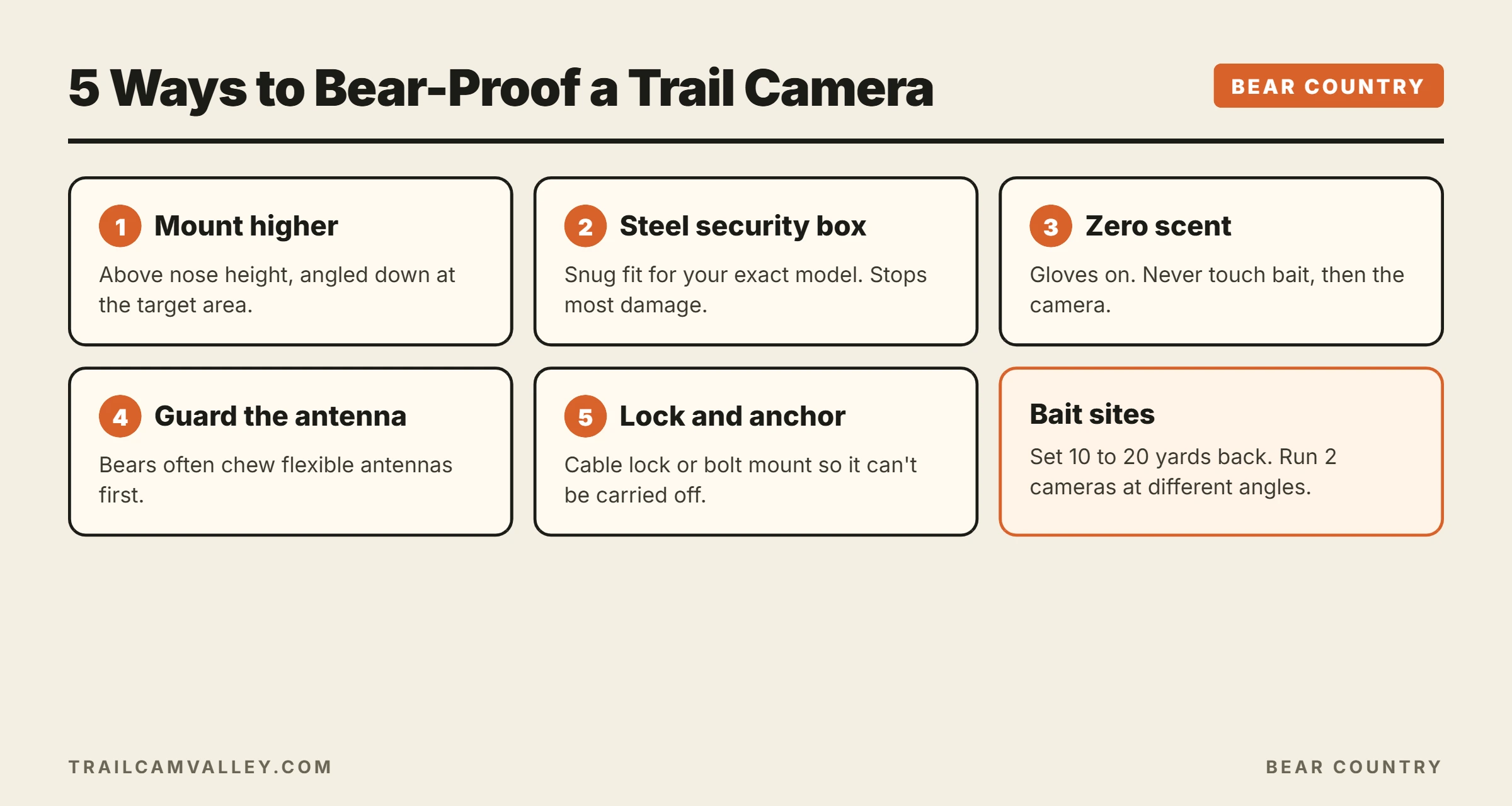
1. Mount it higher
GardePro calls normal deer height one of the biggest mistakes in bear territory, because a camera at four to five feet is easy for a curious bear to inspect. Mount it higher, angle it down toward the target area, and test the angle before you leave. A bear can still climb, but you remove the easy nose-level target. Our trail camera height guide explains how angle affects detection.
2. Use a steel security box
A metal box is the most reliable protection. Bear hunters quoted by Outdoor Canada say they buy security boxes for every camera because bears destroy unprotected ones. Boxes are not perfect, though. The Bradford Era notes that bears sometimes still reach in with their claws. Pick a snug box that matches your exact model. See our trail camera security box guide.
3. Control scent
- Handle cameras with clean gloves.
- Never touch bait and then the camera.
- Wipe the housing before deployment.
- Don’t store cameras with food, snacks, or bait in your truck or pack.
4. Protect the antenna
Flexible antennas are often the first part bears target. A camera with an internal antenna, or a box that covers the antenna, helps.
5. Lock and anchor it
Use a cable lock or a bolt-through mount so the camera cannot be carried off. Check local rules before bolting into trees on public land. See how to lock a trail camera.
Where to Place Cameras for Black Bears
Bears follow food. Their menu changes with the season, so camera spots should too.
| Season | Where bears feed | Camera spots |
|---|---|---|
| Spring | New green growth, carrion, legal bait sites | South-facing slopes, swamp edges, bait sites |
| Summer | Berries, insects, wetlands | Berry patches, creeks, wallows |
| Fall | Acorns, beechnuts, crops | Oak flats, field edges, corn |
Also look for travel corridors: creek bottoms, logging roads, and trails with fresh scat, torn-up logs, or claw-marked trees.
Trail Cameras at Bear Bait Sites
Where baiting is legal, cameras are one of the most useful tools you can have. Muley Freak’s bear baiting guide recommends at least two cameras at different angles to learn which direction bears approach from, and notes that cameras help you get to know individual bears and judge sex and maturity.
Tips for bait-site cameras:
- Keep the camera back from the bait. 10 to 20 yards gives a full-body view and less temptation.
- Use a second camera on the approach trail to see where bears come from and when.
- Use video or burst mode to compare body size against a fixed object like a barrel.
- Use cellular cameras to check activity without walking in. Wide Open Spaces describes a boar that hit the same bait daily about an hour before dark, exactly the kind of pattern a camera reveals.
- Know the law. Baiting rules, permits, and allowed bait types vary widely by state and province.
Best Camera Settings for Bears
- Video clips of 10 to 20 seconds show behavior and size better than a single photo.
- No-glow infrared is less likely to draw attention at night. Read can animals see trail camera flash.
- Moderate sensitivity. Bears are big and easy to detect; high sensitivity mostly adds false triggers.
- Time-lapse on a large field can show bears feeding beyond detection range. See what time-lapse does on a trail camera.
Judging a Bear From Photos
Bear hunters use cameras to estimate size before the hunt. Common clues include ears that look small and wide-set on the head, a deep belly that sits close to the ground, and a large bear dwarfing a bait barrel. Photos can fool you, so compare against fixed objects and use multiple angles.
What to Do If a Bear Damages Your Camera
Even with every precaution, a bear may eventually get to a camera. Before you write it off, bring it home and test it. Wipe the lens and sensor window with a soft cloth and a little isopropyl alcohol, check the battery tray and SD card slot for bent contacts, and look for cracks around the door seal that could let water in. Many cameras that look chewed still work. If the camera is cellular, check the antenna connection first, since that is often the only part that failed.
Then look at your photos to learn what happened. If the bear came in from the bait side, move the camera farther back or to a different angle. If it came straight to the camera, raise it, box it, or move it to a smaller tree. Repeated visits from the same bear are a sign to change something rather than replace the camera in the same spot.
Quick Facts
- Bears’ strong sense of smell and curiosity about clicks or IR glow likely draw them to cameras (GardePro).
- Minnesota researchers recorded a bear family attacking cameras at one site five times (Voyageurs Wolf Project via Mahoning Matters).
- Cameras at normal deer height are easy targets for bears (GardePro).
- Bait-site hunters often use security boxes on every camera (Outdoor Canada).
- At least two cameras per bait site help show approach direction (Muley Freak).
Frequently Asked Questions
Do bears hate the infrared light?
Not clearly. Bears damage cameras in daylight too, which suggests curiosity and scent matter more than the flash.
Do cellular cameras attract more bears?
Some hunters think the antenna draws extra attention. Protecting or concealing the antenna is a smart move either way.
Will a security box stop a bear?
A good steel box stops most damage, but determined bears can still scratch through gaps. Pair it with height and scent control.
How far should a camera be from bear bait?
Around 10 to 20 yards is a common choice for full-body photos without inviting the bear to the camera.
Can a bear carry off a trail camera?
Yes. Bears sometimes carry cameras a long way. A cable lock or bolted mount helps.
Do bears show up at deer feeders?
Often. A bear on your deer feeder camera is common in bear country. See how to get big bucks on trail camera for feeder and camera tips.
Final Thoughts
Black bears make some of the most entertaining trail camera footage you will ever capture, and some of the most expensive. Mount high, box the camera, keep it clean of scent, and set it back from bait. Do that and you will spend your time watching bears instead of replacing cameras.