
Do Trail Cameras Make Noise? (Click Sounds and Spooking)
Stand right next to some trail cameras at dusk and you may hear a soft click. Then you look through your photos and see a deer staring right at the lens. It is natural to wonder: do trail cameras make noise, can deer hear it, and is it spooking the deer you are trying to watch? Here is what makes the sound, how much it really matters, and how to keep your cameras as quiet as possible.
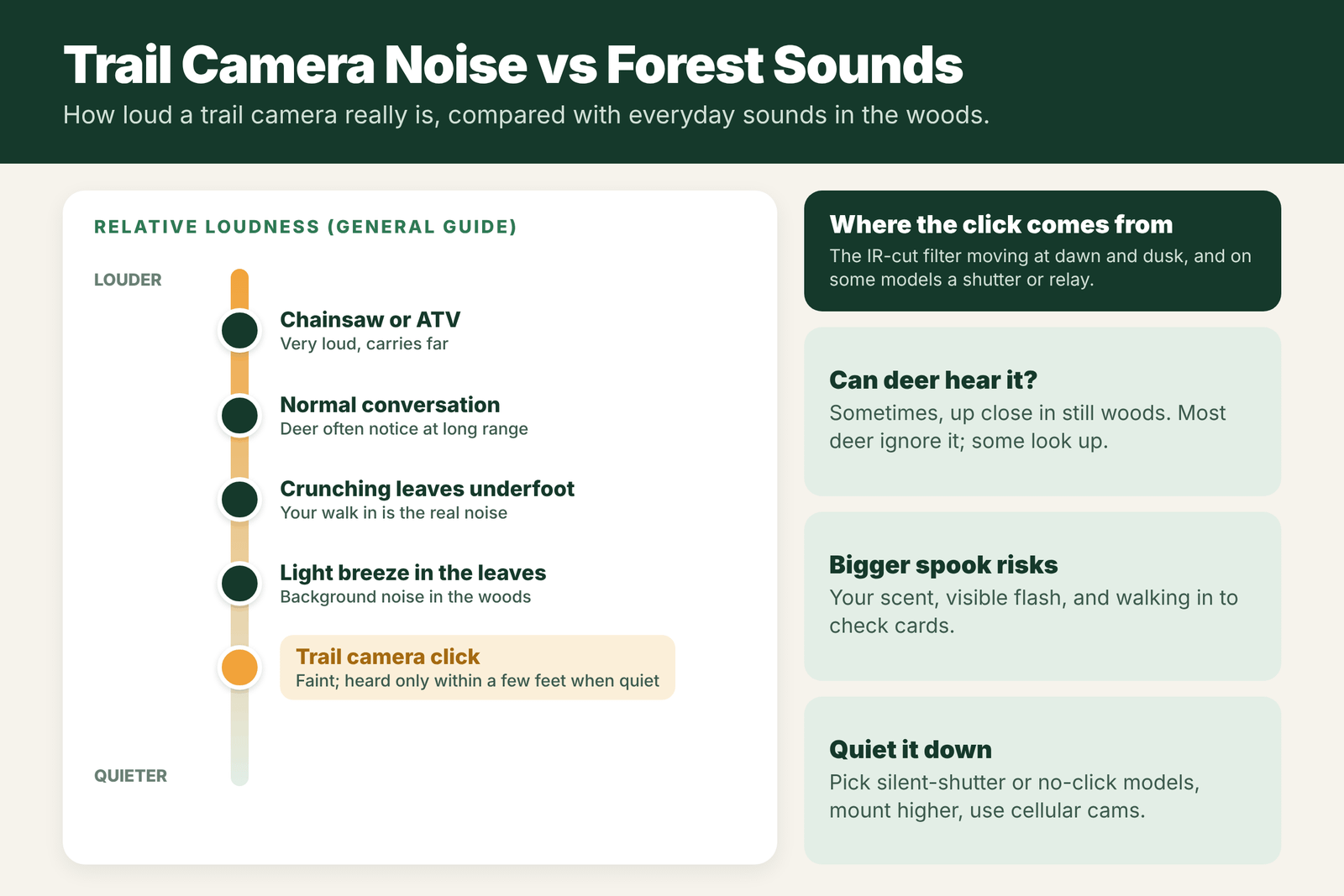
Yes, many trail cameras make a small click, mostly from the IR-cut filter moving when the camera switches between day and night modes, and on some models from a shutter or relay when a photo is taken. The sound is faint and short, and usually can only be heard within a few feet in quiet woods. Deer have sharp hearing and some may look up at the sound, but most ignore it. Your scent, a visible flash, and walking in to check cameras are much bigger spooking risks than camera noise.
- Main noise
- IR-cut filter click
- When
- Day/night switch, sometimes each photo
- How loud
- Faint, short, close range
- Deer reaction
- Most ignore it, some look
- Bigger risks
- Scent, flash, your visits
- Quietest option
- Models sold as silent or no-click
Sources of Trail Camera Noise
- IR-cut filter: a small filter slides in front of the sensor during the day to block infrared light and give true colors, and slides out at night so the camera can use its IR flash. The movement makes a click. On many cameras it happens when light levels change at dawn and dusk; on some, it may also happen around night triggers.
- Mechanical shutter or relay: a few models have parts that click with each photo.
- Electronic hum: some cameras give off a very faint high-pitched sound when the IR LEDs or electronics power up. People usually cannot hear it, and it is not clear how much deer notice it.
- Strap or mount noise: a loose camera can tap against the tree in the wind.
Can Deer Hear It?
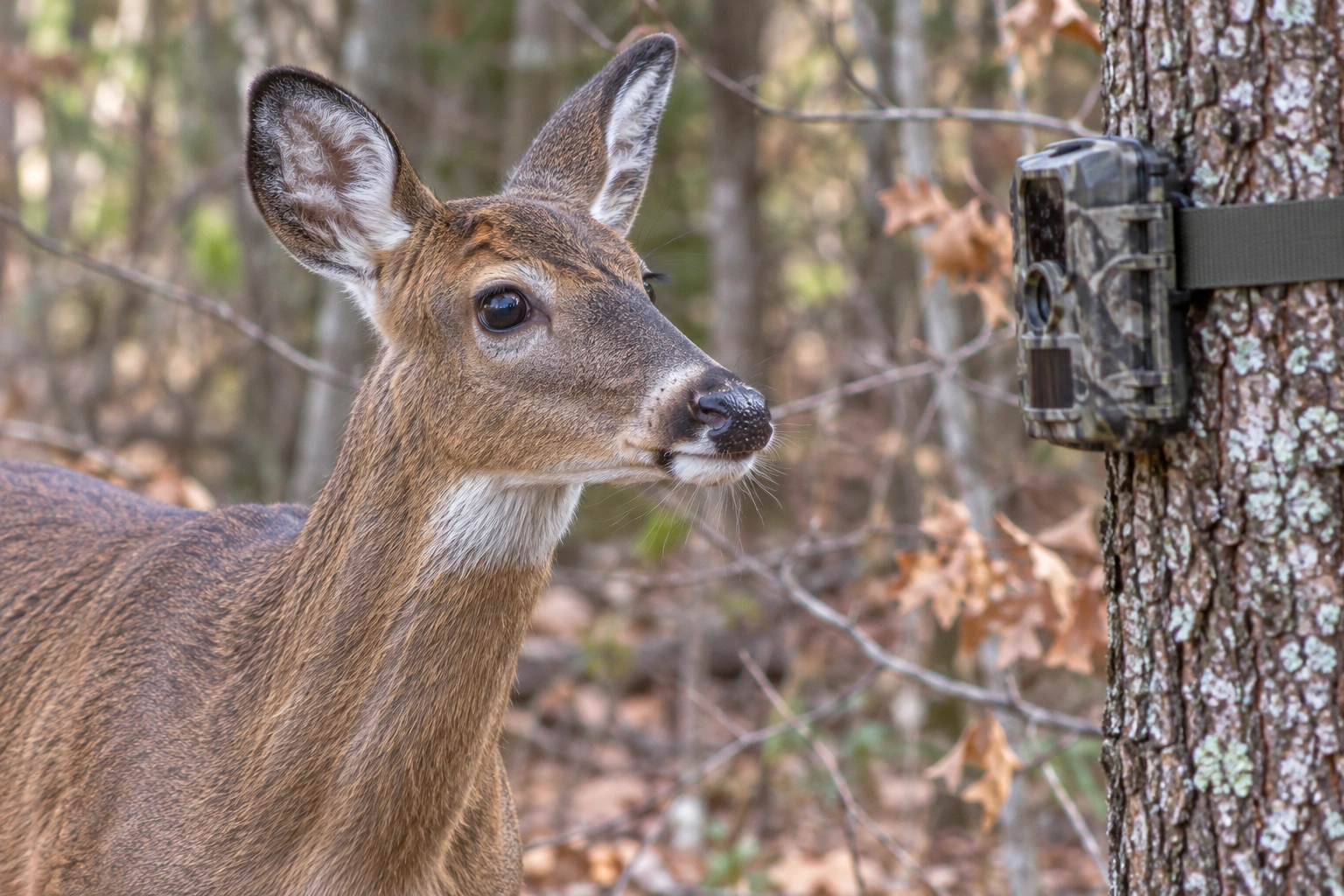
Deer have excellent hearing, better than ours at higher pitches, and they can turn their ears to pinpoint a sound. So yes, a deer standing a few feet from a camera in still, quiet woods may hear a click. What hunters usually see on their photos:
- Many deer show no reaction at all.
- Some look at the camera, especially on the first night it is up, or when a flash or click catches their attention.
- A few, often older does and mature bucks, may stare, stomp, or leave, but this is usually linked to a visible flash or human scent rather than sound alone.
- Most deer get used to a camera after a few days if nothing bad happens there.
Read more in do trail cameras scare deer and can deer see a trail camera flash.
Quiet Camera Features
- Silent or no-click operation: some brands advertise silent IR-cut filters or no mechanical noise.
- No-glow (black) IR flash: no visible glow, so there is nothing to see when the camera fires.
- Fast, quiet triggering: fewer delays and fewer moving parts mean less chance of a noticeable sound.
- Cellular cameras: not quieter in themselves, but you do not have to walk in to check them, which removes the biggest disturbance.
What Hunters See on Camera
Hunters who test cameras in their own woods often report the same pattern. The first night or two, some deer look at a new camera. After that, most walk past without a glance. The deer that stay nervous tend to be at sites that get a lot of human visits, or where the camera is at eye level with a visible flash. If you see deer staring at your camera in photo after photo, look first at scent and flash, then at camera height and placement, before blaming noise.
Reducing Spooking
- Control your scent. Wear rubber boots and gloves when setting and checking cameras. See do deer not like trail cameras.
- Mount higher and angle down. A camera 6 to 8 feet up is outside a deer’s line of sight and farther from its ears.
- Use no-glow IR for wary deer and pressured areas.
- Strap it tight so it does not tap or creak in the wind.
- Check cameras less often, at mid-day, with the wind in your favor, or switch to cellular.
- Hide the camera against the trunk and behind a little cover, without blocking the sensor.
Camera Sounds and How Deer React
| Sound | When it happens | How loud | Typical deer reaction |
|---|---|---|---|
| IR-cut filter click | Switching between day and night modes | Faint click, a few feet | Most ignore; some look up at dusk |
| Shutter or relay click | Some models, when taking a photo | Very faint | Rarely noticed |
| High-pitched electronic whine | Some cameras while the flash charges or records | Faint; some animals may hear it | Some deer stare at the camera |
| Button beeps or startup sound | Setup or when you turn it on | Can be loud | Turn off before you leave |
| Strap, box or bracket rattle | Wind moving a loose camera | Varies | Can draw attention; tighten the mount |
Deer hear higher frequencies than people. Some sounds you cannot hear may be audible to them, but there is little solid research on exactly what deer hear from trail cameras.
Step-by-Step: Testing Your Camera for Noise
- Set the camera up indoors in a quiet room at night.
- Turn off button beeps and any sound settings in the menu.
- Trigger it by walking past and listen from 2 to 3 feet away.
- Cover the light sensor with your hand to force a day-night switch and listen for the click.
- Record a test video with sound on, and play it back loud to hear anything the camera picks up from itself.
Reading Deer Reactions on Camera
- A quick glance, then feeding: the deer noticed something but is not worried. Normal.
- A long stare, ears forward: the deer heard or saw the camera. Try a higher mount and a no-glow model.
- A snort or a fast exit: often scent or the flash, not just sound. See why do deer snort.
- The same deer avoiding the spot: repeated reactions suggest the camera or your visits are the problem.
Field Examples
The staring doe: a camera at 3 feet on a trail shows a doe staring right into the lens on almost every night photo. Moving the camera to 6 feet and angling it down changes everything. Deer pass without looking up, because the camera is no longer at their eye level.
The rattling box: a camera in a loose security box shows deer jumping in windy weather. Adding foam padding inside the box and tightening the strap ends the rattle and the reactions.
The mature buck that vanished: a buck shows up twice, staring at the camera, then never returns in daylight. The camera has a visible red glow, sits at head height and was checked every three days. Switching to a no-glow camera, mounting it higher and checking it every two weeks brings him back on camera within a month.
Mistakes That Make Cameras More Noticeable
- Leaving beeps on. Turn off any startup or button sounds before deploying.
- Mounting at deer eye level. Movement, glow and faint sounds right at eye level draw attention.
- Loose straps and brackets that creak or rattle in the wind.
- Checking cameras too often, which leaves scent and teaches deer the spot is busy.
- Using a camera with a bright glow on pressured bucks.
Should You Worry About Camera Noise?
For most hunters, no. Scent and visits spook deer far more than faint clicks. Mature bucks in pressured areas are the exception. If you hunt a specific older buck, small details add up: a no-glow camera, a high mount, a tight strap, gloves and few visits. Together, those steps make your camera close to invisible to him.
Sound, Sight or Smell: What Really Spooks Deer
When a deer reacts to a trail camera, it is easy to blame the click. In practice, three things matter far more. The first is scent. Your hands, boots and breath leave odor on the camera, the strap and the ground, and deer trust their nose above everything. The second is sight: a visible red glow at night, a shiny strap, or a camera at eye level on a bare trunk. The third is pressure, meaning how often people visit. A camera checked every few days becomes a place where deer smell people over and over. Sound is usually a distant fourth. That is why the fixes that work best are wearing gloves, using a no-glow camera, mounting higher with an angle down, and checking less often, ideally with a cellular camera near bedding areas. See do trail cameras scare deer.
Quick Checklist for a Quiet, Low-Impact Camera
- Beeps and startup sounds turned off
- Mount tight, no rattle in wind
- No-glow or low-glow flash, set above eye level
- Handled with gloves, no food smell
- Visited every one to two weeks, at midday
Frequently Asked Questions
Do trail cameras make noise?
Many make a faint click, mostly from the IR-cut filter switching between day and night modes. Some models also click when they take a photo.
Can deer hear trail cameras?
Deer can hear a camera click when they are close in quiet woods. Some look up, but most ignore it, and they usually get used to it within a few days.
Why does my trail camera click at night?
The click is usually the IR-cut filter moving so the camera can use its infrared flash. It may also be a relay or shutter on some models.
Do trail cameras scare deer?
Usually not much. Human scent, a visible flash and frequent visits to check the camera are far bigger spooking risks than the camera’s sound.
Are there silent trail cameras?
Yes. Some brands sell models with silent or no-click operation. Combined with a no-glow flash, they are the least noticeable option.
Can deer hear a trail camera from far away?
Probably not from far. Most camera sounds are faint and only carry a few feet, though deer hear higher frequencies than we do.
How do I make my trail camera quieter?
Turn off beeps, tighten the mount, pad any security box, and choose a model known for quiet operation.
Why do deer stare at my trail camera?
Often because it sits at eye level and shows a glow or makes a faint sound. Mount it higher and use a no-glow model.