
Why Do Deer Snort? What That Blowing Sound Means
You are sitting still in your stand, the woods are quiet, and suddenly a loud whoosh cuts through the air. Then another, maybe with a stomp of a hoof, and the white tails are gone. If you have hunted deer for more than a few days, you have been “blown at.” So why do deer snort, what are they telling other deer, and did you just ruin your hunt?
Deer snort, or “blow,” as an alarm call. When a deer sees, smells or hears something that might be a threat, it forces air hard through its nose to make a loud whoosh. The snort warns other deer, and it can also be a way to get the threat to move so the deer can figure out what it is. A snort does not always ruin a hunt. A deer that only heard or saw something often calms down and may come back. A deer that smelled you usually leaves and avoids that spot for a while.
- What it is
- A loud burst of air through the nose
- Why
- Alarm and warning to other deer
- Often with
- Foot stomp, head bob, raised tail
- Main trigger
- Human scent, then movement and noise
- Not the same as
- Snort-wheeze, a buck’s rut challenge
- Best response
- Freeze and stay still
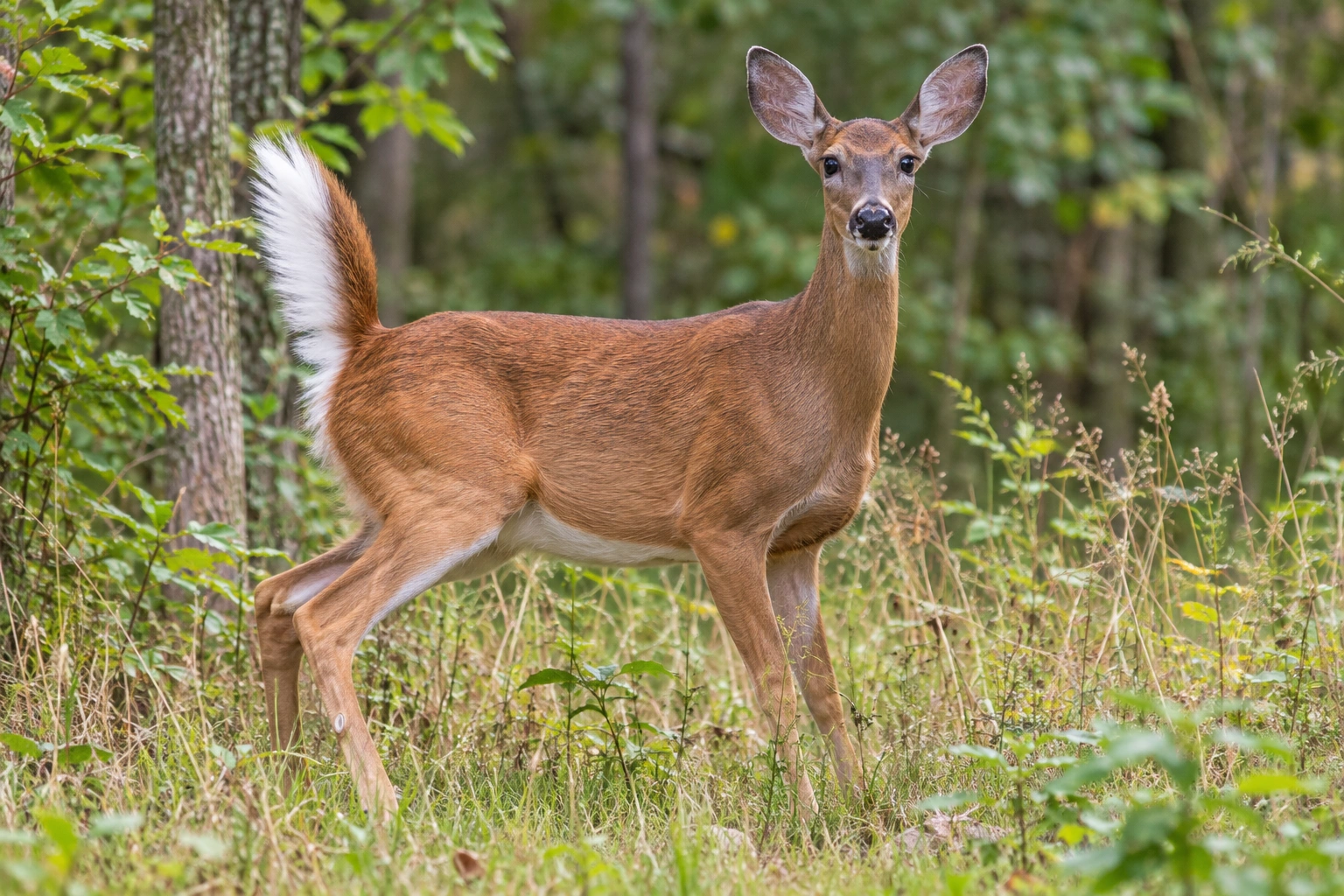
What Does a Deer Snort Sound Like?
A deer snort, also called a blow, is a sharp, loud rush of air through the nose. Some hunters describe it as a “whoosh,” others as a “bark” or a sneeze-like blast. It is surprisingly loud and can carry a few hundred yards on a calm day.
A deer often snorts several times in a row. The snorts may come with:
- Foot stomping: a hard stomp with a front hoof, which also leaves scent from the glands between the toes.
- Head bobbing: the deer drops its head as if to feed, then snaps it back up to catch movement.
- A raised, flared tail (flagging), and stiff, slow steps.
Why Do Deer Snort?
The snort is mainly an alarm signal. There are a few reasons a deer uses it:
- To warn other deer. Deer often live in family groups. A loud snort tells every deer nearby that something is wrong.
- To make the threat move. If a deer is not sure what it sees, a snort and stomp can make a predator or a person flinch or shift, which helps the deer decide whether to run.
- To clear its nose. A strong blow may help the deer clear its nose and take in a fresh, clean breath of scent.
What sets it off? Most often it is human scent. Deer have an amazing sense of smell, and a swirling wind is the top reason hunters get blown at. Movement in a tree stand, a flash of a face, the metal clank of a stand, and other predators like coyotes can also trigger it. Some deer even snort at trail cameras, especially the light from a white flash or a camera that smells like a person. Read do trail cameras scare deer and why some deer do not like trail cameras to keep your cameras from spooking them.
Snort vs Snort-Wheeze: Not the Same Sound
Do not confuse the alarm snort with the snort-wheeze. They come from different deer for different reasons:
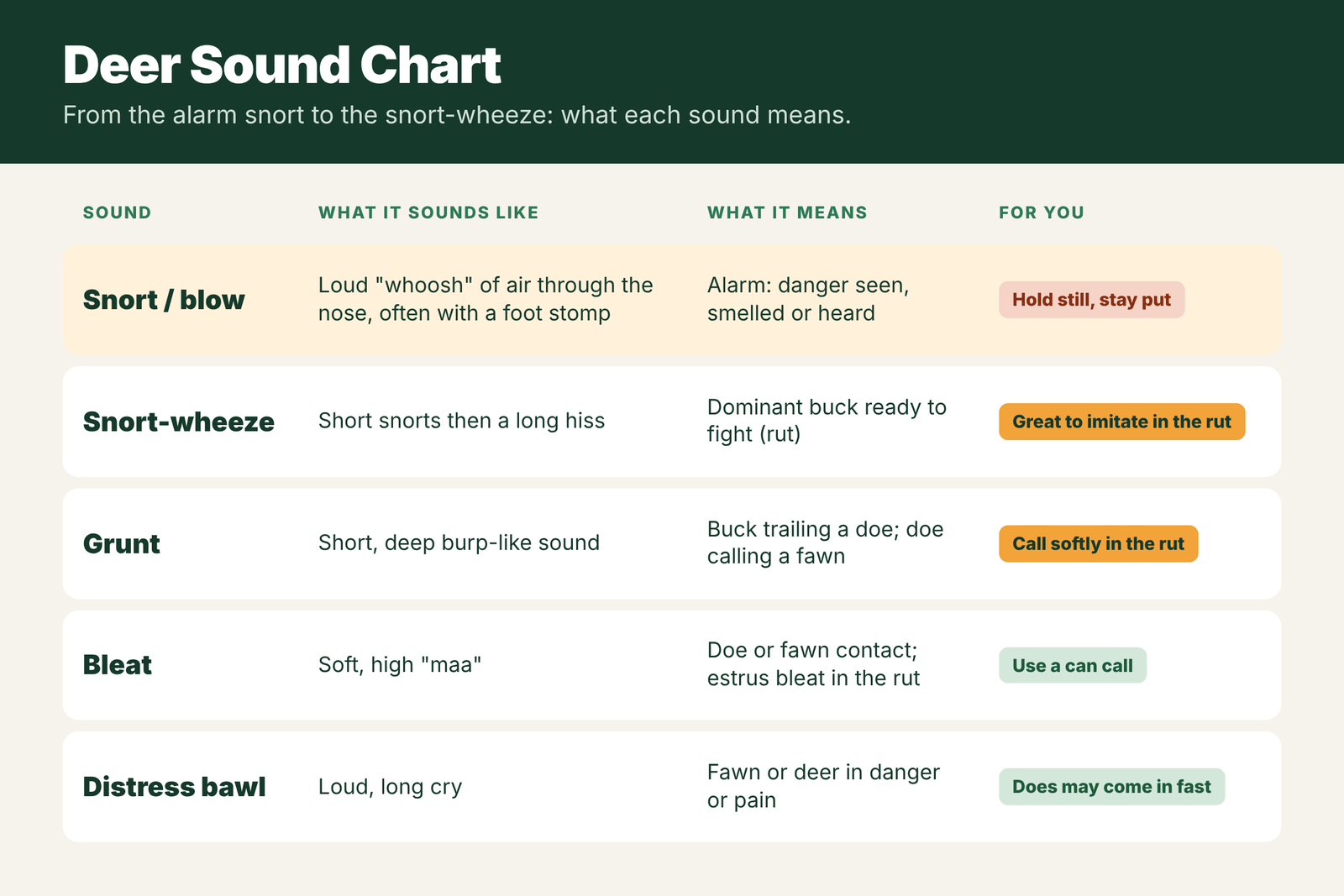
- Alarm snort (blow): made by any deer, buck or doe, when it senses danger. It sounds like one or more loud whooshes.
- Snort-wheeze: made by a mature, dominant buck, mostly during the rut. It sounds like two or three short snorts followed by a long, drawn-out hiss (“fft-fft-fffffffff”). It is a challenge to another buck: “leave or fight.”
A snort-wheeze usually comes with aggressive body language: ears pinned back, hair on the neck and back standing up, and a slow, stiff walk sideways toward the rival buck. Some hunters imitate the snort-wheeze in the rut to pull in a big buck, but it can scare off younger bucks, so use it with care.
Other Deer Sounds You Might Hear
- Grunt: a short, deep sound. Bucks make “tending grunts” when following a doe in the rut. Does grunt softly to call their fawns.
- Bleat: a soft, high “maa.” Does and fawns use it to stay in touch. A doe in heat makes an “estrus bleat” in the rut.
- Distress bawl: a loud, long cry from a deer, usually a fawn, in danger or pain. Does may come running to it.
We explain all of these, plus scent and body language, in our guide to how deer communicate.
Does a Deer That Snorts Come Back?
It depends on what spooked it:
- It only saw movement or heard a noise: deer that are not sure what they saw often snort, move off a short way, and calm down. Some come right back into the area within minutes to an hour, especially does and young deer. Stay put.
- It smelled you: deer trust their nose most. A deer that winded you will usually leave and may avoid that exact spot for days, sometimes longer for a mature buck.
- It happens over and over at the same stand: that stand has a problem with wind, access or visibility. Deer can learn that a spot is dangerous.
Deer are not as “dumb” as some people think. They learn quickly where danger is. See why are deer so dumb for a look at how smart deer really are.
How to Avoid Getting Blown at by Deer
- Play the wind. Only hunt a stand when the wind blows your scent away from where deer come from. Check wind direction with a puff bottle or milkweed.
- Control your scent. Wash hunting clothes in scent-free soap, wear rubber boots, and do not walk where deer travel.
- Use a quiet, hidden entry route to your stand, such as a creek bed or the back side of a ridge.
- Move slowly and stay hidden. Sit with a tree behind you, wear a face mask and gloves, and move only when the deer’s head is down or behind a tree.
- Check trail cameras quietly. Go mid-day, wear gloves, and use cellular cameras near bedding areas so you do not leave scent on every check.
- If a deer snorts, freeze. Do not try to “fix” it by moving. Stay still and wait. The deer may settle down.
Reading the Snort: What Each Version Tells You
Not every snort means the same thing. With experience, you can often tell how alarmed a deer is, and whether you still have a chance, just from the sound and what comes with it.
| What you hear and see | What it usually means | What to do |
|---|---|---|
| One soft blow, deer stays put | Suspicious but unsure | Freeze. It may relax in a few minutes. |
| Several loud blows, stomping, head bobbing | Trying to make you move | Stay still and avoid eye contact. |
| Loud blow, then crashing away with tail up | Confirmed danger, often scent | Note the wind. That deer is gone for now. |
| Repeated blowing from cover, deer unseen | Deer winded you from downwind | Your scent is drifting toward bedding. |
| Blowing at night near a camera | Reacting to flash, scent or a predator | Check camera height, glow and scent. |
Hunters often say a deer that snorts and keeps standing there is still “asking questions.” A deer that snorts while running has already answered them.
Real Hunting Scenarios
Scenario 1: Blown at on the walk in. You hear a snort in the dark as you head to your stand. A deer was bedded or feeding near your route. It does not ruin the hunt, but it tells you something: your access path crosses deer traffic. Next time, try a different route, go in earlier, or use a creek bed or field edge to stay out of their way.
Scenario 2: A doe blows from downwind during the sit. A doe circles behind you and starts snorting. Every deer nearby is now on alert. Stay still and wait it out. If it keeps happening, the stand only works on certain winds. Write down the wind direction and save the stand for better days.
Scenario 3: Snorting on trail camera video. Your camera records a deer that stops, stares at the camera and blows. Look at the setup. Is the camera at eye level with a visible red glow? Did you handle it with bare hands? Raise it to 6 or 7 feet, angle it down, switch to a no-glow model, and wear gloves when you check it.
Scenario 4: Snorts in the rut with no deer in sight. In late October and November, you may hear a quick series of snorts followed by a hiss. That is likely a snort-wheeze from a dominant buck, not an alarm. Pay attention: a mature buck is close.
Mistakes That Get Hunters Blown At
- Trusting the forecast wind. Hills, creek bottoms and field edges make wind swirl. Check it at the stand with a puff bottle, not just on your phone.
- Hunting the same stand every day. Deer pattern hunters too. Rotate stands and give each one rest.
- Skylining yourself. A hunter outlined against the sky is easy to spot. Keep a tree trunk or branches behind you.
- Moving when a deer is staring. Wait until its head is down or behind cover before you raise a bow or gun.
- Over-checking cameras. Walking into a bedding area every few days teaches deer to avoid it. Check every one to two weeks, or use cellular cameras.
- Leaving fresh scent at the base of the stand. Rubber boots and gloves help, and so does climbing quickly and quietly.
Do Other Animals Snort Like Deer?
Elk, mule deer and pronghorn all use similar alarm blows. Elk produce a sharp bark, and mule deer snort and stot (bounce on all four legs) when alarmed. Even horses make a loud snort when nervous. In whitetail country, though, a loud “whoosh” from the brush at dawn or dusk is almost always a deer that has noticed something it does not like.
Frequently Asked Questions
Why do deer snort at you?
A deer snorts at you because it has seen, heard or smelled you and senses danger. The snort warns other deer and may be meant to make you move so the deer can tell what you are.
Is a deer snort the same as blowing?
Yes. Hunters use “snort” and “blow” for the same loud alarm call, a burst of air through the nose. Some people also call it a deer “bark.”
Will a deer come back after it snorts?
Often, if it only saw or heard something. Deer that smell a person usually leave and may avoid that spot for days. Staying still gives you the best chance.
What is a snort-wheeze?
A snort-wheeze is a challenge call made by a dominant buck, mostly in the rut. It sounds like two or three short snorts followed by a long hiss, and it tells another buck to leave or fight.
Do deer snort at trail cameras?
Some do, especially at cameras with a visible flash or ones that carry human scent. No-glow infrared cameras, scent control and careful placement help.
How far away can you hear a deer snort?
On a calm day, a loud snort can carry a few hundred yards. In wind or thick cover, it carries much less.
Do does or bucks snort more?
Both snort. Does often snort more because they lead family groups and react to danger first. Mature bucks tend to slip away quietly.
Can I use a snort call to attract deer?
An alarm snort will usually push deer away. Some hunters use a snort-wheeze call in the rut to challenge a buck, but it can scare young bucks.