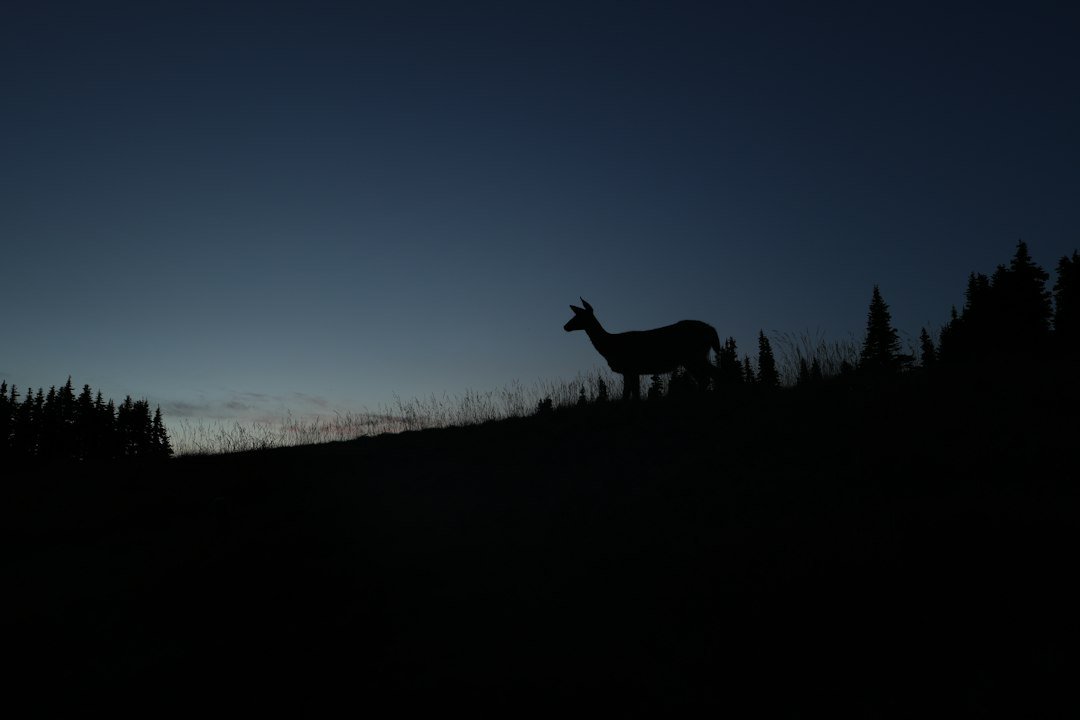
Can deer see trail camera flash? Sometimes. A bright white flash is plainly visible, low-glow infrared may show a faint red glow, and no-glow infrared is designed to be less conspicuous. What a deer notices and how it reacts can vary. This guide explains the differences, practical camera placement, and ways to reduce disturbance without making unsupported claims about deer eyesight.
Can Deer See a Trail Camera Flash?
Yes, deer can notice some trail camera flashes, especially bright white flashes and the faint red glow from certain infrared LEDs. But seeing a flash does not necessarily mean a deer will run away or permanently avoid the area. The response depends on the flash type, how close the deer is, its attention, previous experience, and other cues such as camera noise, human scent, and movement. No-glow cameras generally make the light source less conspicuous to people and wildlife, although they do not guarantee that deer will never notice a camera. The best choice depends on whether you prioritize color night photographs, low disturbance, or maximum discretion.
The Three Common Trail Camera Flash Types
Trail cameras typically use white flash, low-glow infrared, or no-glow infrared illumination. A white flash is visible and can illuminate a nighttime scene for color photos. Low-glow infrared uses LEDs commonly centered near 850 nanometers; people can often see a faint red glow when the LEDs activate, and deer may notice that light or associated cues. No-glow infrared commonly uses LEDs near 940 nanometers, which are much less visibly conspicuous. These labels describe illumination systems, not a guarantee of animal behavior. Night image sharpness, range, exposure and power consumption vary between camera models, even within the same flash category.
White Flash: Visible Light and Color Night Images
A white-flash trail camera emits a brief burst of visible light, similar in principle to a conventional camera flash. This can produce useful color nighttime images that help distinguish coat color, vegetation and surroundings. The trade-off is obvious: a deer looking toward the camera may detect the burst, particularly at close range in darkness. Some deer may pause, turn their heads, or move away; others may continue feeding or walking. A single reaction in a photograph is not enough to prove long-term avoidance. For repeated monitoring at a sensitive crossing, visible flash may be a poor fit even if its nighttime color is attractive.
Low-Glow Infrared: The Faint Red Light
Low-glow infrared cameras use infrared LEDs that may create a dim red appearance at the camera face. The actual emitted light is largely infrared, but the glow can be noticeable in darkness. The exact brightness depends on the LEDs, filters and design. Some deer may look directly at the camera after a trigger; that does not prove the glow was the only cause. Animals can also react to shutter sounds, electronic clicks, movement, or unfamiliar objects. Low-glow models often provide strong nighttime illumination for their cost, making them practical when image detail matters and a small visible glow is acceptable.
No-Glow Infrared: Less Conspicuous, Not Invisible
No-glow cameras usually illuminate a scene using longer-wavelength infrared LEDs, commonly marketed around 940 nm. These are designed to minimize visible red glow. The resulting images are normally monochrome at night, and some models have shorter effective illumination range than comparable low-glow designs. Do not assume a no-glow camera is silent, scent-free, or completely undetectable. Deer may still notice the camera housing, mounting strap, human activity, or mechanical noise. For monitoring a bedding-area edge or a frequently used narrow trail, no-glow is often the more discreet starting point.
Comparison: Which Flash Is Most Noticeable?
White flash is the most obviously visible type because it produces a bright burst of light. Low-glow infrared generally has a faint red LED glow that can be visible when the camera fires. No-glow infrared is designed to reduce visible glow substantially. This is a comparison of the illumination, not a ranking of how strongly every deer will react. A quiet, well-placed low-glow camera may disturb less than a noisy or poorly positioned no-glow camera. Camera positioning, the number of triggers, scent, and frequency of human visits also influence the overall disturbance.
Do Deer Get Spooked by Infrared Trail Cameras?
They can, but not consistently. Deer responses vary across individuals and situations. A curious deer may stop and investigate a camera; another may simply pass through the frame. An abrupt head turn in a sequence of images may be consistent with noticing something, but it cannot identify the cause without additional evidence. Avoid statements that infrared light always scares deer or that deer can never perceive it. A practical approach is to observe repeat visits over several nights and compare behavior before and after changing one variable. The absence of deer pictures also has many possible causes, including weather, season, movement patterns and detection settings.
Can Deer See 850 nm and 940 nm Infrared?
Trail camera manufacturers commonly describe approximately 850 nm as low-glow and 940 nm as no-glow. These wavelengths are beyond the usual human visible range, but LED packages can produce visible leakage or a red-looking emitter. Animal visual sensitivity is not identical to human vision, and precise claims about a deer’s perception at a particular infrared wavelength require species-specific experimental evidence. For buyers, the most reliable practical distinction is that 940 nm systems generally show less visible emitter glow than 850 nm systems. It would be misleading to claim that every deer definitely sees 850 nm light or that no deer could ever detect a 940 nm camera.
Camera Noise, Scent, and Placement Can Matter More
A flash is only one potential source of disturbance. The sound of a shutter mechanism, infrared filter switching, a loose mount, or a clicking housing may attract attention. Fresh human scent around the camera can also change how deer use an area. To reduce these factors, install the camera on a stable tree, keep straps secure, avoid unnecessary visits, and test for audible clicking in a quiet environment. Do not place the camera directly at nose height along a narrow route if animals are likely to investigate it. The goal is a reliable view without forcing wildlife to approach an unfamiliar object.
Best Placement to Reduce Deer Reactions
Choose a tree or post that allows the camera to view a crossing from the side. Pointing slightly down the trail can keep an animal in the detection area longer, but it may also increase the chance that the animal faces the camera. Mount at a height and angle appropriate for the location and expected animal size, and test the actual frame before leaving. Avoid reflective branches and tall grass close to the lens because infrared glare can wash out nighttime images. Keep the camera away from direct sunrise or sunset to reduce false triggers. A slightly elevated mounting position can sometimes make the device less conspicuous, provided the angle still captures useful photographs.
Night Settings That Help Without Overusing the Flash
Use a moderate photo burst and a sensible trigger interval rather than firing repeatedly at the same stationary deer. For example, a short burst of two or three photos may capture movement while limiting unnecessary repeated illumination; the ideal choice depends on your goal. Keep nighttime exposure and illumination settings at the lowest level that still produces identifiable subjects. If the camera has adjustable infrared intensity, test it at the expected distance. A long video clip may keep the infrared LEDs active longer than a single photograph, so choose video deliberately. Always review a sample nighttime capture before committing to a multiweek deployment.
How to Test Whether Your Camera Disturbs Deer
First, record several nights of normal activity without repeatedly visiting the site. Then adjust one factor at a time: flash mode, mounting position, trigger interval, or camera location. Compare deer visits, time spent in the frame, head turns and repeated approaches. Keep in mind that small samples and changing conditions cannot establish cause and effect. Weather, food availability, hunting pressure, and seasonal behavior can alter traffic dramatically. A second camera observing the first camera’s location may provide more context, but avoid adding unnecessary equipment to sensitive habitat. The most useful outcome is learning which setup produces consistent photographs with minimal apparent disturbance at your particular site.
What to Choose for Different Situations
For a backyard wildlife project where color night photographs matter, a white-flash camera can be useful if the flash is acceptable to neighbors and animals. For a general deer trail where strong nighttime detail is a priority, low-glow infrared is often a reasonable compromise. For a secluded crossing where you want the least noticeable emitter, start with no-glow infrared. If you are monitoring an area with people nearby, also consider privacy and local rules. Cellular capability is a separate feature: a cellular camera can use any of these illumination types, and remote uploads may reduce the need for frequent site visits.
Common Myths About Deer and Trail Camera Flash
Myth: every flash permanently scares deer away. Reality: deer reactions are variable, and a single startled image does not prove abandonment. Myth: no-glow cameras cannot be detected. Reality: the camera itself, sound, scent and human presence remain potential cues. Myth: more megapixels mean better nighttime images. Reality: sensor performance, optics, illumination and subject distance matter. Myth: a deer looking at the camera proves it saw infrared light. Reality: the animal may have heard a click or noticed the camera housing. Treat photographs as observations rather than conclusive tests of deer vision.
Frequently Asked Questions
Can a deer see a red trail camera light? A low-glow camera may produce a visible red emitter glow, and deer can react to the camera or its operation, although the precise cue is often uncertain. Do no-glow cameras scare deer? They can still cause reactions, but they reduce the conspicuous red LED glow. Does a white flash scare deer? It can startle some deer, but not all deer react the same way. Are infrared trail cameras completely invisible? No. Infrared illumination can be discreet, while the physical camera, scent and sound remain detectable. Which flash is best for deer monitoring? No-glow is a practical choice when discretion is most important; low-glow can offer strong nighttime illumination, and white flash is useful when color night images are the priority.
Final Verdict
Deer may notice a trail camera flash, but the type of flash and the broader camera setup both matter. White flash is clearly visible, low-glow infrared may reveal a faint red emitter, and no-glow infrared minimizes visible illumination. Rather than relying on a claim that one flash type always scares deer, choose a camera for your site, mount it carefully, minimize visits, and review repeated observations. For a deeper comparison, see our guides to no-glow versus low-glow flash and infrared versus black flash. The right camera is the one that records useful wildlife behavior while causing as little disturbance as practical.
Related reading: Trail Camera No-Glow vs Low-Glow, Infrared vs Black Flash, Do Deer Dislike Trail Cameras?, and Fix Washed-Out Night Pictures.
Editorial note: Flash performance varies by model. Follow manufacturer specifications and local wildlife regulations. Photograph credit for the featured deer image: Jan Canty / Unsplash.
As an Amazon Associate, I earn from Qualifying Purchases.