
How Do Deer Communicate? Sounds, Scent and Body Language
Deer may look quiet, but they are talking to each other all the time. They use sounds, a rich set of smells, and body language that other deer read in an instant. Once you understand how deer communicate, the woods start to make more sense: why a doe stomps, why a buck licks a branch, why one snort empties a field. It also makes you a better hunter and helps you read your trail camera photos.
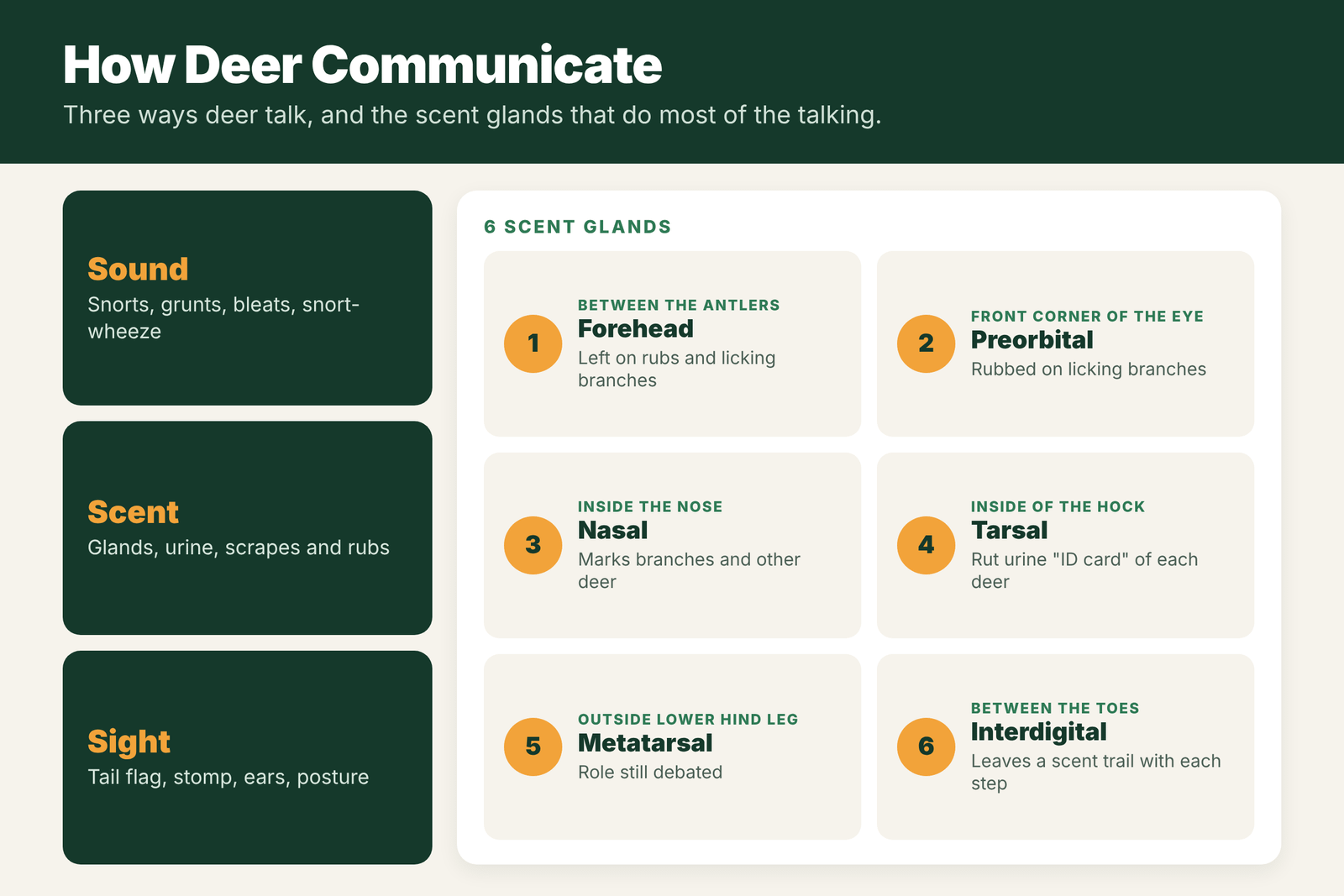
Deer communicate in three main ways. Sound: snorts to warn of danger, grunts and bleats to keep in touch, and the snort-wheeze for buck challenges. Scent: six scent glands, plus urine, let deer identify each other, mark scrapes and rubs, and show who is ready to breed. Body language: a raised tail, foot stomp, ear position and posture show alarm, calm or aggression. Scent is the most important of the three.
- Main ways
- Sound, scent and body language
- Most important
- Scent
- Scent glands
- Forehead, preorbital, nasal, tarsal, metatarsal, interdigital
- Main sounds
- Snort, grunt, bleat, snort-wheeze, bawl
- Alarm signals
- Snort, stomp, white tail flag
- Rut “message boards”
- Scrapes and rubs
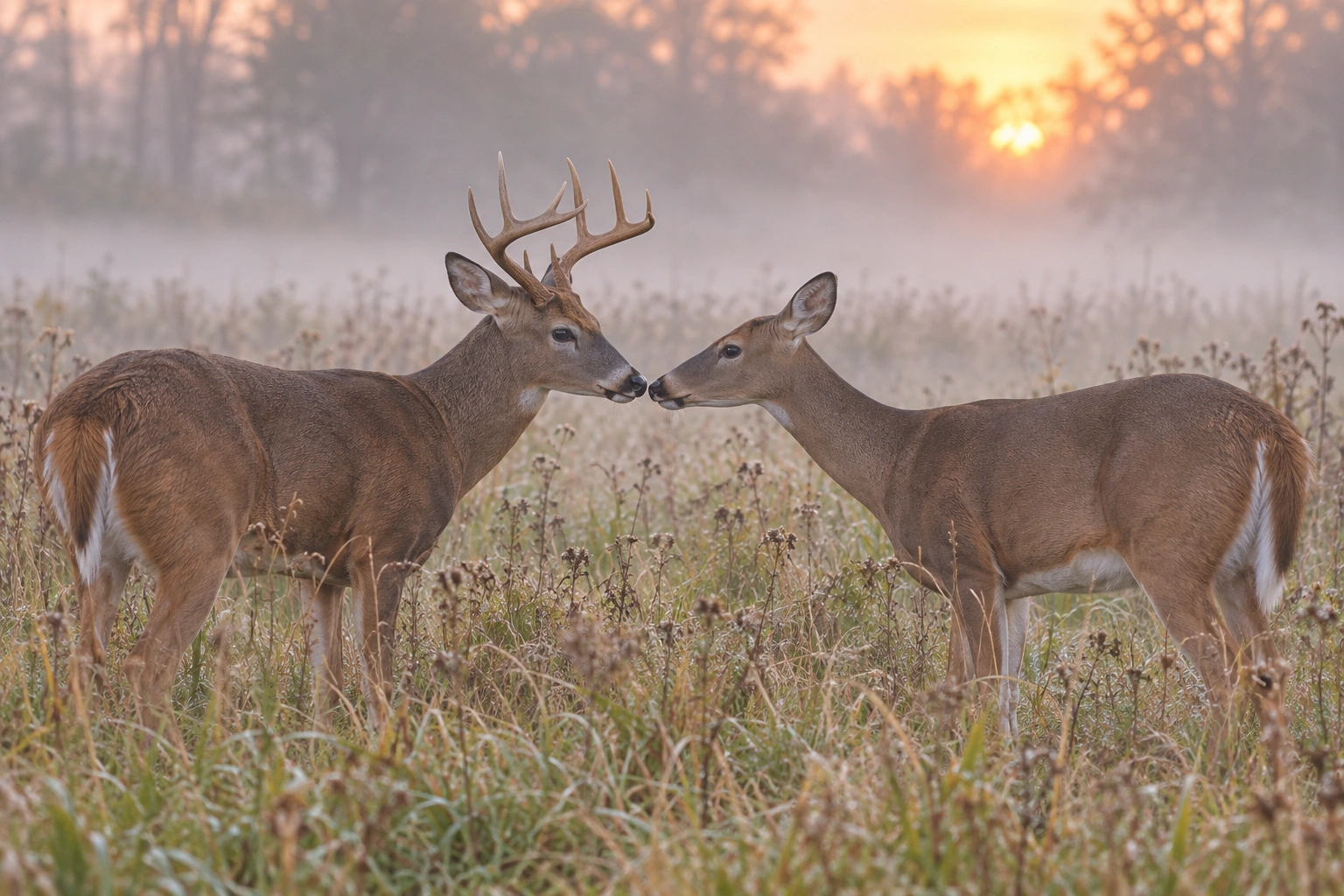
Deer Sounds (Vocal Communication)
Deer make more sounds than most people realize. Most are soft and only carry a short distance, but a few are loud enough to hear across a field.
- Snort or blow: a loud burst of air through the nose. It is an alarm call that warns other deer of danger. Learn more in why do deer snort.
- Grunt: a short, deep “urp.” Does grunt softly to their fawns. Bucks make a “tending grunt” when following a doe in the rut.
- Bleat: a soft “maa” that does and fawns use to find each other. A doe in heat may make a longer “estrus bleat.”
- Snort-wheeze: a dominant buck’s challenge in the rut. Two or three short snorts, then a long hiss.
- Distress bawl: a loud cry from a deer, usually a fawn, that is caught or hurt. Does may run toward it.
- Fawn mew: a soft, high sound young fawns use to call their mother.
Scent Glands and What Each One Does
Scent is the core of deer communication. A deer’s nose is many times more sensitive than ours, and deer leave scent behind everywhere they go. Each deer has a unique smell, so other deer can tell who has been there, whether it was a buck or a doe, and even how dominant or ready to breed it is.
- Forehead glands: the skin between and just behind the antlers. Bucks rub this area on trees (rubs) and on licking branches to leave their scent. These glands become more active in the fall.
- Preorbital glands: in the front corner of each eye. Deer rub them on licking branches over scrapes. They may also open wider when a buck is excited or aggressive.
- Nasal glands: inside the nose. Deer may use them when marking branches and when smelling each other.
- Tarsal glands: the tufts of hair on the inside of the hock (the “knee” of the back leg). Deer urinate over them in a behavior called rub-urination, which mixes urine with gland oils. The scent works like an ID card. Mature bucks’ tarsal glands turn dark and strong-smelling in the rut.
- Metatarsal glands: on the outside of the lower back leg. Scientists still debate what they do. They may play a small role in alarm signals.
- Interdigital glands: between the two halves of each hoof. They leave scent with every step, so other deer can follow a trail. When a deer stomps in alarm, it leaves an extra strong dose of this scent behind.
Visual Signals (Body Language)
Deer also watch each other closely. A lot can be said without a sound:
- Tail flag: a white tail raised high shows alarm and helps other deer, especially fawns, follow when running. A relaxed tail that flicks side to side usually means the deer is calm.
- Foot stomp: a hard stomp with a front hoof says “something is wrong.” It also leaves interdigital scent.
- Head bob: a deer drops its head as if to feed, then jerks it back up to catch any movement.
- Ears: ears pointed forward mean focus or concern. Ears pinned back mean aggression, often between bucks or between does at food.
- Hair raised: a buck with the hair on his neck and back standing up, walking stiffly and sideways, is ready to fight.
- Hard look: a stare with the head held high, often between does competing for food.
Rut Communication: Scrapes, Rubs and Signposts
In the fall, communication gets much more intense. Bucks build a network of signs that work like message boards:
- Scrapes: a buck paws the ground bare under a licking branch, works the branch with his forehead, preorbital glands and mouth, and often urinates in the dirt. Other bucks and does check these spots to learn who is around.
- Rubs: trees where bucks thrash their antlers and leave forehead scent. Lines of rubs mark travel routes.
- Doe scent: a doe coming into heat leaves urine and tarsal scent that bucks follow with their nose to the ground.
- Lip curl (flehmen): a buck lifts his head and curls his upper lip to pull a doe’s scent into a special organ in the roof of the mouth. It tells him if she is close to breeding.
To learn how to read and use these signs, see our guide on deer scrape vs rub.
How to Use Deer Communication When Hunting
- Calling: a few soft grunts or doe bleats can bring in a curious buck, especially in the rut. Call less, not more.
- Mock scrapes: a licking branch and fresh dirt can pull bucks to a spot you choose, in front of a trail camera.
- Scent control: since deer trust their nose more than anything, your own scent is the biggest risk. Hunt the wind every time.
- Read the body language: a deer with a calm, flicking tail is relaxed. A deer with its head up and ears locked on you is about to leave. Freeze until it relaxes.
- On your trail camera: watch for bucks working licking branches, lip curls and stiff-legged posturing. They show the rut is building.
Deer also use these signals to stay alive. Read more in how deer protect themselves.
Deer Communication Through the Year
How deer talk to each other changes with the seasons. Knowing what is normal for each time of year helps you read your trail camera photos and plan hunts.
| Season | Main signals | What you will see on camera |
|---|---|---|
| Spring (fawning) | Soft grunts and bleats between doe and fawn; does chase off yearlings | Lone yearlings, pregnant does alone |
| Summer | Quiet social groups; bucks in velvet travel in bachelor groups | Groups of bucks together at food |
| Early fall | Bucks spar, start rubs; does and fawns stay in family groups | Light sparring, first rubs |
| Rut (Oct to Dec) | Grunts, snort-wheezes, scrapes, rubs, estrus bleats | Bucks cruising, licking branches, chasing |
| Winter | Mostly quiet; group living in sheltered areas | Larger groups, deer yards in the north |
How Scent Messages Work at a Scrape
A scrape is like a community message board. A buck paws the ground bare, urinates over his tarsal glands so the scent runs into the dirt, and works the branch above with his forehead, mouth and preorbital gland. Other deer, including does and rival bucks, visit to “read” who has been there. A licking branch can hold scent for a long time, which is why bucks keep checking it even when the ground scrape is not freshened.
On camera, you will often see a buck sniff and lick the overhead branch, rub his face on it, then paw and urinate. Does may visit, sniff and leave. That is why a scrape is one of the best places to take a buck inventory in the fall. Read more in trail camera over a scrape.
Body Language: What It Looks Like on Trail Camera
- Relaxed deer: head down feeding, tail hanging loose and flicking side to side, ears turning lazily.
- Alert deer: head high, ears locked forward, neck stretched, one front foot raised.
- Alarmed deer: tail raised to show the white underside, hair flared, quick stomps.
- Aggressive buck: ears pinned back, hair raised along the neck and back, sideways stiff walk, often called the “hard look.”
- Submissive deer: head and ears low, body turned away, giving ground to a bigger deer.
Video makes these signals much easier to read than single photos. If you want to learn deer behavior, set one camera to 15 to 20 second clips at a food source and watch how deer interact.
Common Myths About Deer Communication
- “Deer are silent animals.” Not true. They make many sounds, but most are soft and only carry a short distance.
- “Grunt calls only work in the rut.” Soft contact grunts can work early and late in the season too, as long as you do not overdo it.
- “A flagging tail always means a deer is leaving for good.” Often, but a deer that flags at a sound and stops after 50 yards may come back.
- “Rubs are made to remove velvet.” Bucks do strip velvet on trees, but most rubs are made later as visual and scent signposts.
Calling Mistakes to Avoid
- Calling too loud, too often. Real deer sounds are soft. Start quiet and wait 15 to 20 minutes between sequences.
- Calling to a deer that is already coming. Let it come. More calling can make it hang up and look for the source.
- Calling without cover. A deer coming to a call is looking for another deer. If it sees nothing, it gets suspicious. Set up with cover around you and a clear shot downwind.
- Using a snort-wheeze on young bucks. It can scare off younger deer. Save it for a mature buck that will not come to a grunt.
Frequently Asked Questions
How do deer communicate with each other?
Deer communicate with sounds like snorts, grunts and bleats, with scent from six scent glands and urine, and with body language like tail flagging, foot stomping and ear position. Scent is the most important.
What sounds do deer make?
The main deer sounds are the snort or blow (alarm), the grunt, the bleat, the snort-wheeze (a buck’s challenge), the distress bawl and the soft mew of young fawns.
How many scent glands do deer have?
Deer have six main scent glands: forehead, preorbital, nasal, tarsal, metatarsal and interdigital. Each leaves a different kind of scent signal.
Why do deer stomp their feet?
A foot stomp is an alarm signal. It warns other deer that something is wrong and leaves extra scent from the glands between the toes on the ground.
Why do deer raise their tails?
A raised white tail, called flagging, shows alarm. It warns other deer and helps fawns follow their mother when the group runs from danger.
Do deer talk to each other?
In a way, yes. They use grunts, bleats, snorts and other sounds, along with scent and body language, to share information.
What does it mean when a deer stares at you and stomps?
It is unsure whether you are a threat. The stomp warns other deer and tries to make you move.
Can deer recognize each other by scent?
Yes. Each deer has a unique scent from its glands, which helps them recognize family members and rivals.