
Solar Powered Trail Camera: How It Works and How to Get the Most From It
Few things in trail camera scouting are more frustrating than hiking a mile into the woods to find a dead camera. The batteries quit three weeks ago, the card stopped filling, and whatever walked past since then is a mystery. Multiply that by a few cameras and a busy season, and battery runs start to feel like a second job.
A solar powered trail camera is built to break that cycle. A small panel tops up a rechargeable battery during the day so the camera can keep running for months. This guide explains how solar trail cameras work, what to look for, the real-world limits nobody puts on the box, and how to get the most out of one.
What Is a Solar Powered Trail Camera?
A solar powered trail camera uses a photovoltaic panel to charge a battery that runs the camera. There are two common setups:
- Integrated solar: the panel is built into the camera housing and charges an internal lithium battery. The SPYPOINT FORCE-PRO-S 2.0, for example, is described by Tractor Supply as using a solar panel to charge an internal lithium battery that can keep the camera powered for months.
- External solar panel: a separate panel plugs into a regular camera’s 12V or power port, often with its own battery pack. SPYPOINT’s 10-watt battery solar panel, listed by Cabela’s, combines a panel with an internal 15,000mAh rechargeable 12V lithium battery.
Both approaches do the same job. Integrated models are tidier. External panels can be larger, can be aimed separately from the camera, and can power cameras that were never designed for solar.
How Solar Trail Cameras Work
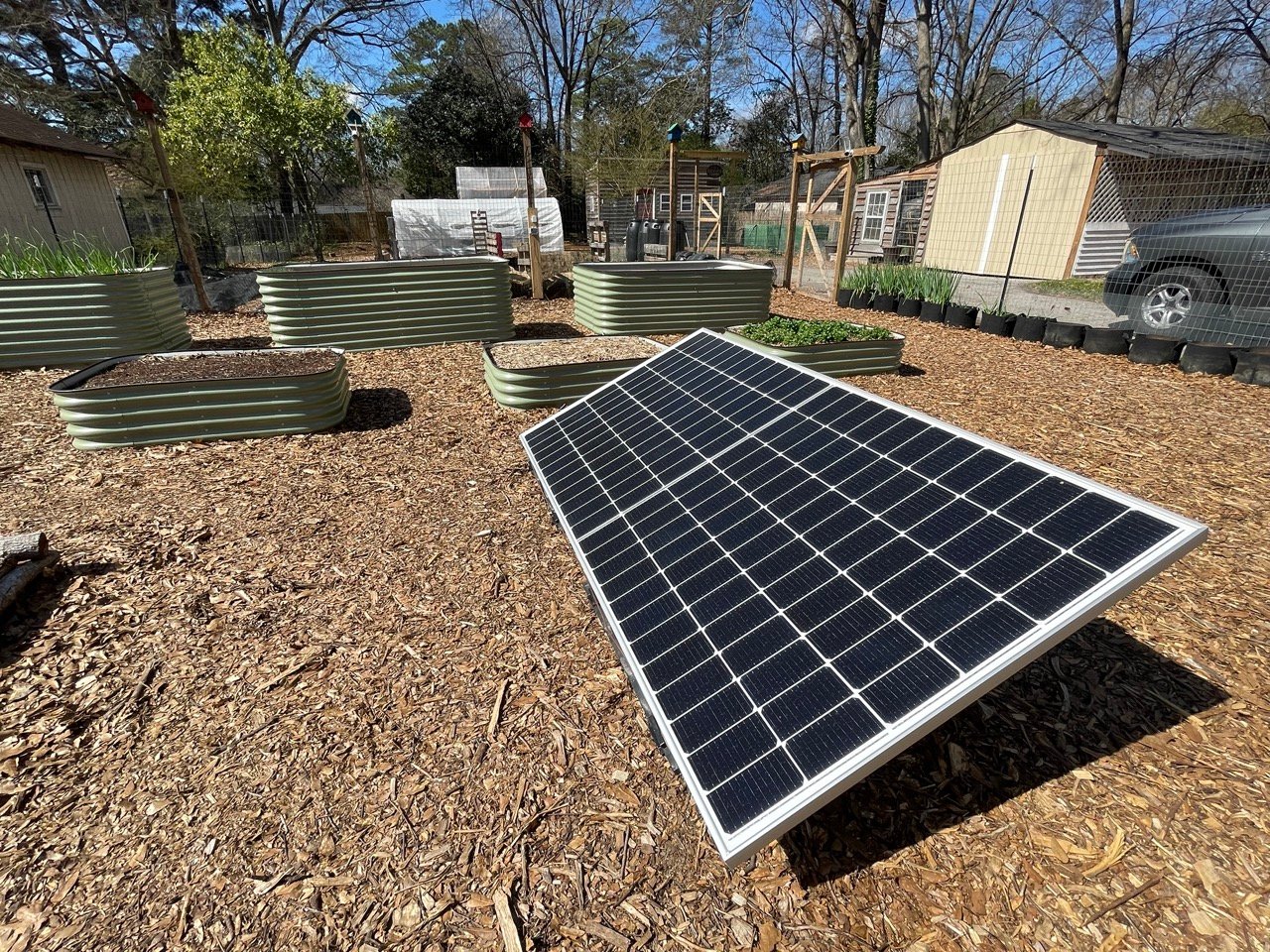
The panel turns sunlight into electricity, which charges a rechargeable battery. The camera runs off that battery day and night. On sunny days the panel puts back more power than the camera uses; on cloudy days or in heavy shade it puts back less. The battery is the buffer that carries the camera through nights and gray stretches.
Many solar models also take AA batteries as a backup. A product page for the SPYPOINT Flex-S Solar at Murdoch’s notes a built-in solar panel and rechargeable lithium battery for year-round use, with room for 8 AA batteries as additional backup power. That backup matters more than most people expect, as you will see below.
Why Go Solar?
- Fewer trips into the field. Less disturbance at your hunting spot and less time hauling batteries.
- Lower long-term cost. Lithium AAs are expensive. A camera that recharges itself saves money over a few seasons.
- Ideal for cellular cameras. Cellular models drain power quickly because every upload uses the modem. Solar is the natural fix. See how cellular trail cameras work for why.
- Better for remote sites. Hard-to-reach locations benefit most from a camera that runs on its own.
The Limits Nobody Mentions
Solar is not magic. A few real-world factors decide whether your camera runs all season or quits in November:
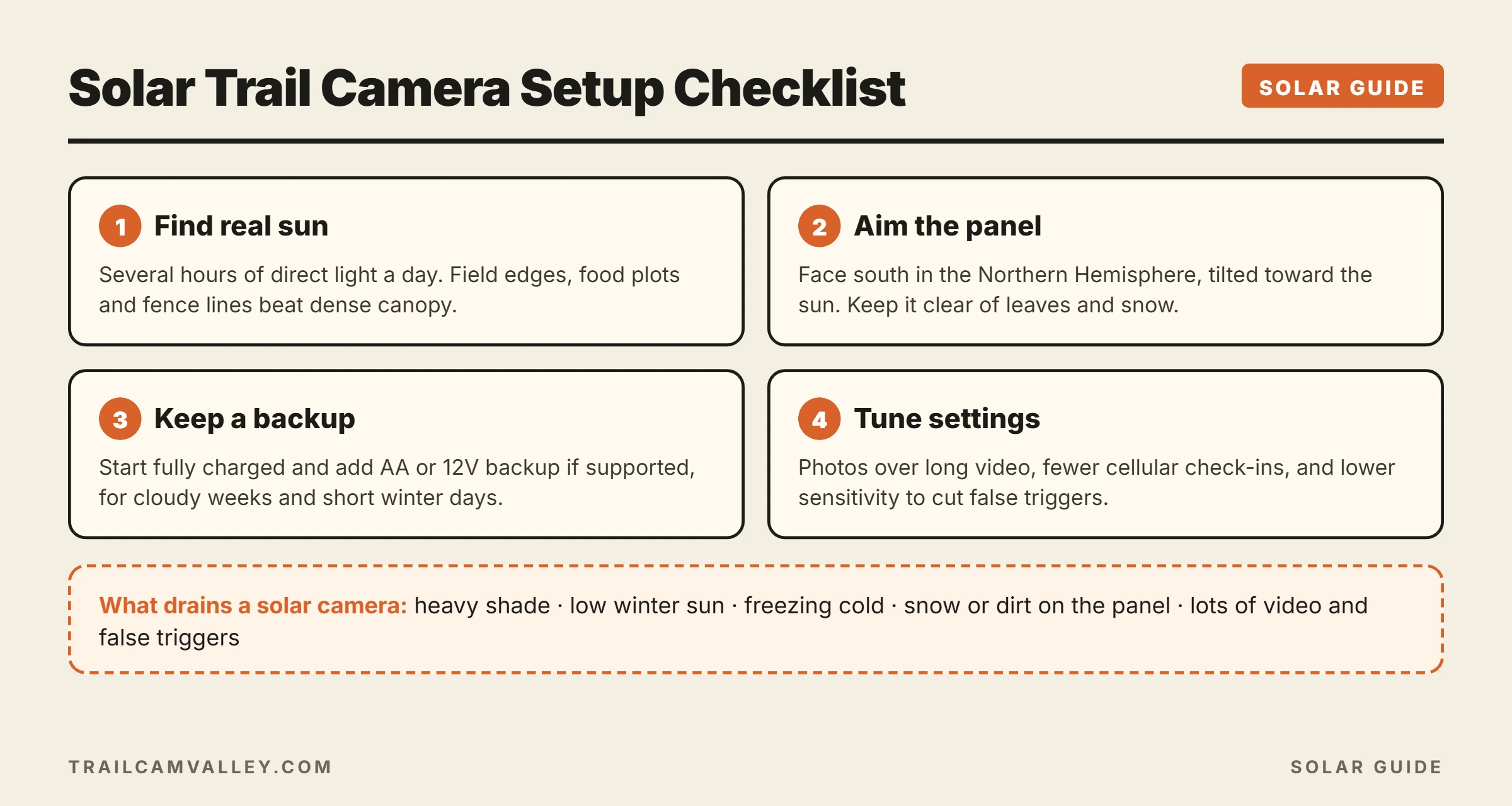
- Shade: a panel under a dense canopy may barely charge. Solar works best on field edges, food plots, fence lines, and open timber.
- Winter sun: days are shorter and the sun sits lower, so panels make less power right when hunting season peaks.
- Cold: lithium batteries charge and discharge less efficiently in freezing weather.
- Snow and grime: a dusting of snow, leaves, or dust on the panel cuts output.
- Heavy use: lots of video, high check-in frequency, and constant false triggers can outpace a small panel.
- Hardware quirks: some cameras only charge a specific rechargeable pack, not a standard AA tray. Check the manual before you buy.
What to Look For When Buying
| Feature | What to check |
|---|---|
| Panel type | Integrated for simplicity; external for larger panels or older cameras |
| Battery | Built-in lithium capacity, and whether it is replaceable |
| Backup power | AA tray or 12V input for long cloudy stretches |
| Cellular or not | Cellular models benefit most from solar but need a data plan |
| Storage | SD card slot or internal memory |
| Mounting | Can you angle the panel toward the sun without mis-aiming the camera? |
Most major brands now offer solar options. American Hunter’s solar coverage includes the Browning Defender Pro Scout Max HD Solar for 2026, the Moultrie EDGE Solar, and the SPYPOINT Force-Pro-S. Moultrie’s EDGE Solar listing at Dick’s also notes built-in memory, so no SD card is needed on that model.
Already own a camera? You may not need a new one. Our guides on how to connect a solar panel to a trail camera and how to use a solar panel for a trail camera cover the add-on route.
How to Set Up a Solar Trail Camera
- Charge it fully first. Start the season with a full battery rather than relying on the panel to catch up.
- Pick a spot with direct sun. Aim for several hours of direct light a day, ideally midday sun.
- Angle the panel south in the Northern Hemisphere, tilted toward the sun. Integrated models may require a mounting arm to aim both camera and panel well.
- Install backup batteries if the camera supports them.
- Tune settings for power. Use photos instead of long videos, reduce check-ins on cellular models, and lower sensitivity if branches cause false triggers.
- Check the battery level in the app or on the screen after the first week to confirm it is holding.
For general setup steps, see our step-by-step trail camera guide, and for mounting in open fields where the sun is strongest, the T-post camera mount guide.
Integrated vs External Solar: Which Is Better?
There is no single winner; it depends on where the camera goes and what you already own.
- Choose integrated solar if you want one clean unit with no cables for squirrels to chew, and your spot gets decent sun at the same angle the camera needs to face.
- Choose an external panel if the camera has to sit in shade while the panel can reach a sunny gap a few feet away, or if you want to add solar to a camera you already trust.
- Consider panel size. External panels are usually larger, which helps in winter and with power-hungry cellular cameras.
- Think about theft. A separate panel is one more visible item. Mount it high, angle it naturally, and lock the camera itself.
For many hunters, the practical answer is both: an integrated solar camera on open field edges, and an external panel paired with an existing camera in tougher, shadier spots.
Maintenance Tips
- Wipe the panel clean on each visit.
- Brush off snow after storms.
- Trim new growth that starts shading the panel.
- Check cable connections on external panels for chewing or corrosion.
- Store the camera charged in the off-season; deeply drained lithium batteries age faster.
Quick Facts
- Integrated solar models use a panel to charge an internal lithium battery (Tractor Supply, SPYPOINT FORCE-PRO-S 2.0).
- External solar panels can include their own battery, such as SPYPOINT’s 15,000mAh 12V pack (Cabela’s).
- Many solar cameras accept AA batteries as backup power (Murdoch’s, SPYPOINT Flex-S Solar).
- Browning, Moultrie, and SPYPOINT all offer solar models (American Hunter).
- Shade, short winter days, cold, and snow all reduce solar charging.
Frequently Asked Questions
Do solar trail cameras work at night?
Yes. The panel charges the battery during the day, and the camera runs from the battery at night.
Do solar trail cameras work in the shade?
Poorly. Light shade may still allow some charging, but dense canopy can stop it. Place the panel where it gets direct sun.
How long will a solar trail camera run?
With good sun and moderate use, months at a time. Heavy video use, constant triggers, or deep shade shorten that.
Can I add solar to my existing trail camera?
Often, if it has a compatible external power input. Check the voltage and plug type in your manual.
Do I still need batteries?
A backup set is smart for long cloudy stretches, especially in winter.
Are solar trail cameras good for security?
Yes, especially cellular solar models in places without power or Wi-Fi. See trail cameras vs security cameras.
Final Thoughts
A solar powered trail camera is one of the easiest ways to spend less time changing batteries and more time scouting. It shines in sunny spots and with cellular cameras that eat power. Give the panel real sun, keep a backup battery in place, and dial in your settings, and the camera will largely take care of itself.