
Deer Predators in Winter: What Trail Cameras Catch
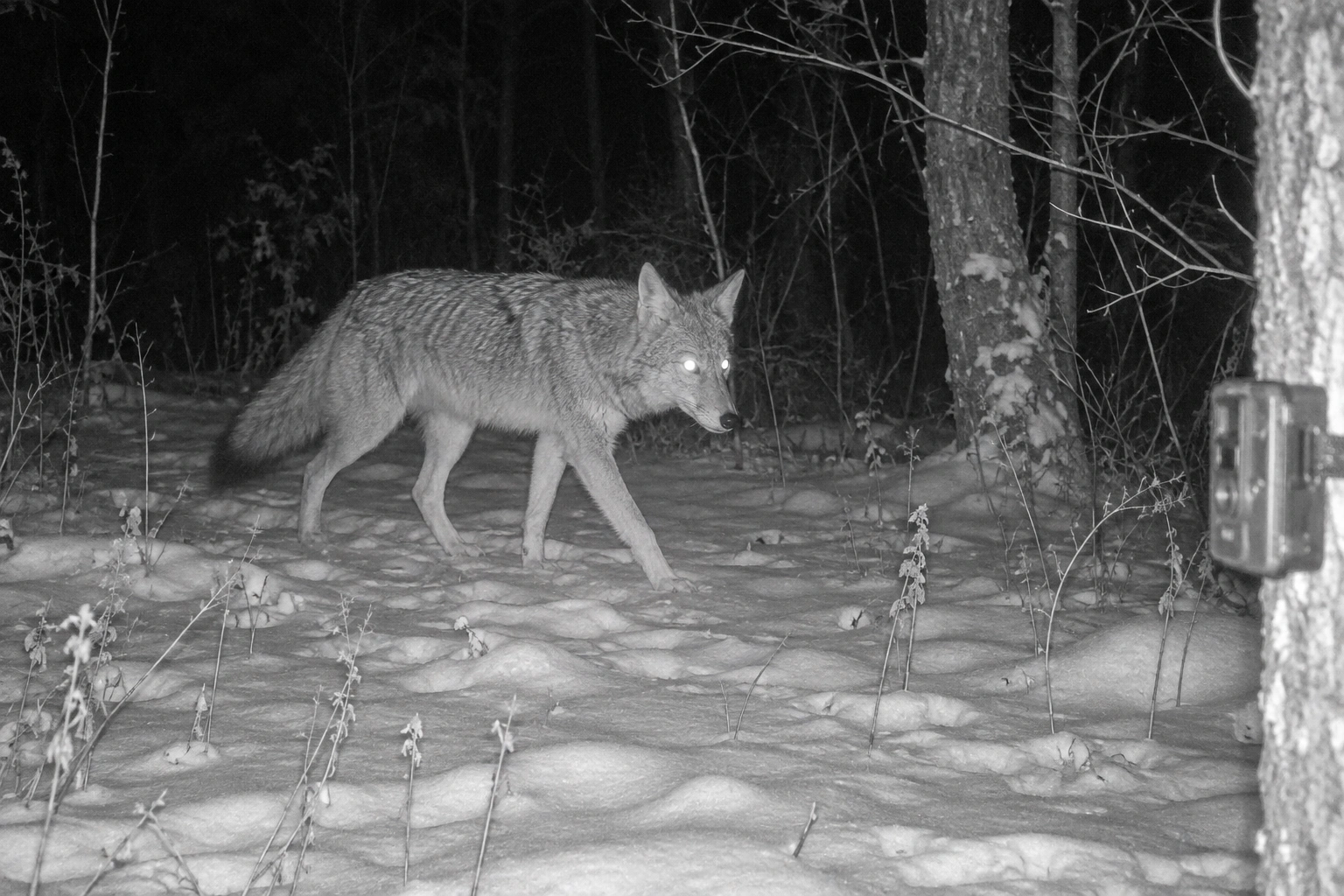
Winter trail camera photos are not just about deer. Once snow falls, many hunters start seeing coyotes on their cards, and in some areas wolves, bobcats or even a mountain lion. These are the main deer predators in winter, and your cameras can tell you a lot about which ones live on your land, how often they pass through, and whether they are affecting your deer.
The main deer predators in winter are coyotes (found almost everywhere), wolves (Great Lakes states and parts of the West), cougars or mountain lions (the West and Florida), and bobcats (wide range, mostly fawns and small deer). Winter is the hardest season for deer because deep snow, cold and poor food leave them weak and slow. Predators mostly take fawns, old, sick or weakened deer, especially in deep, crusted snow. You will usually see predators on camera at night and around dawn and dusk, along field edges, trails and old roads.
- Most common
- Coyote
- Biggest threat in deep snow
- Wolves and coyotes
- Takes adult deer alone
- Cougar
- Most at risk
- Fawns, old and weak deer
- Best camera spots
- Field edges, old roads, carcasses
- Active
- Mostly night, dawn and dusk
Why Winter Is Hardest on Deer
By late winter, deer are running on stored fat. Several things stack up against them:
- Poor food: green plants are gone, and deer live on woody browse that has little energy in it.
- Cold: keeping warm burns energy they cannot easily replace.
- Deep snow: deer sink in and tire quickly, while lighter predators like coyotes and wolves can run on top of crusted snow.
- Worn-out bucks: after the rut, many bucks enter winter thin and tired, which makes them easier targets.
Most deer that die in winter are fawns, old deer, or deer already weakened by hunger, injury or disease. Healthy adults in good habitat usually survive. See how deer survive winter for more.
The Main Winter Predators
Coyotes
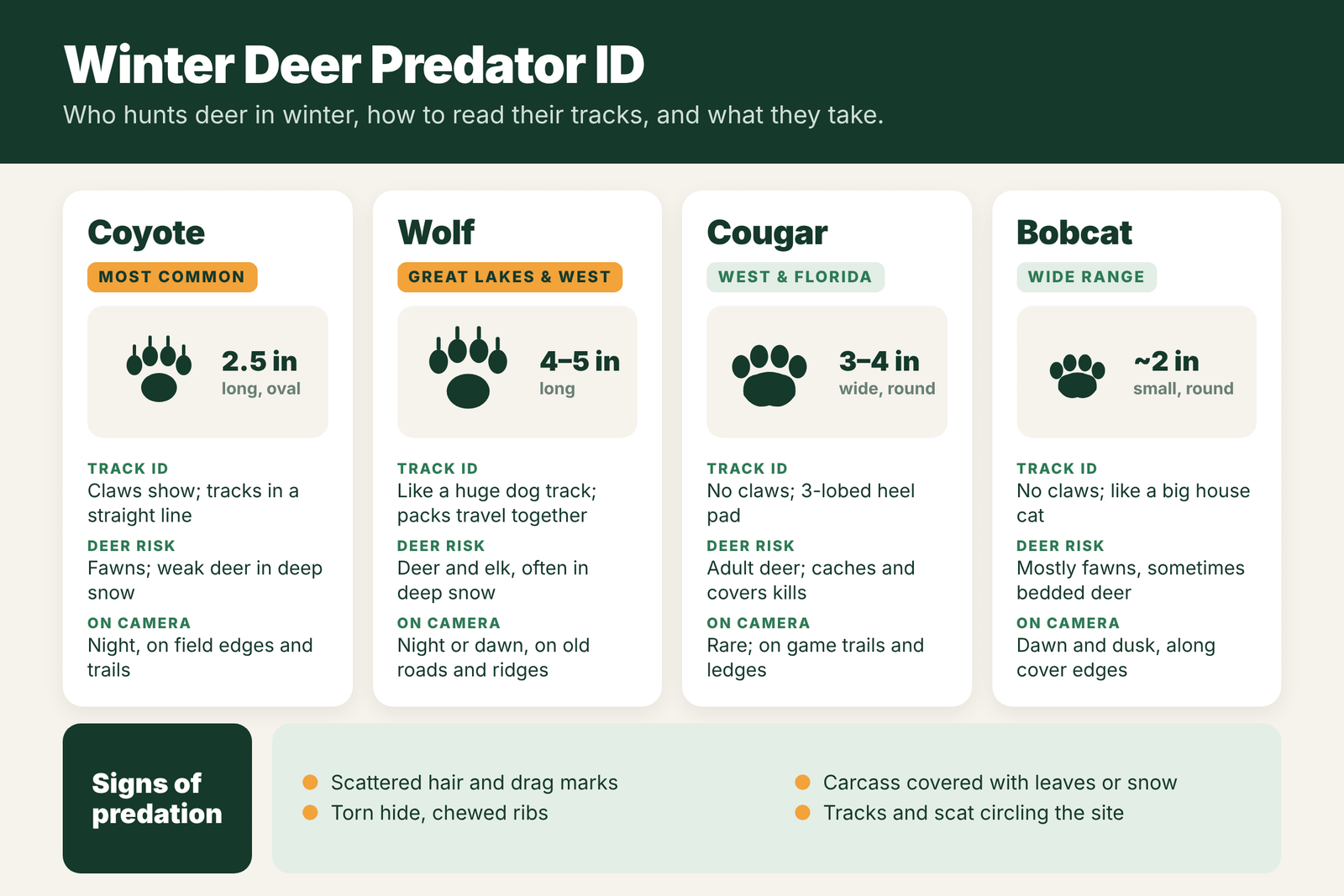
Coyotes live in almost every state and are by far the most common predator on trail cameras. They hunt alone, in pairs or in small family groups. In most places, their biggest impact on deer is killing fawns in early summer, but in winter they also take deer that are weakened or stuck in deep snow, and they scavenge carcasses and gut piles. Their tracks are about 2.5 inches long and oval, with claw marks, and they often walk in a neat straight line. For more, see our guide to a coyote on trail cam.
Wolves
Gray wolves live mainly in the northern Great Lakes states and parts of the northern Rockies and West. They hunt in packs and can kill healthy adult deer, especially in deep snow when deer gather in winter yards. Wolf tracks are big, about 4 to 5 inches long, and look like a very large dog track. On cameras, you may see several wolves pass in a line.
Cougars (Mountain Lions)
Cougars live mostly in the western states and in south Florida, with rare wanderers reported farther east. A cougar hunts alone by stalking and ambushing, and deer are its main food. It often drags a kill to cover and buries it under leaves, sticks or snow to come back later. Cat tracks are round, about 3 to 4 inches wide, with no claw marks and a heel pad with three lobes at the back. Cougars are rarely caught on camera. Read more about a mountain lion on trail camera.
Bobcats
Bobcats are found across much of the US. They mostly eat rabbits, rodents and birds, but they do kill fawns and occasionally take bedded adult deer in winter. Their tracks are small and round, about 2 inches, with no claws, like a large house cat. See our guide to a bobcat on trail camera.
Signs of Predation
If you find a dead deer, look closely before you decide what killed it. Many deer die of other causes and are then eaten by scavengers. Clues include:
- Drag marks and scattered hair showing a struggle or the deer being moved.
- A carcass covered with leaves, sticks or snow, which points to a cougar or sometimes a bobcat.
- Bites on the throat or neck often mean a cat. Coyotes and wolves often attack from the rear and sides.
- Tracks, scat and trampled snow around the site, which tell you which animals visited.
- Blood in the snow along a chase trail, a sign the deer was alive when attacked.
Remember that crows, eagles, foxes and coyotes all scavenge, so many animals may show up at a carcass even if none of them made the kill.
Trail Camera Tips for Predators
- Watch travel routes. Predators like easy walking: old logging roads, field edges, creek banks, fence lines and ridgetops.
- Use a carcass or gut pile where legal. A camera over a dead deer can show every predator and scavenger in the area within a few nights.
- Mount a little higher and angle down so snow does not block the view and coyotes are less likely to notice the camera.
- Use no-glow (black) infrared if you can. Predators are wary, and some notice the red glow of a low-glow camera.
- Choose fast trigger speed and short video clips. Predators often move quickly through the frame.
- Keep scent low. Wear gloves and rubber boots when setting cameras, since coyotes avoid human scent.
Managing Predators on Your Land
Predators are a natural part of the system, and in most areas they are not the main thing limiting deer numbers. Habitat matters more. Good management usually means:
- Improve fawning cover with tall grass and thick brush so fawns are harder to find.
- Improve winter food and cover so deer go into spring in better shape.
- Track predator numbers with your cameras over several years before deciding they are a problem.
- Trap or hunt legally if needed, following your state’s seasons and rules. Coyote hunting is open year-round in many states, while wolves and cougars are protected or tightly managed in most places.
Winter Predators Compared
| Predator | Where found | How it hunts deer | What it usually takes |
|---|---|---|---|
| Coyote | Nearly all of North America | Alone or in small groups; chases in deep or crusted snow | Fawns, weak, sick or old deer; sometimes healthy adults in hard winters |
| Gray wolf | Great Lakes states, northern Rockies, parts of the West, Alaska | Packs that test and chase deer | All ages, more often weak or young deer |
| Mountain lion | The West and Florida | Ambush from cover, then a short rush | Adult deer as well as young |
| Bobcat | Most of the US | Stalk and ambush | Mostly fawns and small deer; adults rarely |
| Black bear | Many forested areas | Mainly opportunistic; not a big winter factor since bears den | Fawns in spring more than winter deer |
How Snow Depth Changes the Odds
Deep snow is a big advantage for predators. A deer’s narrow hooves punch through the snow, while coyotes, wolves and lynx spread their weight over wider feet. When a crust forms on top, deer may break through with every step while a lighter predator runs on top. That is why predation often rises in late winter, when deer are thin and snow is deep and crusty. Deer respond by staying in sheltered areas with packed trails, such as deer yards in the north.
Reading a Kill Site
- Coyotes: scattered remains, hair spread over a wide area, bones chewed and carried off, and lots of tracks.
- Mountain lion: the carcass is often dragged and covered with leaves, snow or debris (caching), with feeding often starting at the chest.
- Bobcat: may also cover a kill, but usually takes smaller deer.
- Wolves: heavy feeding, large bones broken, many tracks from several animals.
- Scavengers confuse things: coyotes, eagles, ravens and crows often feed on deer that died from other causes. A predator at a carcass did not always kill it.
If you suspect a large predator such as a wolf or lion where they are rare, take photos and contact your state wildlife agency.
Camera Setup for Winter Predators
- Watch travel routes: field edges, creek bottoms, logging roads and fence lines are predator highways.
- Set cameras near carcasses where legal. A deer carcass can draw coyotes, bobcats and eagles for days.
- Use video: 15 to 20 second clips show gait and behavior, which helps with ID.
- Night settings: most predators move at night, so use fresh lithium batteries and keep the subject within flash range.
- Lower the camera a bit: about 2 to 3 feet catches coyotes and bobcats better than a deer-height camera.
Does Winter Predation Hurt Your Deer Herd?
It depends on the area. In many places, deer numbers are driven more by habitat, winter severity, disease and hunting than by predators. In others, especially where fawn survival is already low, predators can matter a lot. Trail camera surveys of doe-to-fawn ratios in late summer, year after year, can tell you whether fawn survival is a problem on your land. See game camera deer survey.
Helping Deer Through a Hard Winter
The best thing most landowners can do for deer in winter is give them good habitat and leave them alone. Thick conifer cover, brushy edges and young forest after logging give both shelter and browse. Food plots with winter-hardy crops such as brassicas, standing grain or winter wheat help in farm country. Avoid pushing deer around in late winter, and keep dogs from chasing them. Sudden feeding in deep snow can make deer sick and is illegal in some states, so check your rules and talk to your wildlife agency before you feed deer in winter.
Frequently Asked Questions
What are the main deer predators in winter?
Coyotes, wolves, cougars (mountain lions) and bobcats. Coyotes are the most widespread. Wolves and cougars are found only in certain regions.
Do coyotes kill adult deer in winter?
Sometimes. Coyotes mainly take fawns, but in winter they can kill adult deer that are weak, injured or stuck in deep, crusted snow. They also scavenge dead deer.
How can I tell a coyote track from a bobcat track?
Coyote tracks are oval, about 2.5 inches long, with claw marks. Bobcat tracks are round, about 2 inches, with no claw marks, like a large house cat.
Why is winter hard on deer?
Food is poor, cold burns energy and deep snow makes deer tire quickly. Many deer, especially fawns and worn-out bucks, end winter weak and easier for predators to catch.
When do predators show up on trail cameras?
Mostly at night and around dawn and dusk. Look for them on field edges, old roads, creek banks and near carcasses or gut piles.
Do coyotes hunt deer in packs?
Coyotes often hunt alone or in pairs, but family groups sometimes work together, especially in winter.
How do I know if a mountain lion killed a deer?
Lions often drag the carcass and cover it with leaves or snow. Tracks without claw marks and a clean bite to the neck are other clues.
Should I leave a deer carcass out for a trail camera?
Where it is legal, a carcass can draw predators for days. Check your state rules and keep it away from homes and roads.