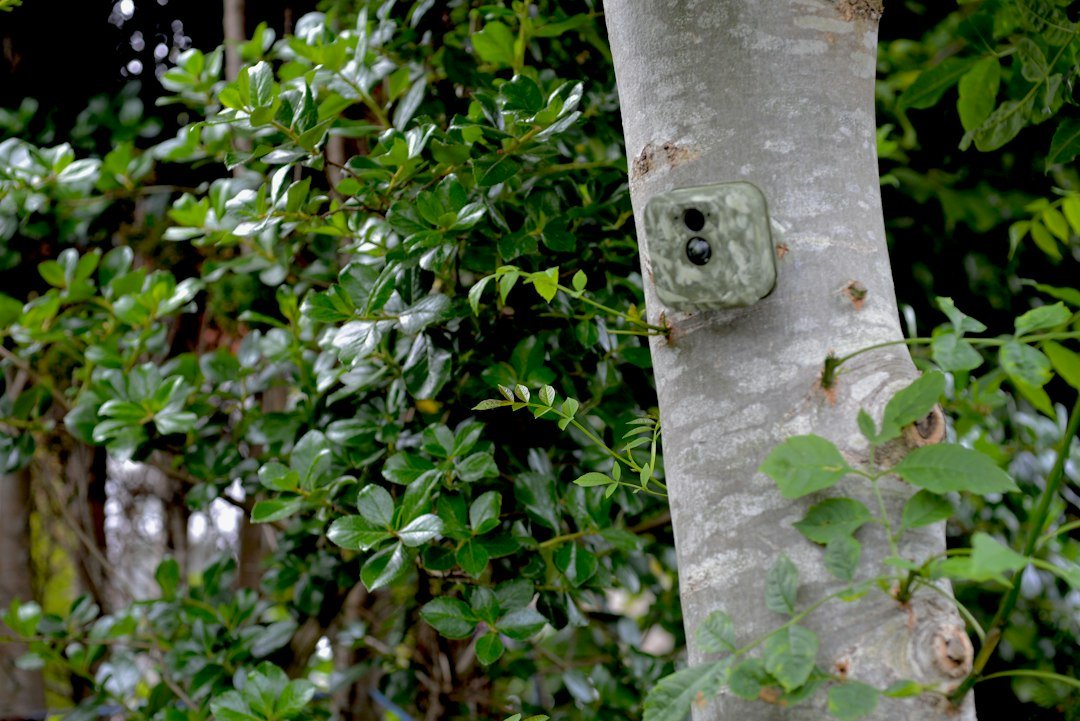
How to spot a trail camera: Look for a compact weather-resistant box with a circular lens, infrared LED panel, motion sensor window, and a mounting strap or bracket. Cameras can be camouflaged and may not show any visible light during normal operation. Observe unfamiliar equipment without touching or disabling it.
What Does a Trail Camera Look Like?
Most trail cameras are compact weather-resistant boxes with a lens, a motion sensor window, and an infrared flash panel. Their housings are commonly brown, green, gray, or camouflage-patterned, so they blend into trees and other natural surfaces. Some are enclosed in metal security boxes or mounted to posts instead of tree trunks. A camera may be positioned at chest height, close to the ground, or higher up depending on what it monitors. Visual identification is not always certain because wildlife sensors, utility equipment, and other outdoor devices can have similar shapes. Look for several distinguishing features together rather than relying on a single dark rectangle.
How to Spot the Camera Lens
A trail camera usually has a small circular glass or plastic lens facing its intended recording area. From a lawful viewing position, the lens may look like a dark circle on the front panel. Reflections can sometimes make it easier to recognize, but a reflection is not proof that an object is a camera. Dirt, protective covers, and camouflage can make the lens difficult to see. Do not approach an unfamiliar camera solely to inspect the lens if the location is restricted or the equipment belongs to someone else. If you are checking your own property, photograph the object from a reasonable distance before deciding what it is.
Recognizing Infrared LEDs
Many trail cameras have an infrared LED array around or above the lens for nighttime recording. This can look like a rectangular panel with small circular elements or a dark translucent window. Some low-glow models emit a faint red light during nighttime captures, while no-glow models are designed to be less noticeable. The LEDs are not necessarily active all the time. Consequently, the absence of a visible flash does not mean a device is not a camera. Infrared LEDs also appear on other equipment, so consider the housing, lens, and mounting arrangement together. Our night vision guide explains the technology.
Looking for a Mounting Strap
A common clue is a webbing strap wrapped around a tree or post. The camera housing is typically held against the support by a buckle or mounting bracket. Some installations use cables, locks, screws, or metal security boxes instead. When inspecting your own installation or authorized monitoring area, the strap can be easier to recognize than a camouflaged housing. Avoid touching, loosening, or cutting unfamiliar straps. An installation may be part of wildlife research, property management, or security monitoring. The presence of a strap alone is not conclusive because signs, sensors, and other outdoor equipment may be mounted in similar ways.
Common Places Trail Cameras Are Mounted
Trail cameras are often positioned to observe wildlife paths, water sources, feeding areas, fence openings, gates, or access roads. Property owners may use them near sheds, remote entrances, or equipment storage areas. Wildlife researchers may place them at specific study sites. Placement height and angle depend on the target subject and terrain, so there is no single reliable height at which every camera can be found. Stay on trails and property where you have permission to be, and do not disturb wildlife habitats to investigate a possible camera. For authorized camera placement, see our mounting height guide.
Can You Spot a Camouflaged Trail Camera?
Camouflage patterns make cameras less visually conspicuous, but the basic shape, lens, and mounting hardware can remain recognizable. A weatherproof housing may be covered with leaves or surrounded by vegetation, although covering the lens or sensor can interfere with recording. If you are relocating a camera you own, compare installation photos with nearby landmarks and check the saved GPS waypoint. That is generally more dependable than trying to identify every camouflaged object in the woods. If you notice a possible camera that is not yours, observe it without handling it. Our finding a trail camera guide covers recovering your own equipment.
How to Tell a Trail Camera From a Birdhouse
A small birdhouse, wildlife monitoring box, or utility enclosure may resemble a trail camera from a distance. Birdhouses typically have an entrance opening or nesting structure, while trail cameras usually present a lens, motion sensor, and flash panel toward the area being monitored. Some specialized monitoring equipment combines these features, so the distinction is not always obvious. Avoid opening any box to check its contents. If the device is on your property and you do not recognize it, consult anyone authorized to install equipment there. A photograph can help the land manager or manufacturer identify the object without unnecessary disturbance.
How to Recognize the Motion Sensor Window
A passive infrared sensor is commonly positioned on the camera’s front panel beneath or near the lens. It may look like a slightly cloudy, curved, or translucent plastic window. The sensor detects changes in infrared energy caused by movement; it does not project a visible beam. A sensor window can help distinguish a trail camera from an ordinary storage box, but other devices use similar sensors. Some cameras combine components in different layouts, so use the model’s overall appearance as a guide. For a technical explanation, read our motion trigger guide.
Do Trail Cameras Have Visible Lights?
A trail camera may show a small status indicator during setup, testing, or startup, but many models suppress visible indicators during normal recording. Low-glow infrared flash may be faintly visible at night when triggered. No-glow designs are less conspicuous. Therefore, a camera that appears dark and inactive may still be recording motion-triggered images. Do not rely on a phone flashlight or a claimed detector app as definitive proof of camera presence. If you are concerned about an unfamiliar device on your property, document the situation and contact the responsible property manager rather than attempting to activate or disable it.
Can a Smartphone Detect a Trail Camera?
There is no reliable universal smartphone app that detects every trail camera. Many SD-card cameras have no active Wi-Fi or Bluetooth signal for a phone to discover. Some cellular cameras transmit intermittently, and a phone’s ordinary network scanner cannot identify all such devices. A flashlight may reveal a reflection in some circumstances, but it also reflects from many harmless surfaces. Claims that a phone can always reveal hidden infrared cameras are overstated. Use ordinary visual inspection on property you are authorized to manage and consult qualified professionals when a serious privacy concern requires investigation. Never access someone else’s camera account or memory card.
Can You See a Trail Camera at Night?
At night, it can be more difficult to recognize a camera housing against a tree. Some cameras emit a faint red infrared glow during a triggered capture, but no-glow models may not show a noticeable flash. Camera status lights may also be disabled during normal operation. Do not assume that a lack of visible light means there is no camera. For your own installation, use the manufacturer’s test mode and known mounting location rather than searching in darkness. Daylight is safer for maintenance, particularly in uneven woodland. If you are concerned about unauthorized surveillance, document the location during safe daylight hours.
How Far Away Can You Recognize a Trail Camera?
There is no fixed distance from which a person can identify every trail camera. Housing size, camouflage, lighting, vegetation, viewing angle, and eyesight all influence visibility. A large security box may be noticeable from farther away than a compact camouflaged camera. The ability to see the camera is separate from its motion detection distance and photographic range. Do not assume that a camera can see you merely because you can see its housing, or vice versa. For the camera’s detection capabilities, see our trail camera range guide.
Spotting Cameras on Your Own Property
If you own or manage a property and find unfamiliar monitoring equipment, start by checking whether family members, tenants, employees, contractors, or authorized wildlife personnel installed it. Take a photograph and note its approximate location without accessing the device. Local laws and agreements may govern camera placement, recording, and removal. Do not assume that an unfamiliar camera is illegal or that you may immediately destroy it. If you have a legitimate privacy or security concern, consult the relevant property manager or local authority. This approach preserves evidence and avoids unnecessary conflict.
Trail Cameras on Public Land
Public land may contain cameras installed by wildlife agencies, researchers, hunters, or other authorized users. Rules for placement and retrieval vary by jurisdiction and land-management agency. A camera seen near a trail does not necessarily belong to the person who last walked there. Do not move, open, or interfere with it. If you suspect a camera violates a specific rule, document its location and ask the land-management authority to investigate. When planning your own installation, check the rules before attaching equipment to trees or structures. Our public-land camera guide discusses considerations.
What to Do If You Find Someone Else’s Camera
Do not remove the memory card, review recordings, change settings, damage the lens, cut a cable, or take the camera. The device may be legitimately installed, and interference can create legal or safety problems. If it is on property you manage, document the location and contact anyone who may have permission to install monitoring equipment. If the camera appears to violate privacy or land-use rules, contact the appropriate authority for guidance. Avoid confronting strangers at remote locations. A respectful, documented approach is more useful than attempting to determine ownership by accessing private recordings.
What If a Trail Camera Is Pointing at Your Home?
A camera aimed toward a residence can raise legitimate privacy questions, but the legal answer depends on jurisdiction, property boundaries, and what the camera records. Do not assume that every camera visible from your home is unlawfully recording you. Note the camera’s location and orientation from a place you are entitled to occupy, and speak with the property owner or appropriate authority if needed. Avoid touching or disabling the equipment. If there is a serious or immediate threat, seek assistance through local channels. This article provides general information, not a legal determination about a particular installation.
How to Identify Your Own Lost Camera
If you are looking for a camera you installed, start with the location records rather than searching indiscriminately. Open saved map pins, review setup photographs, and note the route you took when installing it. Check the last known tree or post and look for your strap or security box. Some cellular models offer location-related features, but not all cameras have GPS tracking. An app’s manually saved location may not update if the camera is moved. Keep serial numbers and purchase records to verify ownership. For a systematic search plan, use our lost trail camera recovery guide.
Can Wildlife Detect Trail Cameras?
Animals may notice camera housings, unfamiliar scents, noises, or visible flash effects, but reactions vary by species and situation. Some deer appear to react to particular camera setups, while others pass without obvious disturbance. Do not assume that every camera is completely invisible to wildlife or that every animal will avoid it. If you install your own camera, minimize unnecessary visits, follow local wildlife rules, and avoid obstructing natural travel paths. Use mounting and positioning practices that serve your monitoring purpose without disturbing animals. Our deer and infrared flash guide explains the distinction.
Frequently Asked Questions
How can you spot a trail camera? Look for a compact outdoor housing with a lens, infrared panel, motion sensor, and mounting strap. Are trail cameras always camouflaged? No, colors and housings vary. Can a phone detect one? Not reliably in every case. Do trail cameras glow at night? Some low-glow models may show faint red illumination during capture. Where are they usually installed? Near wildlife routes or authorized property monitoring points. Can I remove an unfamiliar camera? Do not tamper with it; consult the property owner or responsible authority. Can a trail camera be hidden inside a box? Yes, some use protective enclosures.
Final Checklist: Identify Without Interfering
A likely trail camera often combines a lens, a PIR sensor window, infrared illumination, and a strap or bracket on a tree or post. No single feature guarantees identification, and cameras vary widely by model. For a camera you own, use installation records and saved waypoints. For unfamiliar equipment, observe from a lawful position and avoid touching it. If you have privacy or land-use concerns, document the location and contact the responsible party. To understand legitimate mounting and concealment choices, see our trail camera concealment guide. Accurate identification and respect for property rights should guide every inspection.
As an Amazon Associate, I earn from Qualifying Purchases.