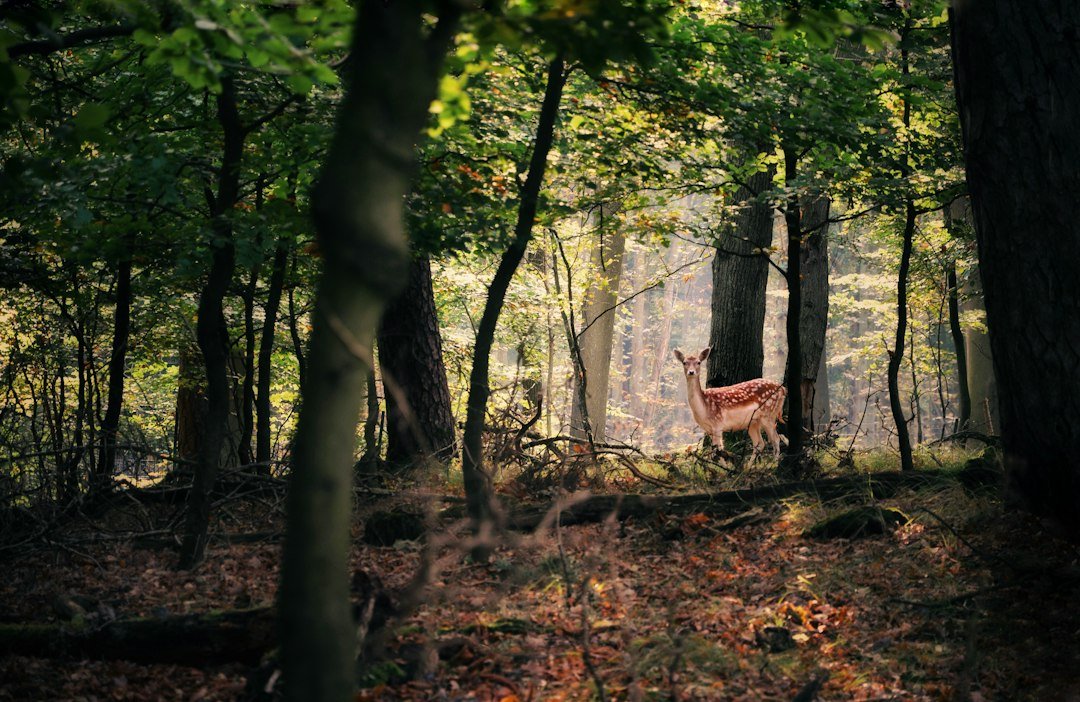
How does a trail camera trigger? Most trail cameras use a passive infrared (PIR) sensor that responds to changing infrared radiation when an animal moves through the detection area. The camera then captures a photo or video. Learn what affects triggering, why empty pictures happen and how to test your setup.
How Does a Trail Camera Trigger?
A trail camera normally triggers when its passive infrared, or PIR, sensor detects a change in infrared energy across its field of view. A warm animal moving against a cooler background can create the changing pattern the sensor is designed to notice. Once the electronics decide the signal meets their trigger criteria, the camera wakes its imaging system and takes a photograph or starts a video clip. The camera does not need a person to press a shutter. It can wait in a low-power state for days or weeks, depending on its batteries and settings.
What Is a PIR Sensor?
PIR stands for passive infrared. Passive means the sensor receives infrared radiation rather than sending out an active beam to find animals. Everything above absolute zero emits infrared radiation, but the intensity and pattern depend on temperature and surface properties. The sensor looks for changes in that incoming pattern, often using optical zones created by a Fresnel lens. It is therefore misleading to say a PIR sensor directly recognizes a deer or identifies an animal’s species. It detects changes that may correspond to a moving subject, and the camera then records the scene.
How a Trigger Happens Step by Step
First, the camera remains armed with its motion sensor monitoring the area. Next, an animal crosses one or more of the sensor’s detection zones, changing the infrared pattern. The camera’s electronics evaluate that change against sensitivity and filtering rules. If the event qualifies, the camera initiates its configured capture mode, such as a still photo, burst or video clip. Afterward, the camera stores the file on its memory card and may enter a recovery or delay period before another capture. Cellular models may additionally queue an image for transmission, but uploading is separate from triggering.
Does the Camera Detect Heat or Motion?
It is most accurate to describe a standard PIR trail camera as detecting changes in infrared radiation caused by movement. It does not operate like a visible-light camera that continuously examines every pixel for motion, although some advanced systems may use additional processing. A stationary animal can be harder for PIR to detect because the infrared pattern changes less. A moving branch can sometimes contribute to false triggers, especially when sunlight heats parts of the scene. A large temperature contrast and movement across detection zones generally make a trigger more likely.
Why Movement Direction Matters
An animal crossing sideways through the camera’s detection area often produces a stronger changing infrared signal than an animal moving directly toward the sensor. The reason is that crossing movement can carry the subject through multiple detection zones. A straight-on approach may create less rapid variation in the sensor’s view, especially at long distance. This is one reason many users aim a trail camera slightly along a path rather than pointing it directly at an approaching animal. Actual performance depends on the lens geometry, sensitivity, distance and model.
What Is Trigger Speed?
Trigger speed is the time between a qualifying detection event and the camera capturing its first image, under the manufacturer’s specified testing conditions. A shorter advertised speed may help photograph fast-moving animals before they leave the frame. However, the number on a product page is not the entire story. Detection-zone shape, sensor sensitivity, shutter timing, light level and placement all influence the resulting image. A camera can have fast electronics yet still miss an animal if the subject never crosses a sensitive zone or is too far away.
Trigger Speed vs Recovery Time
Trigger speed and recovery time are different. Trigger speed concerns how quickly the camera responds to a detected event. Recovery time describes how soon it can be ready for another capture after the previous one, sometimes affected by file processing or video recording. A separate user-selectable delay may intentionally prevent repeated captures for a set number of seconds or minutes. For example, a short trigger speed does not guarantee photographs every second if the camera has a long delay configured. Check the manual to learn which terms your camera uses.
What Is Detection Range?
Detection range is the approximate distance at which the PIR sensor can respond to a suitable moving target under particular conditions. It is not identical to flash range or the distance at which an animal will appear sharp and recognizable in a photo. Manufacturers may test detection using targets and temperatures that differ from your field conditions. Cold mornings, hot afternoons, vegetation and target size can change results. Place the camera where the expected animal route falls comfortably within its practical detection area rather than relying on the maximum advertised distance.
How PIR Sensitivity Affects Triggering
A high sensitivity setting can make the camera more responsive to subtle infrared changes and potentially increase distant detections, but it may also produce more unwanted photographs. Low sensitivity may reduce false triggers in a busy or sunlit location, but it can miss small or distant animals. Medium is often a reasonable starting point if your model provides several levels. Make one adjustment at a time and review the outcome. For detailed guidance, see our PIR sensitivity settings guide.
Why Trail Cameras Take Empty Pictures
An empty-looking photograph does not always mean the camera malfunctioned. A small or fast-moving animal may have passed through the detection zone before the shutter opened. A bird or rodent may be difficult to spot in a wide frame. Sun-heated vegetation moving in the wind can also produce infrared changes that the sensor interprets as an event. Other causes include incorrect aiming, a branch close to the sensor, unstable mounting or an overly sensitive setting. Compare a series of empty images to identify patterns before replacing the camera.
How Sunlight and Temperature Affect PIR
PIR performance depends partly on thermal contrast between a subject and its surroundings. In hot conditions, a warm animal may have less contrast against a sun-heated background, potentially reducing detection reliability. At other times, sunlight warming rocks, grass or branches can contribute to unwanted triggers when those surfaces move or when the sensor sees rapidly changing conditions. Avoid pointing the camera directly into strong sunrise or sunset glare where practical. The effect is model-specific, so test your location rather than assuming one compass direction always works.
How to Aim the Camera for Better Triggers
Mount the camera securely at a height appropriate for your target animal and terrain. Clear grass or branches that are close enough to move through the detection zone, but minimize habitat disturbance. Aim where animals are likely to cross rather than where they may remain far away. Take a walk-test across the intended path if the camera supports a test indicator. Inspect actual images for framing and subject size. Our trail camera aiming guide explains mounting angles and placement in greater detail.
Do Trail Cameras Trigger at Night?
Yes. A standard PIR trail camera can detect infrared changes in daylight or darkness because its motion sensor does not depend on visible light. Once a nighttime event triggers the camera, an infrared illuminator or other flash system may help the imaging sensor record the subject. The illumination system is separate from the PIR detector. Some cameras use low-glow infrared LEDs, while others use no-glow LEDs or visible white flash. Night image quality depends on the illumination distance, exposure, subject movement and model. The sensor’s ability to trigger should not be confused with how far the flash can illuminate.
Can Wind Trigger a Trail Camera?
Wind itself does not emit a moving heat signature like an animal, but it can move sun-warmed leaves, grass or branches through the sensor’s zones. That changing infrared pattern can lead to unwanted triggers. A loose mount can also make the camera move relative to the scene, increasing apparent changes. Reduce the problem by securing the camera firmly, trimming nearby obstructions where appropriate and selecting a less sensitive setting if the model allows it. Review whether false captures cluster on windy afternoons before concluding that wind is the main cause.
Can Rain or Snow Cause False Triggers?
Weather can complicate detection and image quality. Rain and snow may obscure the lens, move vegetation, alter background temperatures or affect how the camera sees the scene. Not every raindrop will trigger a PIR sensor, and precipitation should not be treated as equivalent to a warm animal. Condensation and moisture ingress can also create separate reliability problems. Ensure the weather seals are intact, position the camera according to its installation instructions and check the housing after severe weather. Persistent failures deserve a card, battery and firmware check.
Why a Camera Misses Animals
Missed captures can occur when an animal is outside the effective PIR range, crosses too quickly, moves along an unfavorable path or passes during a configured delay period. A low sensitivity setting, weak batteries, a full memory card or an inactive recording schedule can also prevent useful pictures. Some cameras are set to operate only during certain hours. Start troubleshooting by checking the camera’s clock, armed status, batteries, card and settings. Then perform a controlled walk-test. Change only one variable at a time so you can identify what improved performance.
Does Video Mode Change Triggering?
Photo and video modes can use the same PIR detection process, but they record different outputs after a qualifying event. Photo mode may capture a single frame or a burst. Video mode starts a clip whose duration is configured in the camera’s menu. Video files can be larger and may increase battery consumption, particularly with night illumination. A longer video clip can also delay the next available recording on some models. Choose the mode based on the behavior you want to observe rather than assuming that video is inherently more sensitive to motion.
What About Time-Lapse Mode?
Time lapse is an important exception to the normal motion-triggered workflow. In time-lapse mode, the camera takes pictures on a clock-based schedule, such as every minute or every five minutes, without requiring the PIR sensor to detect an animal. Some cameras combine scheduled pictures with PIR-triggered captures, while others offer the modes separately. Time lapse can be useful for broad fields where animals may be too distant to trigger the sensor. Read our time-lapse guide for setup considerations.
Do Cellular Trail Cameras Trigger Differently?
Many cellular trail cameras still use a PIR sensor to initiate capture, just like non-cellular models. The cellular connection usually handles transferring selected photographs or notifications after they have been recorded. A weak signal can delay or prevent an upload without necessarily preventing the camera from saving the image locally. Model-specific features, such as remote settings and image requests, may work differently. Do not confuse a slow phone notification with slow PIR trigger speed. To diagnose a missed event, first confirm whether the file exists on the camera’s memory card.
How to Test Your Trail Camera Trigger
Begin with fresh batteries, a compatible formatted memory card and a correct clock. Select photo mode, a short delay and a moderate PIR sensitivity setting. Mount the camera where it will be used and activate any test or walk-test mode described in the manual. Walk across the intended detection area at several distances and note where the indicator responds. Then arm the camera and repeat with actual photographs. Compare timestamps and framing, and inspect the images on a computer. Repeat in different light and temperature conditions if detection is inconsistent.
Frequently Asked Questions
Does a trail camera trigger when something stands still? A standard PIR sensor generally responds best to changing infrared patterns, so a motionless subject may not cause a new trigger. Does it detect every animal? No. Size, distance, direction, thermal contrast and settings all matter. Can a camera trigger without an animal? Yes, environmental changes can create false triggers. Is trigger speed the same as detection range? No. Can a trail camera work without PIR? Some models offer scheduled time-lapse capture. Does the camera need Wi-Fi to trigger? No; local PIR detection normally works without a network connection.
Final Takeaway
A trail camera typically triggers because its PIR sensor detects a changing infrared pattern as an animal moves through the detection area. The camera then takes a photograph or starts a video, according to its settings. Trigger speed, recovery time, sensitivity and placement all affect whether the animal appears in the result. If your camera misses activity, begin with a walk-test and a careful review of its mounting angle rather than changing every menu option at once. For manufacturer-specific operation and test procedures, consult the documentation from Browning Trail Cameras or Bushnell for your exact model.
As an Amazon Associate, I earn from Qualifying Purchases.