Use camouflage, lockboxes, low placement, and remote alerts to hide trail camera from thieves.
I have spent years placing trail cameras for wildlife study and property security. I know what thieves look for and what works. This guide shows clear, practical ways to hide trail camera from thieves. Read on to learn proven tips, real mistakes I made, and simple setups that work in the field.
Why hiding trail camera from thieves matters
Trail cameras catch wildlife and deter trespassers. When thieves find cameras they will steal or destroy them. Losing a camera costs money and months of lost data. Hiding cameras helps protect your gear and keeps your monitoring reliable. I will show you simple, low-cost steps anyone can use to reduce theft risk.
Choose the right camera and enclosure
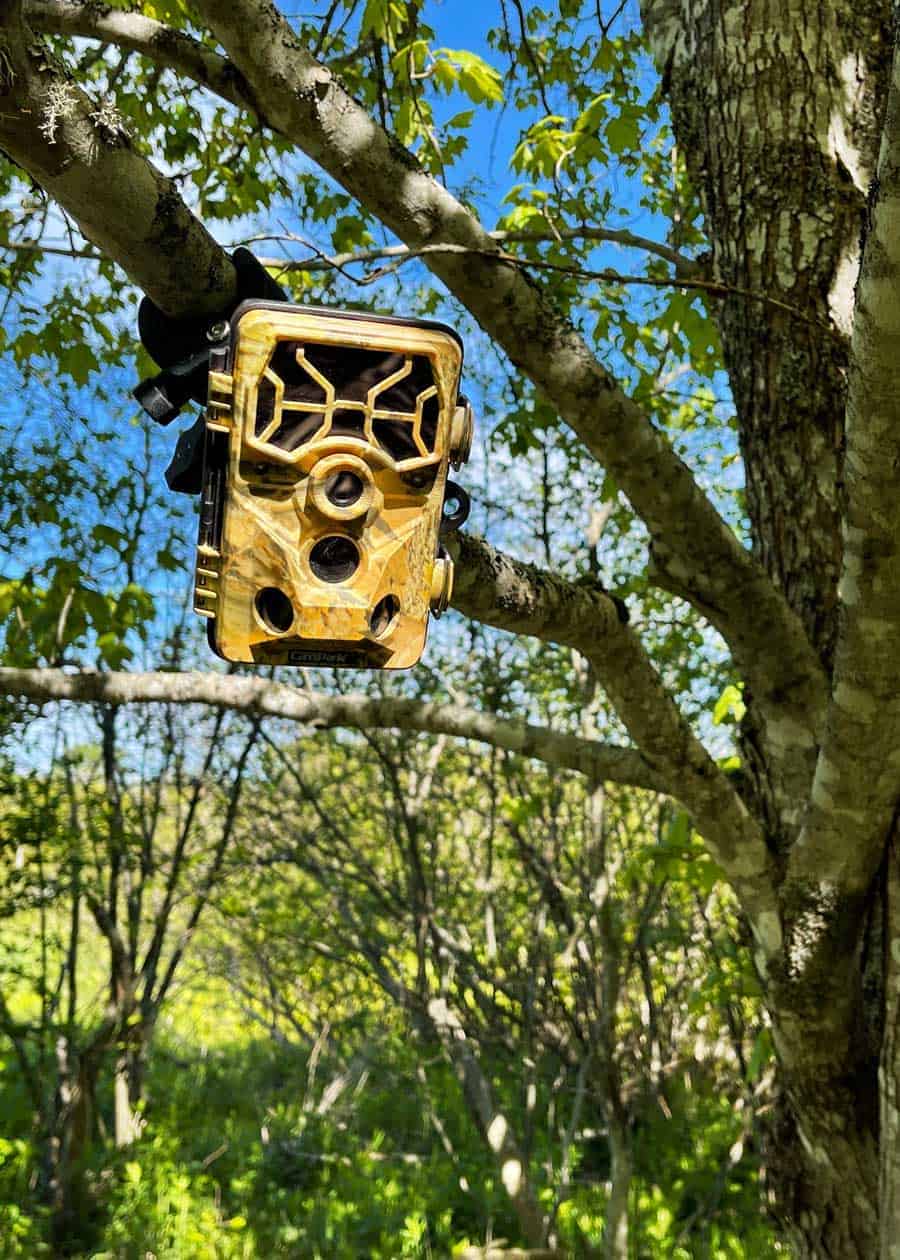
Pick a camera built for stealth and rugged use. Low-glow or no-glow infrared models are less visible at night. Metal or heavy-duty plastic bodies resist quick breakage. Choose a camera with a lockable case or buy a weatherproof lockbox.
Practical gear choices:
- Use a compact, matte-finish camera to reduce reflections and shine.
- Buy a steel lockbox sized for your camera and battery pack.
- Add a Python cable or anchor to secure the lockbox to the tree or post.
How to hide trail camera from thieves starts with gear choices. A good camera and case alone stop many casual thieves. I once lost a camera because it sat in a bright orange case. Learn from my mistake: always remove logos and bright marks.
Best hiding locations and mounting strategies
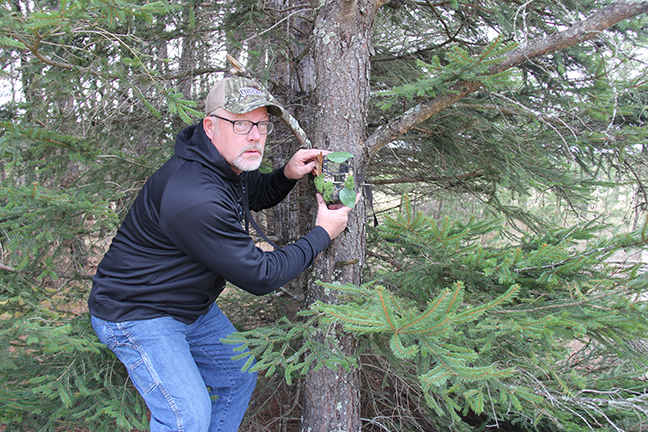
Location beats gadgetry. Place the camera where people don’t instinctively look. Facing a game trail from the side often hides the unit behind foliage. Mount cameras at chest height for natural concealment. Mount low and angle up slightly on game trails. Mount high and angle down on property access points.
Location tips:
- Place near bends, not on straight runs where it’s obvious.
- Tuck behind branches or thick bark so only the lens is exposed.
- Fit the camera flush to the tree to reduce a silhouette.
- Use an offset mount to keep the camera hidden behind a branch or burl.
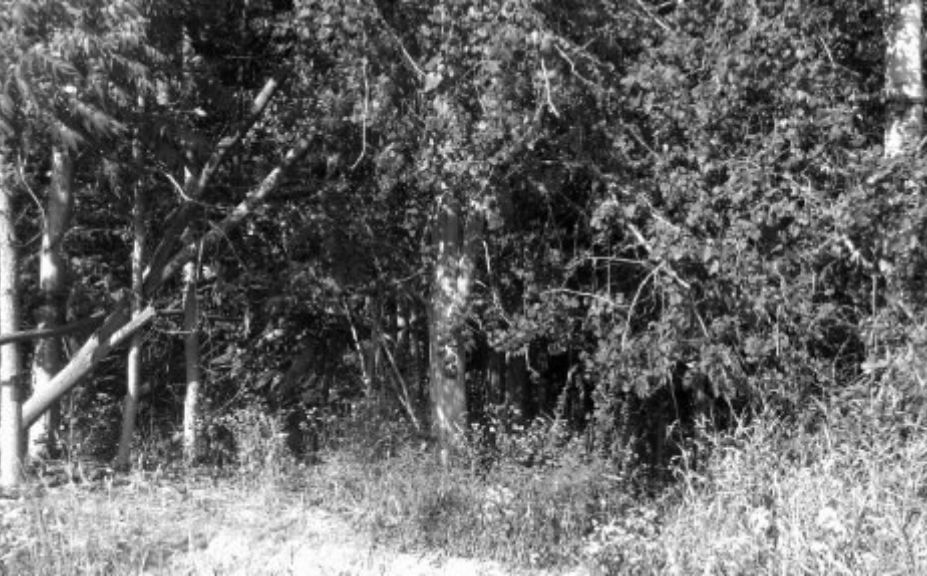
How to hide trail camera from thieves means thinking like a thief. Thieves scan open areas and obvious posts first. Use natural cover and less obvious mounts to avoid that quick glance. I test positions by walking the approach path and noting what is visible from 10–30 feet. This quick test cuts theft risk a lot.
Camouflage, cases, and concealment methods
Camouflage is more than paint. Use texture and depth to break up the camera outline. Wrap the camera in natural material. Use bark, moss, or burlap to blend. Keep the lens area clear. Paint or skin the case with non-reflective, earth tones. Avoid glossy tape or bright adhesives.
Concealment ideas:
- Use a half-log or faux rock housing for ground use.
- Attach natural debris with zip ties so it looks organic.
- Use camo sleeves to mask factory shapes.
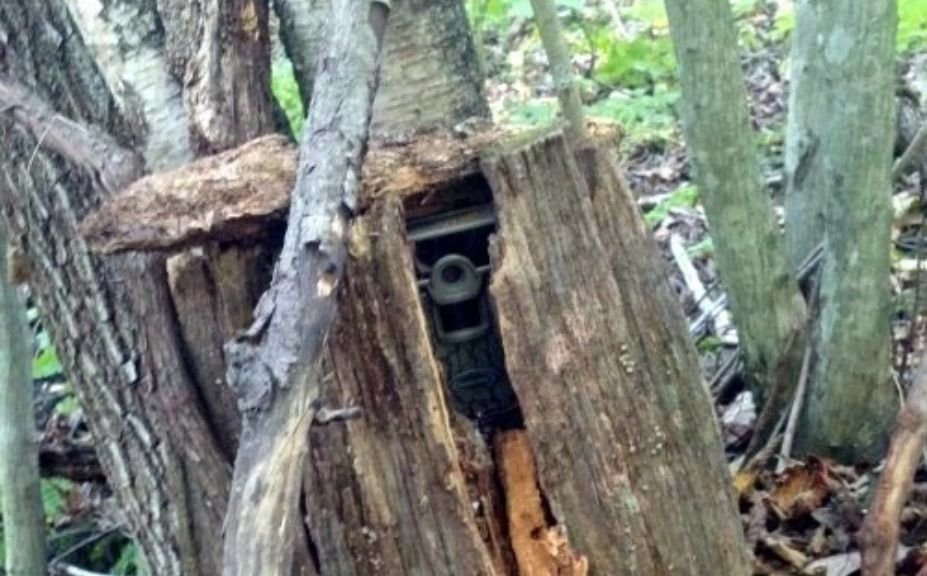
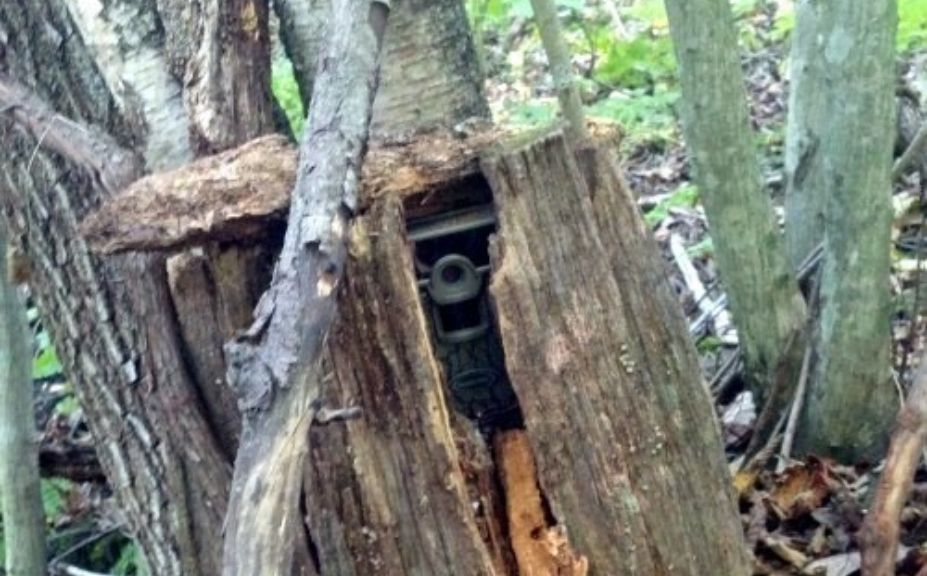
- Cut a small peephole in a hollow log and push the camera inside.
When hiding trail camera from thieves, don’t overdo decoration. Too much covering can attract attention. Also, never block the IR sensor or motion detector. I once over-camouflaged a camera and lost half my nighttime footage. Balance concealment with function.

Anti-theft devices and smart tech
Combine concealment with theft-prevention hardware. A lockbox slows thieves. A Python cable anchored through the box prevents quick grabs. Use tamper-resistant screws on mounts. Add a padlock with a low-profile shield to make cutting harder.
Tech options:
- Use GPS trackers hidden inside the camera or battery pack.
- Enable cellular alerts so you get notified of motion or tampering.
- Use cameras that lock images to cloud storage to avoid card theft.
- Add a decoy camera to fool thieves while your real unit stays hidden.
How to hide trail camera from thieves includes tech. A GPS tracker gives you recovery chances. Cellular alerts let you act quickly. These add cost but cut loss risk. In one case I retrieved a stolen camera because the tracker reported its location within 48 hours.
Operational tips and legal and ethical considerations
Good operation reduces risk. Rotate camera locations every few weeks. Remove visible straps and factory labels. Use plain tape to cover logos. Record serial numbers and photos of each camera for insurance and police reports. Avoid placing cameras where they record private areas of neighbors. Follow local laws about surveillance and hunting seasons.
Daily practice tips:
- Keep backups of images in the cloud or a secure drive.
- Hide memory cards in a sealed compartment if the camera allows.
- Label gear inside the case with your contact but not your full address.
How to hide trail camera from thieves also means acting responsibly. Respect privacy and landowner rules. If you are unsure about a legal point, get advice. Transparency with landowners reduces conflict and theft risk.

Maintaining and monitoring your hidden cameras
Check hidden cameras regularly but not predictably. Vary visit times and routes. Inspect mounts, seals, and concealment to keep the camera working. Update firmware and test sensors before leaving the site.
Maintenance checklist:
- Check battery health and replace before drain.
- Clean the lens and IR window to avoid false triggers.
- Inspect straps, locks, and cable anchors for wear.
How to hide trail camera from thieves is an ongoing task. A well-hidden camera still needs care. My best setups lasted months with two quick maintenance visits. Keep a log of visits and findings to refine your approach.
Frequently Asked Questions of how to hide trail camera from thieves
Can I use a lockbox to hide a trail camera?
Yes. A lockbox both hides and secures the camera. Use a sturdy box with a padlock and anchor it to a tree or post.
Will camo tape make my camera invisible?
Camo tape helps but won’t make it invisible. Use tape with natural textures and combine it with branches or bark for best effect.
Is a GPS tracker worth it for a trail camera?
Yes for high-value cameras. GPS trackers increase recovery chances if a thief removes the unit.
How often should I move my trail camera?
Move it every 2–6 weeks if theft is a concern. Rotation reduces the chance thieves learn camera spots.
Can cellular alerts stop a thief?
Alerts do not stop theft instantly, but they let you respond fast. They are most useful with a nearby partner or security service.
What legal rules should I watch for when hiding cameras?
Avoid recording private spaces or areas where people expect privacy. Check local laws on surveillance and property access before installing.
Conclusion
Hiding trail camera from thieves is about smart gear, careful placement, and steady practice. Use camouflage, lockboxes, and tech together. Test vantage points, rotate locations, and keep good records. Start with one discreet mount and refine it over time. Try a low-cost lockbox and a simple camo sleeve this week. Share what works, and consider subscribing or commenting to get more tips and tricks.
As an Amazon Associate, I earn from Qualifying Purchases.