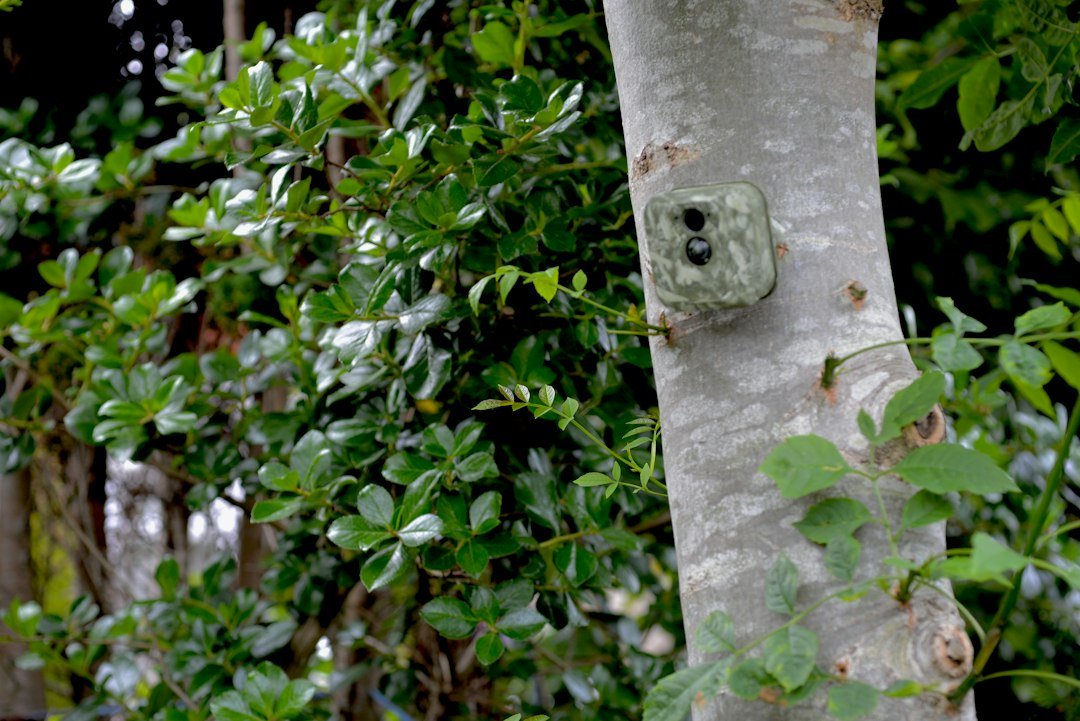
What does a trail camera do? A trail camera automatically takes pictures or videos when an animal or person moves through its detection area. It is designed for unattended outdoor monitoring, so you can discover wildlife activity without standing nearby. This guide explains what it records, how the sensor works, and how to use it effectively.
What Does a Trail Camera Do?
A trail camera automatically photographs or records wildlife and other activity while nobody is standing behind it. You mount it outdoors, choose the recording settings, and leave it armed. When a subject moves through the sensor’s detection area, the camera captures a photograph or short video. Many models also work at night with infrared illumination. People use them to learn when deer travel, watch backyard animals, document biodiversity, observe remote property and understand activity without visiting constantly. It is not necessarily a continuously recording surveillance camera; most models spend much of their time in a low-power standby state.
How a Trail Camera Detects Animals
Most consumer trail cameras use a passive infrared sensor, often abbreviated PIR. It detects changes in infrared energy as a warm or cool subject moves across the background. This is different from recognizing an animal with artificial intelligence or continuously analyzing a video stream. An animal crossing the detection zone often produces a stronger trigger than one approaching directly, although performance depends on the design and conditions. If the air and animal are similar in temperature, detection can become less reliable. A moving sun-warmed branch or a changing background can also cause an unwanted trigger. The detection area may not exactly match the photographed field of view.
What Happens After the Sensor Triggers?
Once the PIR sensor detects an appropriate change, the camera wakes its imaging system and takes a picture or begins recording. Trigger speed describes the time between detection and capture. Recovery time is how long the camera needs before it is ready to capture again. Both influence whether a fast-moving deer is fully visible or partly outside the frame. Many cameras let you choose one photo, a burst of photos, or a video clip for each event. A trigger interval or delay can prevent hundreds of nearly identical images when an animal remains nearby. The best settings depend on whether you want an identification photograph or a record of behavior.
Does a Trail Camera Work at Night?
Yes. Many trail cameras use infrared LEDs to illuminate the scene after dark. Night images are commonly black and white because the camera records infrared illumination rather than ordinary visible color. Low-glow systems may show a faint red emitter glow; no-glow systems are designed to minimize that visible glow. Some cameras use a white flash for color nighttime images, but it is more conspicuous. The effective night range depends on the camera’s illumination, lens, exposure and conditions. Avoid placing reflective branches close to the camera, because they can cause bright white foreground glare while the animal remains dark.
What Does a Trail Camera Record?
Depending on its features, a trail camera can save still photographs, video clips, timestamps, temperature readings, moon phase information and other metadata. Not every model offers all of these features, and recorded temperature or moon data may not be accurate enough for scientific measurement. Most standard models save files to a compatible SD or microSD card. Cellular models can transmit selected files or previews to a mobile app when network coverage and an active service plan are available. A camera with Wi-Fi may allow nearby file access without providing long-distance internet uploads. Check the actual specifications rather than assuming all wireless cameras behave the same way.
What Do Hunters Use Trail Cameras For?
Hunters commonly use trail cameras to learn where game animals travel and when activity occurs. Repeated photographs can show whether deer use a trail mostly at dawn, after dark or at another time. A camera can also reveal how activity changes through the season. However, a picture is a sample of activity at one place, not a complete population count or a guarantee that an animal will return. Trail camera regulations vary across states and public lands, including rules about hunting seasons and placement. Always check the relevant wildlife agency before using cameras for hunting-related monitoring.
What Do Wildlife Researchers Use Them For?
Camera traps help researchers document animals that are difficult to observe directly. They can record species presence, activity patterns and behavior without a person waiting nearby. Researchers often use consistent placement, dates, camera settings and identification methods so results can be compared. Even so, a camera can miss animals outside its detection zone, and one animal may trigger it many times. This makes camera counts different from actual numbers of animals unless an appropriate study design and analysis are used. Conservation groups also use camera traps for education and to help communities understand local biodiversity.
Can a Trail Camera Monitor a Yard or Property?
A trail camera can photograph movement near a gate, garden, barn or remote path. It is particularly useful where electrical outlets or wired internet are unavailable. A cellular model may send alerts, depending on its service plan and signal. But most trail cameras are not substitutes for full security systems. They may miss events outside their detection zone, have a delay before capture, and lack continuous recording, two-way audio or guaranteed real-time notification. Respect privacy, obtain permission where necessary and avoid aiming toward areas where people reasonably expect privacy.
What Is the Difference Between a Trail Camera and a Security Camera?
A typical trail camera prioritizes long unattended operation, battery power, weather resistance and motion-triggered wildlife images. A dedicated security camera may prioritize continuous video, network access, rapid notifications, integration with other security devices and broader monitoring features. There is overlap: some cellular trail cameras offer remote alerts and some battery security cameras operate on motion detection. Choose based on the actual task. For identifying wildlife on a distant path, a trail camera is often practical. For comprehensive home security, a dedicated security system may be more appropriate.
Where Should You Put a Trail Camera?
Choose a stable tree or post overlooking a route animals are likely to use. Place the expected subject near the center of the image and test the angle. A diagonal view across a trail can give the sensor time to detect a passing animal while keeping it in the frame. Avoid direct sunrise or sunset, moving vegetation and nearby reflective objects. Mounting height depends on the animal size, terrain and distance. For deer, start with a height that keeps the full animal in view, then adjust based on test photographs. See our trail camera aiming guide for more detail.
How Do You Set Up a Trail Camera?
Begin by reading the model’s manual and checking the battery type and supported memory card. Insert fresh compatible batteries and a formatted card if required. Set the date and time, choose photo or video mode, and select a reasonable trigger interval. Secure the camera to a tree or post with the supplied strap. Use test mode to walk through the detection area and review the resulting images. Adjust the angle and distance until the subject appears where you want it. Finally, switch the camera into its armed or ON mode and close the housing properly. Our complete setup tutorial covers the process.
How Long Can a Trail Camera Run?
Runtime varies dramatically with batteries, ambient temperature, the number of triggers, nighttime illumination, video length and wireless transmissions. A standard camera that takes a few photographs each day may run much longer than a cellular model uploading frequent videos in a weak-signal area. Some models support compatible external batteries or solar accessories. Rather than relying on an advertised maximum battery life, estimate how many events occur at your location and test the actual runtime. Check the manufacturer’s guidance before mixing battery chemistries or connecting a power accessory.
Can You View Trail Camera Photos on Your Phone?
With a cellular trail camera, yes, if the model, network and subscription support remote uploads. The camera generally sends files or previews through a cellular connection to the manufacturer’s service. A Wi-Fi-enabled model may allow you to view or transfer images when your phone is within wireless range, but this does not automatically mean it can upload over the internet from a remote forest. Ordinary nonwireless cameras require a memory card reader or direct connection. Learn how remote models work in our cellular trail camera guide.
Why Does a Trail Camera Take Empty Pictures?
Empty photographs can result from a subject leaving the frame before the shutter fires, the sensor detecting movement outside the camera’s visible field, or changing infrared energy in the background. Vegetation moving in the wind and sunlit surfaces can also contribute. Check the mounting angle, remove close obstructions where permitted and use the camera’s test mode. If the model supports PIR sensitivity adjustment, change one setting at a time and compare results. Repeated empty pictures do not automatically indicate a defective camera. See our PIR sensitivity guide.
What Should You Look for When Buying One?
Focus on dependable detection, usable nighttime images, weather resistance, compatible power options and straightforward controls. Fast trigger speed can help capture moving animals, but a quick camera still needs good positioning. High advertised megapixel counts do not necessarily mean better image detail because some models enlarge images digitally. If you want remote uploads, compare network compatibility and ongoing data-plan costs. Also consider whether the camera uses a visible white flash, low-glow infrared or no-glow infrared. Our trail camera buying guide explains these trade-offs.
Frequently Asked Questions
Does a trail camera record all the time? Usually not; most consumer models record when triggered, although some offer time-lapse modes. Can a trail camera work without internet? Yes, standard cameras record locally, while cellular uploads require connectivity. Will a trail camera photograph people? Yes, a person entering the detection area may trigger it. Can animals see the flash? White flash is visible, low-glow infrared may produce a faint red glow and no-glow reduces visible emission. Do trail cameras need batteries? Most portable models use batteries, sometimes with external power options. Are trail cameras waterproof? Many are weather-resistant, but the exact protection rating varies by model.
The Bottom Line
A trail camera quietly documents activity when people are not present. Its main job is to detect a moving subject and record useful photographs or video, often both day and night. Standard cameras store files locally, while cellular versions can send selected images to a phone when service is available. Good placement, a compatible power source and a successful walk test matter as much as the specifications printed on the box. For reliable wildlife monitoring, use the camera responsibly, minimize disturbance and check local placement rules.
Sources and Further Reading
Missouri Department of Conservation: Camera Traps; Browning Trail Cameras: PIR Sensor; Utah State University Extension: Using Trail Cameras.
As an Amazon Associate, I earn from Qualifying Purchases.