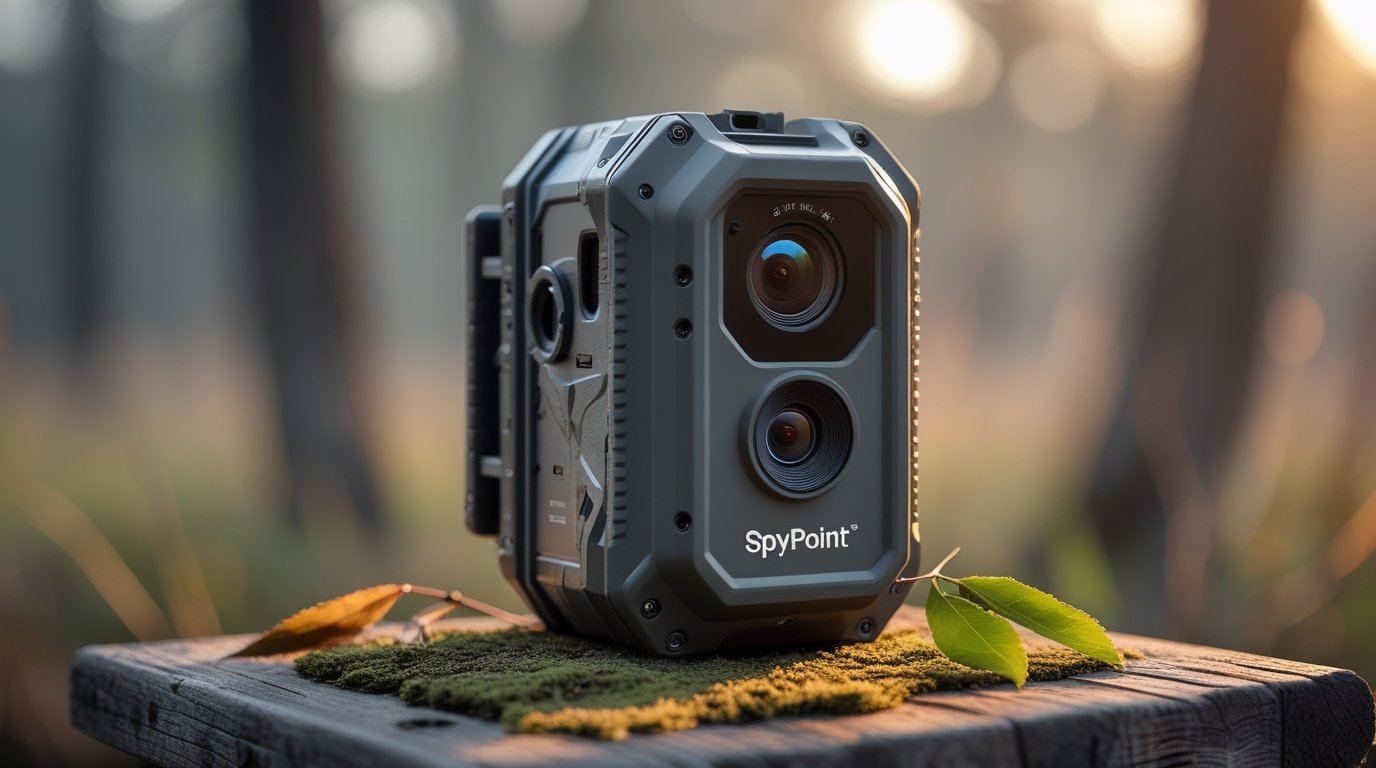
Is SPYPOINT a good trail camera? For many people who want affordable cellular wildlife monitoring, yes—but the answer depends on the specific model, your cellular coverage, and whether you value convenience more than premium image quality. This evidence-based guide compares practical strengths, weaknesses, and buying considerations using recent independent field tests.
Quick Verdict: Is SPYPOINT Worth Buying?
SPYPOINT is a good choice for buyers who value affordable cellular connectivity, straightforward setup, and the ability to check wildlife activity remotely. It is not automatically the best choice for photographers who demand the sharpest night images, immediate alerts, or long battery life without additional accessories. Independent field tests in 2026 offer a useful middle ground: the FLEX-M2 earned a best-value recommendation from Field & Stream, while Outdoor Life praised its affordable plans but reported transmission delays and limited battery endurance. Digital Camera World found the solar-powered FLEX-S-DARK convenient and reliable as a connected device, yet criticized its image processing and motion blur. Those differences matter more than a blanket yes-or-no verdict. Pick the model for the job rather than assuming all SPYPOINT cameras perform alike.
What Makes SPYPOINT Different?
SPYPOINT offers both cellular and non-cellular trail cameras, but its cellular FLEX models are the reason many buyers consider the brand. Cellular cameras record activity locally and transmit selected images over a mobile network to a companion app. This can reduce trips into the field, especially when a camera is located on distant hunting property or at a remote gate. Some models use multiple SIM or carrier options to find a usable network. That convenience does not guarantee coverage at every location, and the upload schedule is not necessarily instantaneous. A camera with an attractive price can also have ongoing service costs. Before purchasing, confirm that the exact model, its cellular service, and the available plan work in the country and region where you intend to deploy it.
SPYPOINT FLEX-M2: A Budget Cellular Option
The FLEX-M2 is one of the most compelling entry points for someone who wants a cellular trail camera without a large upfront investment. Field & Stream’s 2026 field test highlighted the model’s compact design, simple setup, dependable detection, and value. Its reviewer also observed occasional false triggers that improved after adjusting sensitivity. Outdoor Life independently described the FLEX-M2 as an affordable and capable camera but reported that some pictures took hours to transmit and that battery life was a drawback during testing. That combination suggests a sensible role: wildlife scouting where an occasional transmission delay is acceptable. It is a weaker fit for security situations requiring guaranteed immediate notification. Budget for suitable batteries and a compatible memory card, not only the camera itself.
SPYPOINT FLEX-S-DARK: Solar Convenience With Tradeoffs
The FLEX-S-DARK is more appealing when reducing maintenance visits is a priority. It incorporates a solar panel, cellular connectivity, and infrared flash options into a single package. In Digital Camera World’s September 2026 field test, the reviewer liked the integrated solar design, easy app management, and reliable network connectivity. However, she found uneven night illumination, motion blur, and heavily processed daytime images. The solar panel performed best in bright conditions and supplied less energy under a woodland canopy. This is an important practical limitation: built-in solar does not mean the battery will remain charged indefinitely in shade, winter weather, or a very busy location. Choose this model for convenience and lower maintenance demands, not because it guarantees superior photo detail.
Image Quality: Good Enough for Wildlife?
For many hunters, the important question is whether a camera can show when deer, turkeys, or other animals visited a location. SPYPOINT can perform that job well, especially when the subject is inside the detection and illumination zone. However, advertised megapixel numbers do not by themselves prove superior image quality. Lens quality, exposure, sensor performance, processing, and subject movement all influence the result. Digital Camera World’s FLEX-S-DARK review reported bright areas losing detail, uneven nighttime infrared illumination, and blurred moving subjects. Conversely, Field & Stream’s FLEX-M review found surprisingly good daytime and nighttime images for the price. These are different models tested in different conditions. Judge real sample photos and independent testing for the model you are considering rather than extrapolating from one review.
Trigger Speed and Detection Reliability
A trail camera needs to detect movement and wake up quickly enough to record the subject while it is still in frame. The FLEX-M2 has an advertised 0.4-second photo trigger, but real-world success depends on mounting angle, walking direction, ambient temperature, vegetation, and sensitivity settings. Field & Stream found the FLEX-M2 capable in its field test, including at longer deer-sized target distances, although it also saw some false triggers. Outdoor Life reported successful detections at tested distances but not at every extreme range. Those observations are more meaningful than treating a published maximum detection distance as a guarantee. Before leaving any trail camera unattended, run a walk test across the actual path animals use. Check the photographs rather than relying only on a blinking test indicator.
Battery Life: A Common Compromise
Cellular uploads, frequent motion triggers, infrared illumination, and long video clips can all consume energy. In Outdoor Life’s 2026 FLEX-M2 test, the reviewer reported roughly a month and a half of operation on AA batteries in the conditions tested; that is a single test outcome, not a universal runtime specification. Field & Stream also identified battery endurance as a weakness relative to some alternatives. You may get different results depending on temperature, camera settings, activity, and power source. SPYPOINT offers compatible rechargeable packs and solar accessories for certain models, but the exact options vary. Avoid mixing battery chemistries or connecting an external pack merely because its plug fits. Verify the manufacturer’s voltage and polarity requirements for your specific camera.
Cellular Coverage and Transmission Delays
SPYPOINT’s biggest attraction is receiving images without physically retrieving a memory card. The app can make remote monitoring convenient, but an uploaded image may not arrive at the moment it was taken. Some models connect according to a configured schedule; weak reception or network congestion can also affect timing. Outdoor Life documented delayed FLEX-M2 photo transfers during field testing. Digital Camera World similarly noted synchronization delays and that certain settings changes took effect only at the next connection. If you are using the camera to monitor wildlife, those delays may be perfectly acceptable. If you need immediate notice of a trespasser, they are a major consideration. Always verify local coverage with a real transmission test before treating a cellular trail camera as a dependable alerting device.
SPYPOINT App: Useful but Not Magic
The companion app helps owners view transmitted images, manage cameras, and check information such as signal and battery status, depending on the model. Reviewers of recent FLEX models have generally found the setup process and app interface approachable. Still, an app cannot correct poor camera placement, blocked infrared illumination, weak cellular coverage, or an exhausted battery. Features such as filtering, video delivery, and on-demand requests may also differ by model and subscription. Read the exact plan terms before buying, especially if you want frequent video clips rather than a small number of still images. Set realistic expectations: the app is a convenient interface to a field device, not proof that every event will be captured or uploaded without delay.
Do You Need a SPYPOINT Subscription?
A major selling point is SPYPOINT’s free photo-transmission option for eligible cellular cameras. Recent independent reviews describe a free allowance of 100 transmitted photos per month, with paid plans available for greater usage. Plan prices, features, billing terms, and eligibility can change, so verify them on SPYPOINT’s official website before purchase. Also distinguish locally recorded images from images transmitted to the app. A camera may continue saving files to its memory card after a transmission allowance is exhausted, but you may not receive those files remotely until the plan permits it. A low-traffic feeder or gate might fit within a modest allowance, while a busy wildlife trail can generate far more activity. Calculate your likely photo volume rather than choosing a plan based solely on the monthly headline price.
Is SPYPOINT Good for Hunting?
SPYPOINT is particularly attractive for hunters who want to check activity patterns without disturbing a location with frequent visits. A small, affordable cellular model can help monitor multiple trails or feeding areas. The ability to view pictures from a phone is useful when travel time is significant. Nevertheless, a camera is only as useful as its deployment. Position it on a stable mount, avoid moving grass in the foreground, verify date and time, and confirm that the target animal appears clearly in daytime and nighttime test shots. If your primary goal is identifying individual animals from fine coat or antler details, prioritize real-world image quality over the lowest price. Local hunting rules may restrict the use of cellular cameras or cameras for hunting, so check regulations before deployment.
Is SPYPOINT Good for Property Security?
A SPYPOINT camera can supplement security at a remote shed, private gate, equipment yard, or cabin, particularly when power and Wi-Fi are unavailable. However, wildlife cameras are usually optimized for motion-triggered capture rather than continuous recording or professional alarm monitoring. Delayed cellular transmission can be a serious disadvantage if you need an immediate response. Privacy laws and audio-recording rules vary by location, so aim the camera at areas you are entitled to monitor and avoid recording neighboring private spaces. Protect the device against theft and confirm that its memory card is secure. For practical placement and testing, see our guide to using a trail camera for security. Do not rely on a trail camera as your only protective measure.
SPYPOINT vs Tactacam, Browning, and Moultrie
The best alternative depends on what you value. If inexpensive cellular service is the priority, SPYPOINT’s entry-level FLEX models are worth shortlisting. If sharper photographs, different night illumination, or particular app features matter most, compare independently tested Tactacam, Browning, and Moultrie models rather than assuming one brand dominates every category. Digital Camera World’s 2026 comparison praised SPYPOINT’s integrated solar convenience while noting that competing Browning models could produce stronger images in some scenes. Outdoor Life likewise identified strengths and weaknesses across different cellular cameras. Compare the total cost of ownership: camera, memory card, batteries or solar accessories, subscriptions, and travel for maintenance. A cheaper camera is not always cheaper if it needs frequent service visits or misses the events you care about.
How to Set Up a SPYPOINT Camera for Better Results
Begin by reading the manual for the exact model and confirming that you have a compatible memory card and approved power source. Activate the camera through the official process and ensure the app recognizes it. Install the device where there is usable cellular service if it is a cellular model. Mount it securely, clear vegetation directly in front of the sensor, and angle it toward a defined path rather than a huge open area. Set the correct date, capture mode, sensitivity, and transmission schedule. Then walk across the detection zone and review the saved photographs. For cellular units, wait for a confirmed uploaded image rather than assuming the setup is complete because a signal indicator appears. Our trail camera aiming guide explains placement fundamentals.
Common SPYPOINT Problems and Practical Fixes
If a SPYPOINT camera does not turn on, check the battery type, polarity, tray connection, and power source specified by its manual. If it records locally but sends no photos, check the active plan, registration, signal, and transmission schedule. If pictures are blank or blurry at night, remove reflective branches close to the infrared LEDs and test at a shorter distance. If you receive many empty pictures, adjust the position and sensitivity before assuming the PIR sensor is defective. For card errors, back up images and follow the manufacturer’s supported-card and formatting instructions. Avoid installing firmware for a different model. If basic checks fail, contact SPYPOINT support and preserve the model number and failure details. Our trail camera troubleshooting guide covers these issues step by step.
What Real Customer Complaints Tell Us
Not every owner has a smooth experience. Consumer review platforms include complaints about failed cameras, batteries, solar performance, subscription confusion, and customer support. These accounts are useful warnings, but review websites are self-selected samples and do not establish an industry-wide failure rate. Likewise, one glowing review does not guarantee that a particular unit will work perfectly for years. Independent controlled field tests provide a different kind of evidence: they can document detection, upload delays, image quality, and battery endurance under stated conditions. The most balanced approach is to read both, check warranty terms, and buy from a seller with a clear return policy. Keep receipts and test the camera thoroughly before relying on it at a remote location.
Who Should Buy SPYPOINT and Who Should Skip It?
Buy a SPYPOINT cellular trail camera if you want affordable remote wildlife monitoring, appreciate app-based image delivery, and can tolerate some delay between capture and upload. The FLEX-M2 is especially appealing for value-focused users; the FLEX-S-DARK may suit those who want integrated solar convenience and fewer trips to change batteries. Consider another camera if sharp night imagery, dependable action video, or instant security alerts are your top priorities. Also reconsider a cellular model if the installation area lacks usable mobile coverage. If you can visit the camera regularly and do not need remote uploads, a non-cellular trail camera may be simpler and less expensive over time. Match the purchase to your actual monitoring needs, not to marketing resolution figures alone.
Frequently Asked Questions
Are SPYPOINT cameras reliable? Independent 2026 tests found capable cellular performance in several models, but reviewers also reported battery-life limits, delayed transmissions, and image-quality compromises. Does SPYPOINT have a free plan? Recent reviews report an eligible free tier of 100 transmitted photos per month; check current official terms. Which SPYPOINT camera is best for beginners? The FLEX-M2 is a reasonable budget starting point based on independent field tests. Are SPYPOINT cameras good at night? They can record usable infrared images, but clarity and motion blur vary significantly by model and conditions. Can SPYPOINT work without Wi-Fi? Cellular models use compatible mobile networks for remote uploads, while locally saved files use memory cards. Will photos arrive immediately? Not necessarily; reviewers have documented transmission and synchronization delays. Can I use one for security? Yes, as supplemental monitoring, but not as a guaranteed instant alarm system.
Final Verdict and Independent Sources
SPYPOINT is a worthwhile brand to consider for budget cellular trail cameras, especially when convenience matters more than top-tier photographic detail. The FLEX-M2 stands out as an affordable way to begin remote scouting, while solar-equipped models offer a different convenience tradeoff. The important caveat is that performance differs across models and locations. Before buying, compare actual field-test images, plan terms, and battery requirements for the exact product. Sources used for this assessment include Field & Stream’s 2026 cellular camera tests, Outdoor Life’s 2026 comparison, Digital Camera World’s FLEX-S-DARK field review, and SPYPOINT’s official product catalog. Reviews reflect their stated test conditions rather than universal guarantees.
As an Amazon Associate, I earn from Qualifying Purchases.