
How Much Do Cellular Trail Camera Plans Cost? Brand-by-Brand Guide (2026)
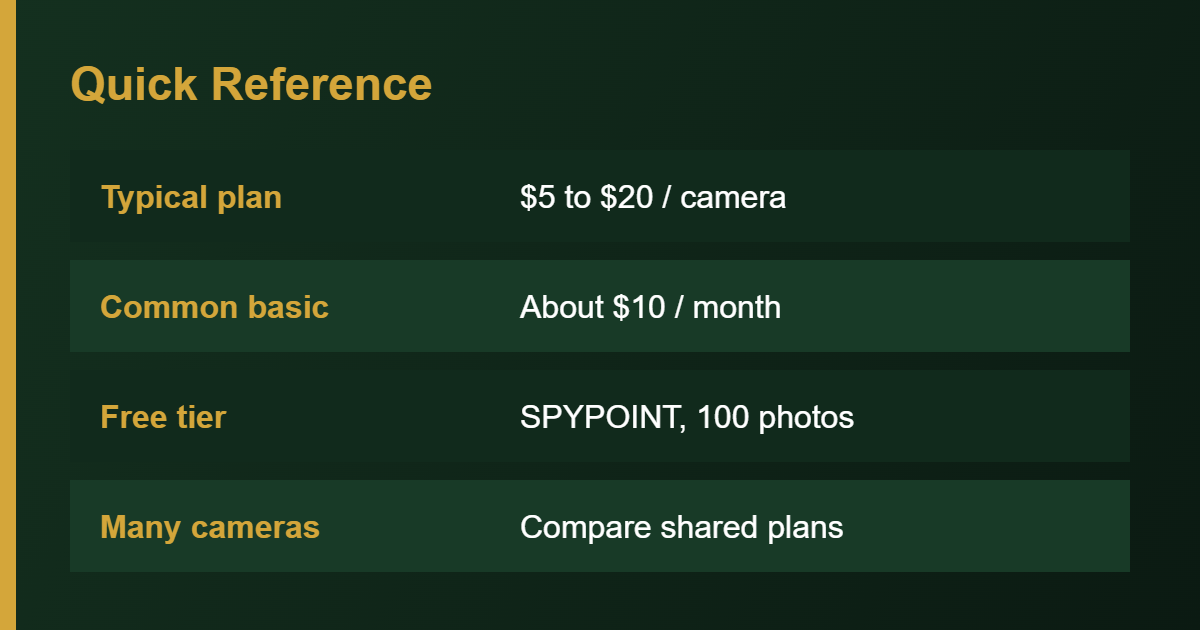
Short answer: Most cellular trail camera plans cost about $5 to $20 per camera each month, with $10 a month the common basic level. SPYPOINT offers a free tier of 100 photos a month, and Tactacam uses a shared account plan that can cover several cameras. Almost every other brand bills per camera, so the total depends on how many cameras you run and how many photos and videos you want.
Typical plan cost by brand
Plan prices change often and vary by tier, so treat these as typical ranges from retailers and review sites, then confirm in the camera’s app before you subscribe.
| Brand | What to expect | More detail |
|---|---|---|
| SPYPOINT | Free 100 photos; paid tiers around $5, $10 and $15 | SPYPOINT plans |
| Bushnell | About $10 to $15, no contract | Bushnell plans |
| Moultrie | Around $10 for a standard plan; higher for unlimited | Moultrie Mobile plans |
| Tactacam | From about $5 for a starter; account plan can cover multiple cameras | Cheapest plan guide |
| Stealth Cam | Around $10 through the Command app | Command app guide |
Outdoor Empire puts the average basic plan at about $10 a month and says plans range from free to as much as $100 a month, depending on the provider and how many full-resolution images you send. Field & Stream cites roughly $13 per camera per month for unlimited images plus a set number of videos.
What makes plans cost more
- Photo allowance. A few hundred versus thousands versus unlimited.
- Video. Often a separate allowance or an extra charge.
- HD or full-resolution photos. Some plans send thumbnails only; full-size downloads can cost extra or use a separate allowance.
- Number of cameras. Per-camera billing multiplies the total. Shared account plans change the math.
- Billing period. Annual billing is usually cheaper per month than month-to-month.
- Extras. Live view, species filters and mapping add-ons can raise the price.
What it costs per year
| Cameras | At $5 each | At $10 each | At $15 each |
|---|---|---|---|
| 1 | $60 | $120 | $180 |
| 2 | $120 | $240 | $360 |
| 3 | $180 | $360 | $540 |
| 5 | $300 | $600 | $900 |
Those are simple multiplications, not quotes from any brand. They show why the plan, not the camera, is often the biggest cost over several years. One review site calculates that a $120 camera on a $10 plan costs about $360 over two years.
Per-camera plans versus shared plans
Per-camera billing is the norm. SPYPOINT, for example, requires a separate plan for each camera. A shared account plan can be much cheaper for larger setups: one review site says a single Tactacam account plan around $13 a month can cover several cameras, which compares well against five separate $10 plans. Moultrie also offers pooled options. If you run three or more cameras, compare shared plans before choosing a brand.
Free and trial options
- SPYPOINT: a free tier of 100 photos a month per camera, with no commitment. After a paid period ends, the camera drops back to the free tier.
- Bushnell: some CelluCORE models include a free first 30 days.
- GardePro: advertises a free first month on a new account’s first plan.
A busy trail can use up 100 photos in days, so a free tier works best for quiet spots or short checks.
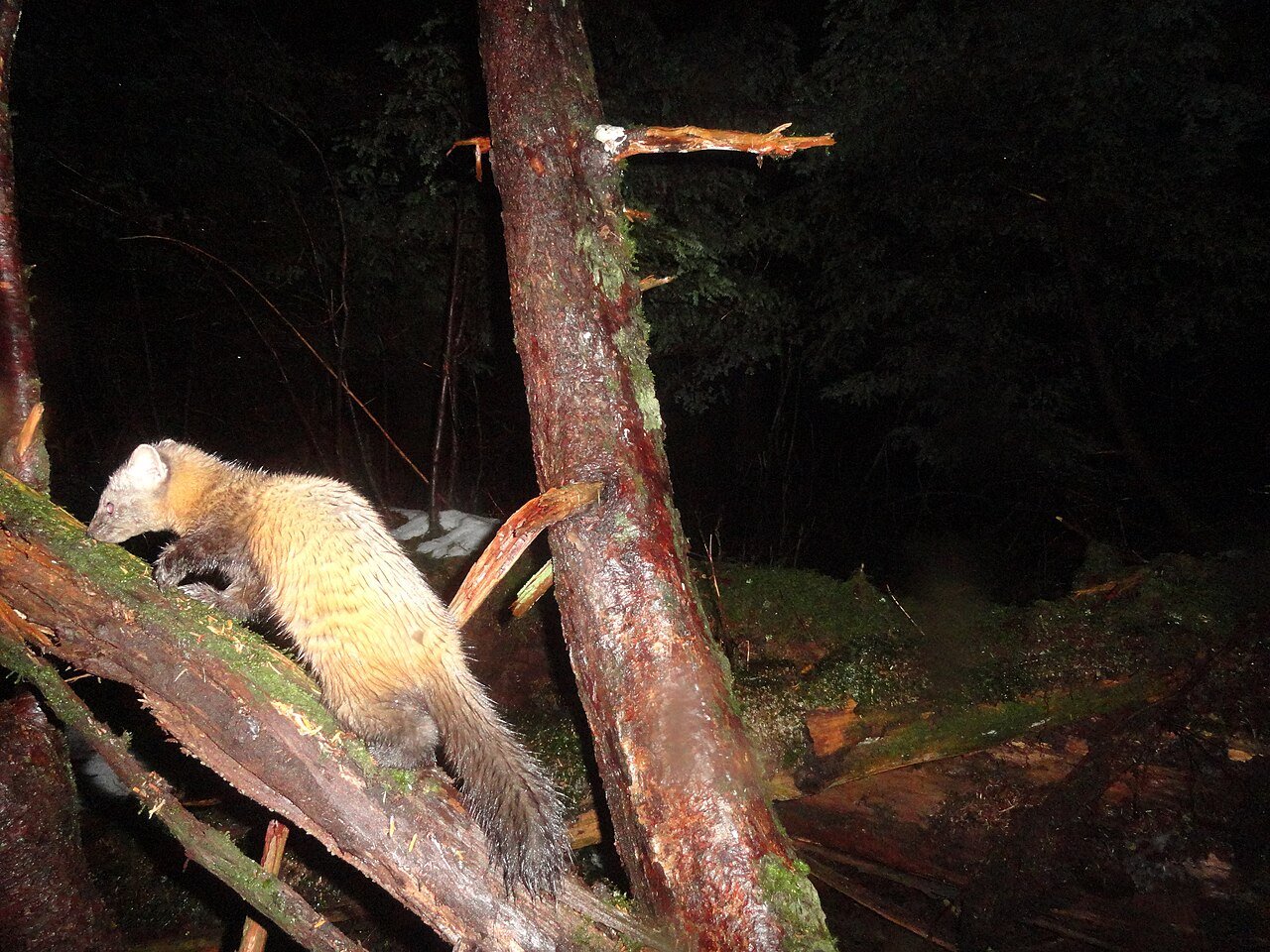
A real example of what a camera is watching
How to estimate your own usage
- Count how many triggers your busiest camera had last month, or check how many photos are on its card.
- Multiply by the number of cameras on cellular.
- Decide whether you want thumbnails only or HD downloads.
- Choose the lowest tier that covers your usual month, not your busiest one.
- Lower sensitivity or move the camera off a busy feeder if you are hitting limits. See motion sensitivity settings.
Strategies to pay less
- Start on a free or basic tier and upgrade only when you hit the cap.
- Suspend or cancel in the off-season where the brand allows it.
- Choose annual billing for cameras that run all year.
- Reduce upload frequency and photo size.
- Keep a few standard SD cameras for easy spots.
Other costs to budget for
Plans are not the only expense. Lithium batteries, SD cards, a security box, a lock and a solar panel all add up. Our worth-it guide weighs the full cost against the benefits, and how cellular cameras work explains why signal and power matter.
Three example budgets
These examples use typical prices and are only meant to show how the math works.
The occasional user
You run one camera to check a trail a few times a month. A free tier, such as SPYPOINT’s 100 photos, may be enough, for a cost of $0 a year. If you outgrow it for a few months, a basic plan around $5 a month adds about $15 for a three-month stretch.
The seasonal hunter
You run two cameras from August through January. At roughly $10 each for six months, that is about $120 in plans, instead of $240 for a full year. Pausing in the off-season is the single biggest saving, so choose a brand that lets you suspend or cancel without a fee.
The multi-camera landowner
You manage eight cameras across a property. On $10 per-camera plans that is about $960 a year. A shared account plan, if your brand offers one, can bring the total far lower. Adding up the real costs before you buy the cameras can change which brand you pick.
What happens when you hit your limit?
Most plans cap the number of photos or videos per month. When you reach the cap, photos usually stop uploading until the next billing cycle or until you upgrade, though the camera keeps saving to its SD card. Some brands sell extra photo packs or charge for overage. Read the terms for your plan so a busy week does not surprise you.
How to compare plans fairly
- Compare the same unit. Photos per month, videos per month and HD allowance differ by brand.
- Check what is included. Video, HD and live view are often extras.
- Count cameras. Per-camera billing multiplies; shared plans do not.
- Check the cancellation rules. Paying only in season can beat a cheaper monthly rate.
- Confirm current prices. They change; always check the app or the maker’s page.
Our guides to SPYPOINT, Bushnell, Moultrie and the Stealth Cam Command app go deeper on each.
How often prices change
Camera makers update plan names, photo allowances and prices from time to time, and promotions can change what a first-year buyer pays. A plan guide written today can be out of date next season. Before you buy a camera, open the maker’s app or plan page, read the current allowances, and write down the photo and video limits. That five-minute check can prevent paying for a tier you do not need.
Bottom line
Expect to pay somewhere between nothing and $20 per camera each month, with around $10 the most common. Choose the cheapest tier that covers a normal month, pause plans when you are not hunting, and compare shared plans if you run three or more cameras. The right plan is the one that matches how many photos your busiest camera actually takes.
Frequently Asked Questions
How much does a cellular trail camera plan cost per month?
Most cost $5 to $20 per camera, with about $10 common for a basic plan.
Is there a free cellular trail camera plan?
SPYPOINT offers a free tier of 100 photos a month. Most other brands require a paid plan.
Do I pay for each camera?
Usually yes, though some brands offer shared account plans.
Can I cancel or pause a plan?
Several brands let you cancel or suspend, which helps with seasonal use. Check each brand’s terms.
Is annual billing cheaper?
Usually yes. SPYPOINT retail listings show lower monthly rates on annual billing.
Do SD-card cameras need a plan?
No. Only cellular models need one. See subscription requirements.
Which brand is cheapest for many cameras?
Shared account plans, such as Tactacam’s, tend to be cheaper at three or more cameras.
Do plans include video?
Some include a limited number of videos, while others charge extra.
Sources
- Trail Cam HQ, cellular data plans compared (2026)
- Outdoor Empire, how much is a cellular plan for a trail camera
- Field & Stream, cellular vs conventional trail cameras
- GardePro, plan comparison and cellular vs non-cellular guides
- Retailer listings for SPYPOINT FLEX models and Bushnell CelluCORE cameras