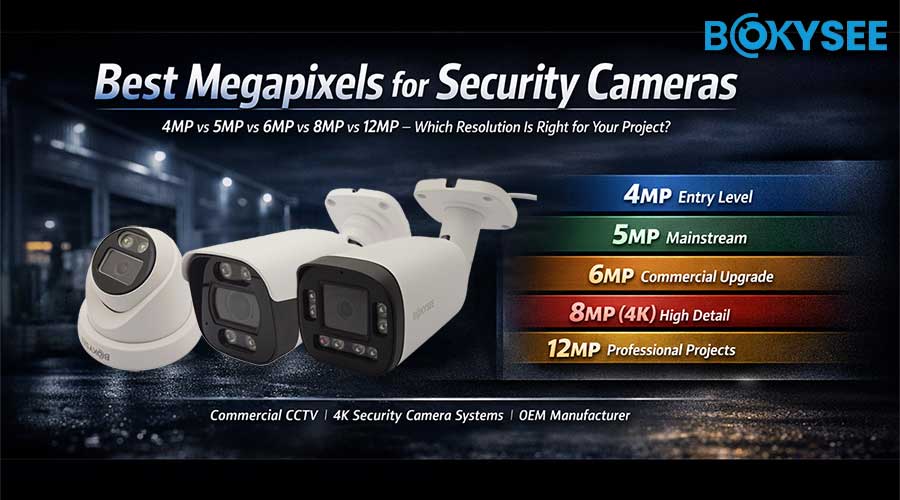
A 3 to 8 MP camera offers the best balance of detail, storage, and cost for most needs.
I have worked with security systems for years and tested cameras in real homes and small businesses. This guide explains how many MP is a good security camera, when you need more pixels, and what matters more than megapixels. Read on for clear recommendations, simple steps, and hands-on tips you can use today.

Why megapixels matter for security cameras
Megapixels measure image detail. More megapixels can capture finer detail at the same field of view. That helps when you need to crop or zoom to see faces or signs.
Megapixels are only one part of image quality. Sensor size, lens quality, light, and compression also shape what you see. High MP with a poor sensor can still give weak images.
Understand megapixels as a tool. Use them when you need zoomed detail. Rely on other specs for real-world performance.
How many MP is a good security camera? Real recommendations
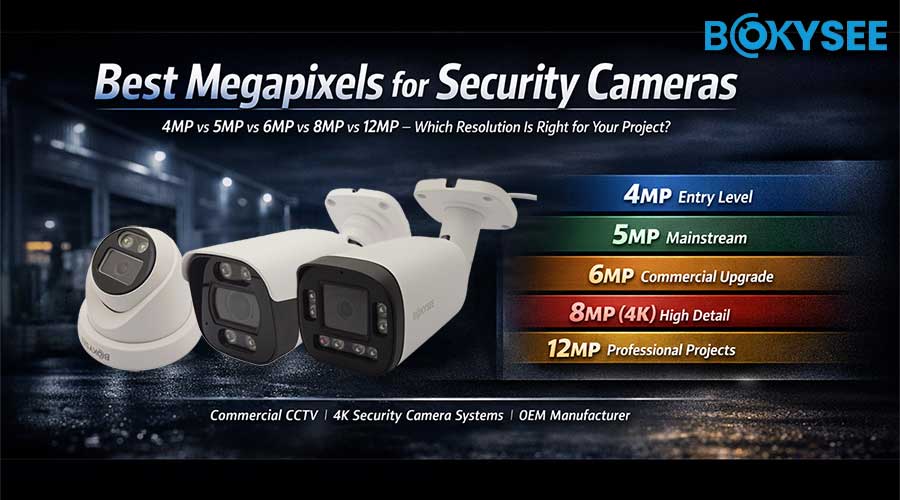
For most users, the sweet spot is 3 to 8 MP. That range balances sharp detail, file size, and cost.
Practical ranges by use case
- Home indoor monitoring: 2 to 4 MP. Good face detail and small file size.
- Home outdoor and porch: 4 to 6 MP. Better for wider yards and clearer faces.
- Small business or storefront: 4 to 8 MP. Captures faces and signs at medium range.
- Long range or license plates: 8 MP or higher. Use a good lens and proper placement.
- High-security sites: 12 MP and above. Only when the lens and light match the sensor.
When you decide how many MP is a good security camera, match pixels to your goals. If you only want motion alerts, low MP may work. If you must identify faces or plates, choose more MP and a quality lens.

Factors that matter more than megapixels
Sensor size
- Larger sensors gather more light. They improve low-light detail and reduce noise.
Lens quality
- A sharp glass lens beats a high MP count with a poor lens. Look for good optics and low distortion.
Lighting and IR performance
- Good lighting or strong IR means clearer images. MP can’t fix bad light.
Compression and bit rate
- Heavy compression hides fine detail. Check codec and set a sensible bit rate.
Field of view and placement
- A 4 MP camera with the right angle often beats an 8 MP camera placed poorly.
Frame rate
- Low frame rates blur motion. For clear moving subjects, keep 15–30 FPS.
When you ask how many MP is a good security camera, check these factors first.
How MP affects storage, bandwidth, and cost
Higher megapixels increase file size. That means more storage and more network bandwidth.
Estimated file sizes (per hour) at medium compression
- 2 MP at 15 FPS: small files, light bandwidth.
- 4 MP at 15 FPS: moderate files, balanced bandwidth.
- 8 MP at 15 FPS: large files, heavy bandwidth.
Money matters
- Higher MP cameras cost more at purchase. They also raise cloud or NAS storage costs.
- Choose MP based on need, not on the idea that more is always better.
When deciding how many MP is a good security camera, tally storage and monthly costs first.

Common mistakes and myths about camera MP
Many people think megapixels equal image quality. That is not true alone.
Mistakes to avoid
- Buying ultra-high MP cameras without checking lens or sensor size.
- Expecting great night images from high MP alone.
- Ignoring placement and lighting when choosing MP.
Think of megapixels like resolution on a map. More dots help, but a blurred map still fails you.
How to choose the right camera: checklist and steps
Follow a clear process. This keeps choices simple and smart.
Step-by-step checklist
- Define the goal. Identify faces, license plates, or motion only.
- Measure distance and field of view. Note how far a face or plate will be.
- Match MP to the goal. Use 2–4 MP for basic faces, 4–8 MP for wider coverage, 8+ MP for plates or long range.
- Check sensor size and lens specs. Prefer larger sensors and quality glass.
- Test in real light. Try a camera in the scene before final buy if possible.
- Plan storage and bandwidth. Calculate retention days and network load.
- Factor total cost of ownership. Add cloud fees, NAS, or hard drives to camera price.
This checklist helps answer how many MP is a good security camera for your exact situation.

Personal experience and lessons learned
I installed cameras for a small retail shop and learned two big lessons. First, a 12 MP camera looked great in the store but showed noise at night. We replaced it with an 8 MP camera that had a larger sensor and better low-light control. The result was cleaner video and lower storage cost.
Second, at a friend’s house, a 2 MP camera missed a distant plate. Upgrading to 6 MP solved that once we adjusted the lens and angle. The change proved that placement and optics plus the right MP count are the winning combo.
Tips from the field
- Test one camera before buying a dozen.
- Prioritize sensor and lens over raw megapixels.
- Use site-specific tests at night and day.
These hands-on tips show how to decide how many MP is a good security camera in real life.
Frequently Asked Questions of How many MP is a good security camera
How many MP is a good security camera for a small home?
For a small home, 2 to 4 MP typically works well. It gives clear faces and keeps storage low.
How many MP is a good security camera for reading license plates?
To read plates, aim for 8 MP or higher with a focused lens and close placement. Lighting and angle matter as much as pixels.
How many MP is a good security camera for night recording?
Night performance depends more on sensor size and IR than MP. A 4 to 8 MP camera with a good sensor will usually be best.
Does higher MP always mean better evidence quality?
No. Lens, sensor, light, and compression shape evidence quality. High MP alone does not guarantee good evidence.
How many MP is a good security camera for a storefront?
For a storefront, 4 to 8 MP is a solid choice. It captures faces and signs across wider scenes while managing storage.
Can I use a high MP camera and lower the resolution to save space?
Yes. Many systems let you record at lower resolutions or use motion-only recording. That saves space while keeping raw high-res captures for events.
Conclusion
Pick megapixels to match the job. For most homes and small businesses, 3 to 8 MP is a smart balance of detail, cost, and storage. Focus on sensor size, lens quality, lighting, and placement before chasing high MP. Test a camera in the real scene, and adjust settings for the best results.
Take action today: measure your scene, pick the right MP range from the guide, and test one camera on site. Share your experience below or subscribe for more practical tips on picking and tuning security cameras.
As an Amazon Associate, I earn from Qualifying Purchases.