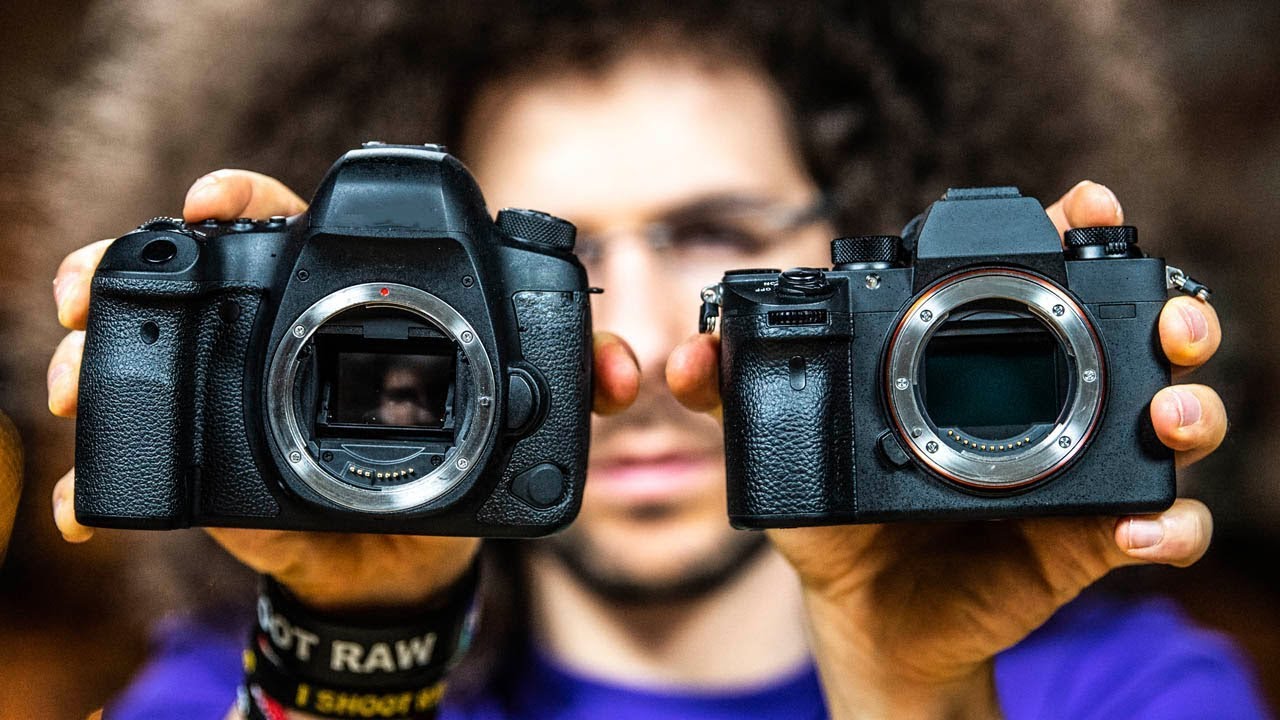
Yes — with tweaks, a DSLR can mimic many mirrorless features but not replace them fully.
I’ve spent years shooting with both DSLR and mirrorless systems. This article breaks down how and when a DSLR can act like a mirrorless camera. You’ll get clear, tested steps, trade-offs, and real-world tips to help you decide if converting your workflow is worth it.

How mirrorless and DSLR systems differ at a glance
When you ask "Can a DSLR act like a mirrorless camera", start with the core difference. Mirrorless cameras use an electronic viewfinder (EVF) or the rear screen for live preview. DSLRs use an optical viewfinder (OVF) that looks through a mirror and prism.
Key technical contrasts:
- Sensor feed and preview: Mirrorless shows exposure and preview in real time. DSLR shows the scene optically until you take a shot.
- Autofocus: Mirrorless commonly uses fast on-sensor phase detect or contrast detect AF. DSLRs rely on a dedicated AF module when using the viewfinder.
- Size and design: Mirrorless bodies can be smaller since they skip the mirror box and prism.
- Battery life: DSLRs often last longer on a charge because they don’t run an EVF or screen continuously.
Understanding these basics helps answer "Can a DSLR act like a mirrorless camera" with nuance. You can replicate many mirrorless behaviors on a DSLR, but the hardware differences limit full parity.

Practical ways a DSLR can mimic mirrorless workflow
You can change how you shoot to get mirrorless-like results from a DSLR. These steps are practical and tested.
Use live view as your main shooting mode
- Switch to live view to see exposure preview on the rear screen.
- Use exposure simulation where available to preview white balance and exposure.
- Live view also enables on-sensor autofocus on many DSLRs.
Add an electronic accessory
- Use an external electronic viewfinder for models that support it to simulate an EVF.
- Some third-party EVFs mount on the hotshoe and give a close experience to mirrorless.
Leverage lens adapters and AF modes
- Use adapters to fit native mirrorless lenses or newer optics that offer better on-sensor AF.
- Enable continuous AF or face-detect modes in live view to emulate mirrorless tracking.
Use tethering and preview tools
- Tether your DSLR to a laptop or tablet. This gives a large live preview and fast review workflow.
- Use remote apps to control exposure, focus, and capture from your phone.
Shooting modes and stabilization
- Use mirror lock-up and electronic front curtain shutter (if available) to reduce vibration for long exposure work.
- Pair stabilized lenses with in-body stabilization (if your DSLR lacks it) by choosing lenses with IS.
These approaches answer "Can a DSLR act like a mirrorless camera" in a practical way: yes, for many tasks, with a few trade-offs.

Performance compromises and limits to expect
Even after tricks and tools, some limitations remain. Be clear about what a DSLR cannot fully replicate.
Autofocus in low light and continuous tracking
- Mirrorless on-sensor AF tends to beat DSLR phase modules in live view tracking.
- Fast subject tracking (sports, wildlife) is often better on modern mirrorless bodies.
Size and weight gains
- Adding EVFs, battery grips, or adapters can make a DSLR larger than small mirrorless bodies.
Electronic viewfinder advantages
- Mirrorless EVFs preview dynamic range, HDR, and simulated effects instantly. DSLRs can’t replicate EVF latency-free in the OVF.
Video and autofocus during video
- Mirrorless often offers superior continuous AF in video, with smoother transition and face tracking.
- Some DSLRs offer good video AF, but typically not as refined.
Future firmware and lens ecosystems
- Mirrorless platforms are getting lens and firmware focus features that DSLRs won’t receive. Long term, mirrorless tends to evolve faster.
This list clarifies where a DSLR can act like a mirrorless camera and where it will fall short.

Use cases where a DSLR acting like a mirrorless camera works well
There are many real scenarios where you can confidently adapt a DSLR.
Portrait and studio work
- Live view and tethering give accurate exposure and composition control.
- Focus peaking and magnification (on some models) help with manual lens work.
Landscape and architecture
- Use live view plus mirror lock-up for low vibration. Tethered previews help with focus stacking and bracketing.
Casual video and run-and-gun
- Use continuous AF in live view and a microphone hotshoe for basic video work.
- For low-budget creators, this approach can be effective.
Event photography with prep
- For weddings or events, use live view for posed shots and the OVF for fast candid shooting.
- Plan lens choices to match focus speed needs.
These examples show when a DSLR can act like a mirrorless camera for most needs.

Personal experience: what I tried and what I learned
I shifted between DSLR and mirrorless over a decade. Here are practical lessons from my work.
First-hand tests
- I used live view as my main mode for portrait shoots. It saved time on exposure and color. It did add battery drain.
- I added a hotshoe EVF on an older DSLR. It helped composition but was slightly clunky.
Mistakes I made
- Relying on adapters with older lenses cost me AF speed. Test combinations before big jobs.
- Underestimating battery use in live view caused missed frames on long receptions.
Tips I recommend
- Keep spare batteries if you use live view a lot.
- Calibrate lenses in live view and test AF tracking before client work.
- Use tethering for critical shoots to get large previews and quick feedback.
These real notes help you see how a DSLR can act like a mirrorless camera in daily shoots.
Buying and upgrade advice
If you’re deciding whether to adapt a DSLR or switch to mirrorless, consider these points.
When to stick with your DSLR
- You need long battery life and an optical viewfinder.
- You have a large lens collection that performs well on your current body.
- Your shooting style relies on OVF speed and tactile feedback.
When to switch to mirrorless
- You want the best autofocus tracking and EVF previews.
- You need compact gear for travel or run-and-gun work.
- Future lens releases and firmware features matter to you.
Hybrid approach
- Keep your DSLR for specific jobs and add a compact mirrorless for video or fast AF needs.
- This gives flexibility and reduces sudden costs.
These choices will help you decide if "Can a DSLR act like a mirrorless camera" is a practical question for your gear plan.
PAA-style questions
Can live view make a DSLR work like a mirrorless?
Yes. Live view gives a real-time preview and on-sensor AF on many models, creating a mirrorless-like shooting flow.
Will adding an EVF fully replicate a mirrorless experience?
No. An EVF helps but may add bulk and not match the integration and smooth tracking of a native mirrorless EVF.
Is video autofocus on DSLR as good as mirrorless?
Not usually. Mirrorless systems tend to have smoother and faster continuous AF for video, though some DSLRs are close.
Frequently Asked Questions of Can a DSLR act like a mirrorless camera
Can I use my DSLR like a mirrorless for portraits?
Yes. Use live view, tethering, and exposure preview to match the mirrorless portrait workflow.
Will switching to live view hurt my battery life?
Yes. Live view uses more battery power. Carry spare batteries or a power bank for long shoots.
Can adapters make DSLR lenses perform like mirrorless lenses?
Adapters let you use different lenses, but autofocus speed may drop with some adapters and older optics.
Is autofocus on-DISPlay the same as mirrorless AF?
No. On-sensor AF in live view helps, but native mirrorless AF systems are often faster and more consistent.
Should I buy a mirrorless camera instead of upgrading my DSLR?
If you need top autofocus, EVF previews, and a compact kit, mirrorless is worth it. If your DSLR workflow works, you can adapt instead.
Conclusion
This article shows that a DSLR can act like a mirrorless camera for many uses. You can use live view, EVFs, adapters, and tethering to get similar previews and workflows. Expect trade-offs in AF speed, battery life, and future firmware support.
Try the practical tips here on a short test shoot. Compare results and costs before you commit. If you liked this guide, subscribe for gear tests, share your experiences below, or ask a question in the comments.
As an Amazon Associate, I earn from Qualifying Purchases.